
NewsDigest

Deezer says 44% of uploads are AI-generated

🏷️ Tech News🌍 France🔗 3 sources37Digest ScoreiThis score reflects the story's reliability, bias neutrality, and public momentum.
Deezer says 44% of uploads are AI-generated

📰 Full Story

Deezer on April 20, 2026, said AI-generated tracks now make up 44% of all daily uploads to its platform — roughly 75,000 synthetic songs a day or more than two million a month. The Paris-headquartered streamer said consumption of AI tracks remains low (1-3% of streams) and that around 85% of those streams are detected as fraudulent and demonetized. Deezer has been tagging AI content since June 2025 and says it tagged more than 13.4 million AI tracks in 2025. It has stopped storing hi-res versions of flagged AI songs, excludes them from algorithmic recommendations and editorial playlists, and is licensing its detection technology to partners including collecting society Sacem and other third parties. The company noted rapid growth from 10,000 daily AI tracks in January 2025 to 60,000 in January 2026 and 75,000 now. Deezer urged rival platforms to adopt similar measures as industry players pursue different transparency approaches, while AI-made tracks have already topped charts in several countries.
Google's Fitbit Air screenless wearable teased

🏷️ Tech News🌍 United States🔥 Trending🔗 6 sources46Digest ScoreiThis score reflects the story's reliability, bias neutrality, and public momentum.
Google's Fitbit Air screenless wearable teased

📰 Full Story

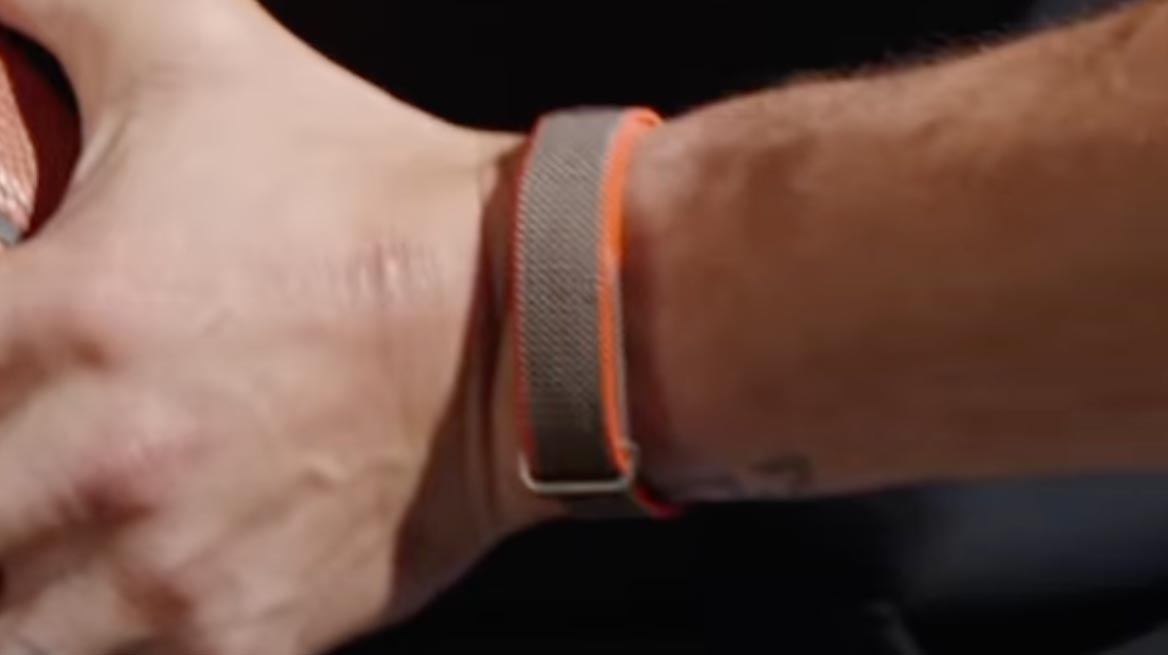
Multiple outlets reported on April 20, 2026, that Google is preparing a screen-less fitness band called the Fitbit Air. Citing 9to5Google and corroborating leaks spotted by Droid Life and retailers, the slim band — first seen on NBA star Stephen Curry in a March teaser — is positioned as a Whoop-style competitor with a focus on continuous health monitoring. Retail listings suggest a possible May 16 availability, a roughly $99 price point and multiple strap options and colors. Google plans to rebrand Fitbit Premium as “Google Health,” fold Gemini-powered AI into the Fitbit app and market an AI-powered health coach (currently in preview) under the Google Health name. Reports say some basic tracking features will remain free while advanced analytics, including the Ask/Health Coach offerings, will require a subscription. Leaks also indicate standard sensors such as heart-rate and SpO2 and an accelerometer; battery life and final sensor suite remain unconfirmed.

Huawei launches Pura X Max and Pura 90 series

🏷️ Tech News🌍 China🔗 5 sources32Digest ScoreiThis score reflects the story's reliability, bias neutrality, and public momentum.
Huawei launches Pura X Max and Pura 90 series

📰 Full Story

Huawei unveiled multiple new Pura-series phones in China on April 20, 2026, led by the Pura X Max — promoted as the first commercially available “wide” passport-style foldable. The Pura X Max features a 5.4-inch 3:2 cover display and a 7.7-inch internal 3:2 (landscape) panel, both LTPO OLED (1–120Hz) with peak brightness up to 3,500/3,000 nits; a HiSilicon Kirin 9030 Pro chip; a 5,300 mAh battery with 66W wired and 50W wireless charging; triple cameras (50MP main with variable aperture, 50MP telephoto, 12.5MP ultrawide); HarmonyOS 6.1 and M‑Pen stylus support. Prices in China start at 10,999 CNY for the base model. Alongside it Huawei launched the mid-range Pura 90 (12GB/256GB from 4,699 CNY; shipping from May 9) with a 6,500 mAh battery, 50MP main and 50MP periscope telephoto (3.7x optical) and Kirin 9010S, and the Pura 90 Pro Max flagship (200MP telephoto sensor, 6,000 mAh, 100W wired/80W wireless) priced from 6,499–8,599 CNY. International availability has not been confirmed.

GoPro launches Mission 1 series at premium prices

🏷️ Tech News🌍 United States🔗 3 sources30Digest ScoreiThis score reflects the story's reliability, bias neutrality, and public momentum.
GoPro launches Mission 1 series at premium prices

📰 Full Story

GoPro has unveiled its new Mission 1 camera family, positioning the devices as high-resolution, cinema-capable action cameras aimed at professional and prosumer users. The lineup centers on a 50MP 1-inch sensor and the new GP3 processor. U.S. pricing starts at $599.99 for the Mission 1 and $699.99 for the Mission 1 Pro, with a $100 subscriber discount on both; an interchangeable-lens Mission 1 Pro ILS is due in Q3 and will carry similar pricing. GoPro says pre-orders are open now and that orders will ship on or before May 28. The Mission 1 offers 8K and high-frame-rate 4K capture (with limits versus the Pro), while the Mission 1 Pro boosts frame rates (including 8K/60 and higher 4K rates) and supports 4:3 Open Gate recording for flexible cropping. Accessories and pricing were also disclosed: a wireless mic system (~$159.99), Media Mod (~$149.99) and Enduro 2 battery (~$34.99); early pre-orders include a bundled grip while supplies last. GoPro is marketing the line as “the world’s smallest, lightest and most durable high-resolution cinematic camera system.”

AI-driven memory crunch may last years

🏷️ Tech News🔗 3 sources29Digest ScoreiThis score reflects the story's reliability, bias neutrality, and public momentum.
AI-driven memory crunch may last years

📰 Full Story

Multiple industry reports in April 2026 warn the global memory chip shortage is likely to persist for years, driven by surging demand for high-bandwidth memory (HBM) used in AI systems. Nikkei Asia and Counterpoint Research say suppliers ramping DRAM production will still meet only about 60% of demand by end-2027 unless output grows significantly faster than planned. SK Group chairman Chey Tae-won has told Reuters the wafer shortfall could remain above 20% and stretch to 2030 as AI data-centres prioritise HBM over general-purpose DRAM. The world’s biggest makers — Samsung, SK Hynix and Micron — are adding fabs, but most capacity will come online in 2027–28 or later. SK Hynix holds a dominant share of the HBM market and roughly a third of global DRAM; the three firms control roughly 90% of DRAM production. The squeeze has already pushed memory prices sharply higher (one report cites a roughly 90% quarter-on-quarter jump), with knock-on effects for smartphones, laptops, GPUs, consoles, SSDs and cloud infrastructure that depend on DRAM and HBM.

Massive Intel Nova Lake leak reveals cache surge

🏷️ Tech News🔗 3 sources29Digest ScoreiThis score reflects the story's reliability, bias neutrality, and public momentum.
Massive Intel Nova Lake leak reveals cache surge

📰 Full Story

Multiple leaks published April 19–20, 2026 outline Intel’s forthcoming Nova Lake desktop CPUs, showing the company pushing exceptionally large on-die cache and expanded core counts. Leaker Jaykihn (X), VideoCardz and reports compiled by NotebookCheck and ExtremeTech indicate a 52-core flagship (Core Ultra DX9 400) with up to 288MB of total cache via Intel’s bLLC (big Last Level Cache), a 44-core part with 264MB, and several other SKUs ranging from 6 to 52 cores. Some Nova Lake ‘D’/’DX’ models would directly target AMD’s X3D chips by offering significantly more cache than AMD’s Ryzen 9 9950X3D2 (192MB). Leaks also point to DDR5-8000 support, next-gen NPUs, improved integrated graphics and mixed signals on power: reported TDPs vary between ~125W and 175W+. Intel has not confirmed specs; a wider rollout is expected later in 2026, with more official details due nearer launch.
Explore more on NewsDigest