
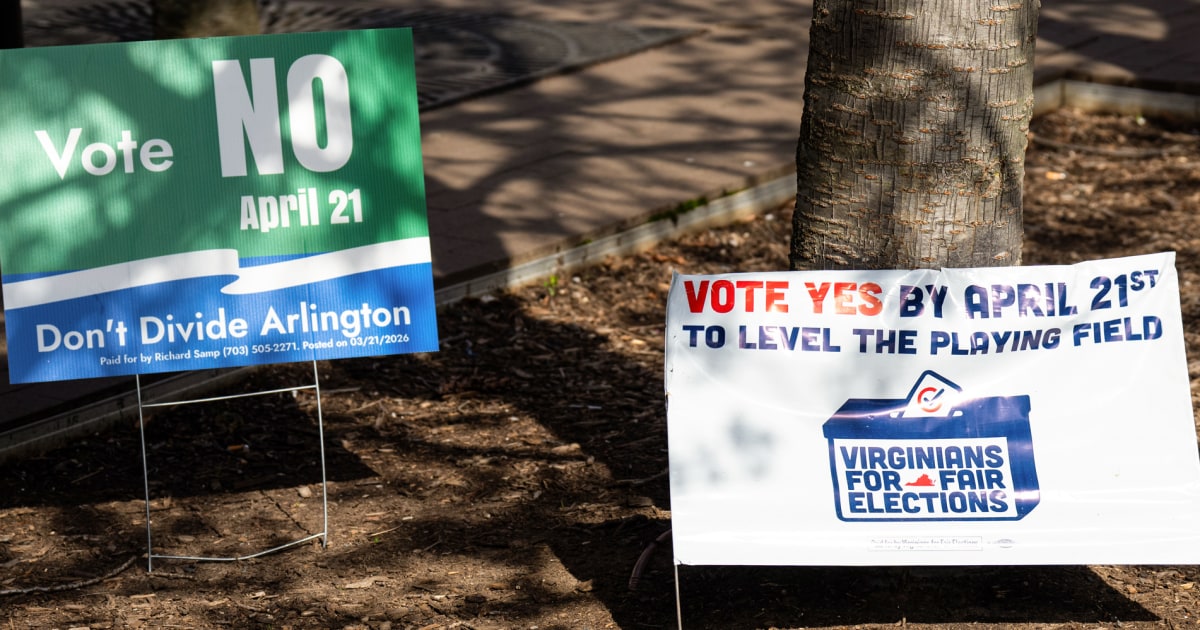
📰 Full Story
On April 21, 2026, Virginians headed to the polls in a one-question special election on a Democratic-drawn mid-decade congressional map that could flip up to four Republican-held U.S. House seats, potentially giving Democrats 10 of the state’s 11 districts.
The ballot would temporarily allow the Democratic-controlled General Assembly to adopt new lines through 2030, bypassing the bipartisan commission created in 2020.
The contest has attracted near-record spending — much of it from “dark money” — with Virginians for Fair Elections reporting roughly $64 million raised and opposition groups roughly $20–23 million; combined outside spending has been estimated between $75 million and nearly $100 million.
Polling showed a narrow edge for the “yes” campaign (around low 50s vs high 40s in several surveys), while the Virginia Supreme Court permitted the referendum to proceed amid legal challenges.
National figures including former President Donald Trump and House Speaker Mike Johnson urged a “no” vote, while Democrats leaned on Barack Obama and Hakeem Jeffries to back “yes.” The outcome could affect control of the narrowly divided U.S. House in November and intensify a coast‑to‑coast redistricting battle, with Florida and other states watching closely.



💬 Commentary