
NewsDigest

Carney names Canada-U.S. economic advisory committee

🏷️ Finance & Economics🌍 Canada🔥 Trending🔗 8 sources56Digest ScoreiThis score reflects the story's reliability, bias neutrality, and public momentum.
Carney names Canada-U.S. economic advisory committee

📰 Full Story

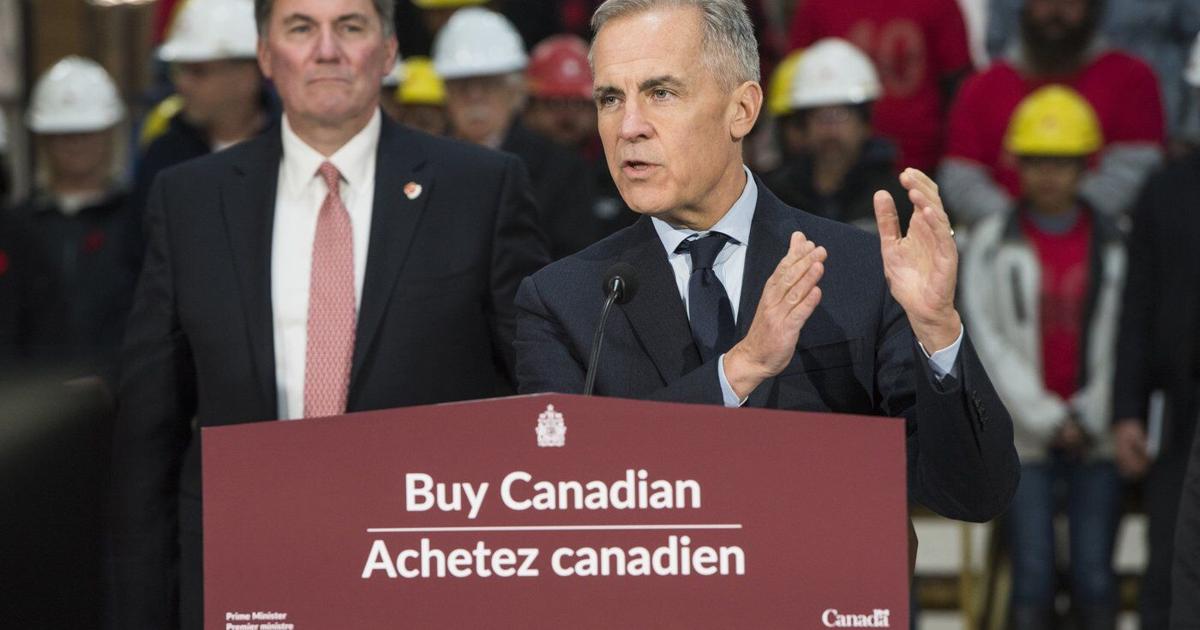
OTTAWA, April 21, 2026 — Prime Minister Mark Carney on Tuesday reconstituted and renamed the government’s Canada-U.S. advisory body as the Advisory Committee on Canada‑U.S. Economic Relations, tapping a mix of former politicians, union leaders and senior corporate executives to help steer strategy ahead of the review of the Canada‑United States‑Mexico Agreement (CUSMA). The panel, to be chaired by Canada‑U.S. trade minister Dominic LeBlanc, will hold its first meeting on April 27. Members include former Conservative leader Erin O’Toole, ex‑Quebec premier Jean Charest, Ralph Goodale, Lisa Raitt and former Nunavut premier P.J. Akeeagok, alongside industry chiefs such as BMO’s Darryl White, CN’s Tracy Robinson, TC Energy’s François Poirier, Teck’s Jonathan Price, Nutrien’s Ken Seitz, Canfor’s Susan Yurkovich, Auto Parts Association head Flavio Volpe, Unifor president Lana Payne, and Canadian Chamber CEO Candace Laing. The government says the committee will provide “expertise and strategy” as Canada prepares for CUSMA talks amid U.S. tariffs and unresolved bilateral negotiating timelines, with U.S. officials indicating talks may not conclude by the July 1 review deadline. The move replaces the Trudeau-era body and shifts composition toward senior executives and sectoral representation.


Carney forms Canada-U.S. trade advisory committee

🏷️ Finance & Economics🌍 Canada🔥 Trending🔗 12 sources56Digest ScoreiThis score reflects the story's reliability, bias neutrality, and public momentum.
Carney forms Canada-U.S. trade advisory committee

📰 Full Story

OTTAWA, April 21 — Prime Minister Mark Carney on Tuesday announced a 24-member Advisory Committee on Canada‑U.S. Economic Relations to guide Ottawa as the Canada‑United‑States‑Mexico Agreement (CUSMA/USMCA) comes up for review this summer. Chaired by Canada‑U.S. trade minister Dominic LeBlanc, the panel — which holds its first meeting on April 27 — retains only four members from the previous council set up under Justin Trudeau and adds leaders from banking, rail, energy, mining, forestry, auto parts, agriculture, unions and cultural sectors. Appointees include former Conservative leader Erin O’Toole, former Quebec premier Jean Charest, ex‑high commissioner Ralph Goodale, BMO CEO Darryl White, CN’s Tracy Robinson, TC Energy’s François Poirier, Teck’s Jonathan Price, Nutrien’s Ken Seitz, Unifor president Lana Payne and TIFF CEO Cameron Bailey, among others. Ottawa says the group will provide strategy and sectoral expertise as Canada prepares for CUSMA negotiations ahead of the July 1 renewal/annual review deadline amid ongoing U.S. tariffs and trade tensions that have hit several Canadian industries.

SpaceX IPO: Musk Consolidates Voting Control

🏷️ Finance & Economics🌍 United States🔗 8 sources55Digest ScoreiThis score reflects the story's reliability, bias neutrality, and public momentum.
SpaceX IPO: Musk Consolidates Voting Control

📰 Full Story

SpaceX’s newly public S-1 and related reporting show founder Elon Musk and a small group of insiders will retain dominant voting control after the company’s planned IPO. The prospectus details a dual-class share structure (Class B shares with 10 votes each versus one vote for Class A), giving Musk disproportionate influence despite holding roughly 42% of equity and about 79% of voting power. The filing targets a roughly $1.75 trillion valuation and a $75 billion raise, with an unusual allocation of up to 30% of shares for retail investors and a planned June listing. The documents also disclose Musk bought about $1.4 billion of SpaceX shares last year and could receive up to 60 million additional shares tied to steep market-cap milestones and an ambitious “orbital data center” plan. Financials show strong Starlink profits offsetting heavy AI-related capital spending after SpaceX’s acquisition of xAI; the combined business reported large capex and consolidated losses in 2025 even as cash and subscriber figures remain significant. The prospectus includes provisions restricting shareholder litigation and arbitration requirements.

GE Aerospace Q1 Beats Estimates, Warns on Oil

🏷️ Finance & Economics🌍 United States🔥 Trending🔗 23 sources51Digest ScoreiThis score reflects the story's reliability, bias neutrality, and public momentum.
GE Aerospace Q1 Beats Estimates, Warns on Oil

📰 Full Story

April 21, 2026 — GE Aerospace reported a stronger-than-expected start to 2026 while cautioning about near‑term risks from elevated oil prices and regional fuel supply constraints. The engine maker posted adjusted first‑quarter EPS of $1.86 (GAAP EPS $1.83) and GAAP revenue of $12.39 billion, with adjusted revenue about $11.61 billion. Total orders surged 87% to $23.0 billion and commercial services backlog topped roughly $170 billion. Management reaffirmed full‑year adjusted EPS guidance of $7.10‑$7.40 and free cash flow guidance of $8.0‑$8.4 billion, saying results are trending toward the high end of ranges. GE said it now assumes Brent crude stays elevated through Q3 and flagged a reduced industry departures outlook — flat to low‑single‑digit growth — driven by sharper declines in the Middle East. The company highlighted strong aftermarket demand, spare‑parts shortages and a healthy shop‑visit pipeline, and said its GE9X program schedule remains unchanged despite earlier durability issues.

AB Foods to demerge Primark, create two FTSE 100 firms

🏷️ Finance & Economics🌍 United Kingdom🔥 Trending🔗 17 sources50Digest ScoreiThis score reflects the story's reliability, bias neutrality, and public momentum.
AB Foods to demerge Primark, create two FTSE 100 firms

📰 Full Story

Associated British Foods (ABF) announced on April 21, 2026, that it will spin off its Primark fashion chain from its food operations in a demerger expected to complete by the end of 2027. The move will create two separately listed London companies—Primark as a standalone retailer and a food-focused group that will retain the Associated British Foods name. Primark, headquartered in Dublin, operates 486 stores in 19 markets with about £9.5 billion in annual revenue; ABF’s food, sugar and ingredients operations generate roughly £9.8 billion. Management said shareholders will receive shares in both entities, with Wittington Investments (the Weston family vehicle) remaining the majority holder in both. ABF flagged one-off separation and transaction costs of about £75 million and estimated lost synergies below £45 million. The group reported weaker first-half results—group revenue down around 2% and adjusted operating profit of £691 million—and its shares fell on the announcement. Company executives and analysts cited ongoing risks from the Middle East conflict, pressure in European retail, intensifying competition from fast-fashion online rivals, and headwinds in the sugar and U.S. grocery markets.

🔗 Based On

Synchrony Financial posts strong Q1, raises buyback and dividend

🏷️ Finance & Economics🌍 United States🔥 Trending🔗 9 sources46Digest ScoreiThis score reflects the story's reliability, bias neutrality, and public momentum.
Synchrony Financial posts strong Q1, raises buyback and dividend

📰 Full Story

Synchrony Financial reported stronger-than-expected first-quarter results on April 21, 2026, as resilient consumer spending drove record purchase volume and improved credit metrics. Net income rose to $805 million, or $2.27 per share, versus prior-year results and above consensus estimates. Purchase volume reached a first-quarter record of $43.0 billion, up about 6% year-on-year, while ending loan receivables were roughly flat at $100.1 billion. Net interest income grew 4% to $4.6 billion and net interest margin expanded 76 basis points to 15.5%. Provisions for credit losses declined by $156 million to $1.3 billion as net charge-offs fell to 5.42% of average loan receivables. The board approved a new, open-ended $6.5 billion share repurchase program and signalled a 13% increase in the quarterly common dividend to $0.34 beginning in Q3 2026; a $0.30 quarterly payout was declared for May 15. Management maintained full-year EPS guidance and highlighted continued partner expansion, digital growth and CareCredit distribution. The company also reported a CET1 ratio of 12.7% and tangible book value per share growth of 8%. Insiders sold roughly $37.7 million of shares in the past quarter.
Explore more on NewsDigest