NewsDigestFollow

SpaceX Wins $4.16 Billion Golden Dome Satellite Deal

🏷️ Defense🌍 United States🔗 9 sources39Digest ScoreiThis score reflects the story's reliability, bias neutrality, and public momentum.
SpaceX Wins $4.16 Billion Golden Dome Satellite Deal

📰 Full Story

On May 29, 2026 the U.S. Space Force awarded SpaceX a $4.16 billion Other Transaction Authority agreement to build a Space-Based Airborne Moving Target Indicator (SB-AMTI) satellite constellation intended to detect and track airborne threats, including missiles and hypersonic weapons. The contract is part of the Trump administration’s wider Golden Dome missile-defence initiative, whose total programme cost has been cited at about $185 billion. The Space Force projects an initial constellation providing early capability by 2028. The award follows a separate $2.29 billion Space Force contract to SpaceX earlier in the same week for a secure Space Data Network backbone, bringing SpaceX’s recent Golden Dome work to about $6.45 billion. Officials say multiple vendors remain in the SB-AMTI pool and further awards are expected, but the scale of SpaceX’s combined wins positions it as a central supplier for sensing and communications layers. SpaceX is concurrently preparing for a high-profile IPO, and government business accounted for a significant share of recent revenue.

🕰️ The Story So Far: An Evolving Timeline

Saturday, May 30, 2026 21:38 UTC
SpaceX Wins $4.16 Billion Golden Dome Satellite Deal
Wednesday, May 27, 2026 22:15 UTC
Space Force awards SpaceX $2.29bn SDN Backbone contract

US to Accelerate Troop Drawdown in Europe

🏷️ Defense🌍 United States🔗 3 sources26Digest ScoreiThis score reflects the story's reliability, bias neutrality, and public momentum.
US to Accelerate Troop Drawdown in Europe

📰 Full Story

Reports published May 30-31, 2026 say the United States is planning to accelerate the withdrawal of forces from bases across Europe and will present the proposal to NATO allies next month, German newspaper Welt am Sonntag reported, citing an unidentified Pentagon source. Washington in May announced a plan to pull about 5,000 troops out of Germany — home to roughly 35,000 active-duty U.S. personnel — with the Pentagon earlier saying that drawdown would take six to 12 months. The new reporting gives no details on the scale, timeline or specific bases that would be affected. U.S. officials and NATO had not publicly commented on the alleged acceleration. Media coverage links the move to frictions between the Biden/Trump-era U.S. administration and European partners amid the Iran war and diplomatic rows with Germany, and says the plan will be tabled at next month’s NATO Force Sourcing Conference where allies discuss deployments and commitments.

AUKUS partners to field underwater drones by 2027

🏷️ Defense🌍 Singapore🔥 Trending🔗 8 sources24Digest ScoreiThis score reflects the story's reliability, bias neutrality, and public momentum.
AUKUS partners to field underwater drones by 2027

📰 Full Story

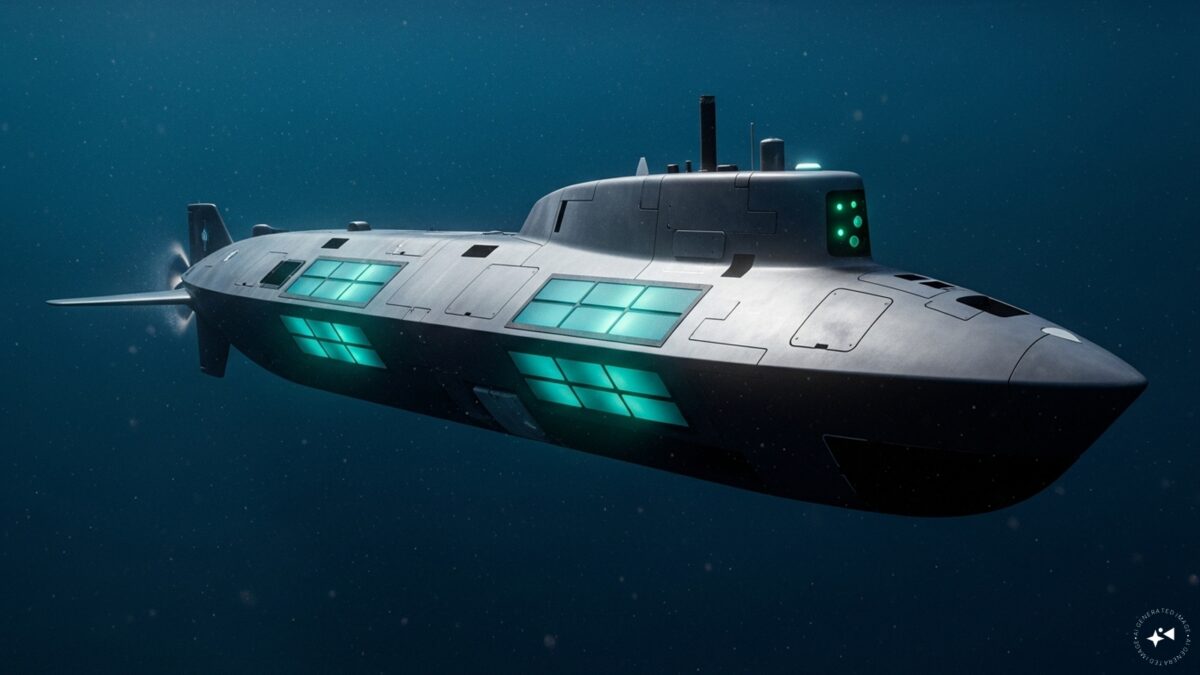
The United States, United Kingdom and Australia on May 30, 2026 announced a joint programme to develop and deploy advanced unmanned undersea vehicles (UUVs) under the AUKUS defence pact. Unveiled by US Defence Secretary Pete Hegseth, UK Defence Secretary John Healey and Australia’s Richard Marles at the IISS Shangri‑La Dialogue in Singapore, the Pillar Two “signature” project is scheduled to begin deliveries in 2027. The initiative will produce adaptable payloads, sensors and weapons for tasks including reconnaissance, strikes, anti‑submarine and anti‑surface warfare, mine countermeasures, electronic warfare and protection of critical undersea cables and pipelines. The BBC reported the UK would contribute £150 million ($~201m); US and Australian financial commitments were not fully detailed in initial announcements. Ministers also reiterated plans to rotate US and UK nuclear‑powered submarines through Australia and to accelerate submarine cooperation. China criticised the move as dangerous and warned it could spur a regional arms race. Officials framed the project as boosting deterrence across the Indo‑Pacific, Atlantic and High North and as the first major deliverable under AUKUS’s technology pillar.

Ukraine drones destroy two Russian Tu-142s, Iskander

🏷️ Defense🌍 Russian Federation🔗 3 sources18Digest ScoreiThis score reflects the story's reliability, bias neutrality, and public momentum.
Ukraine drones destroy two Russian Tu-142s, Iskander

📰 Full Story

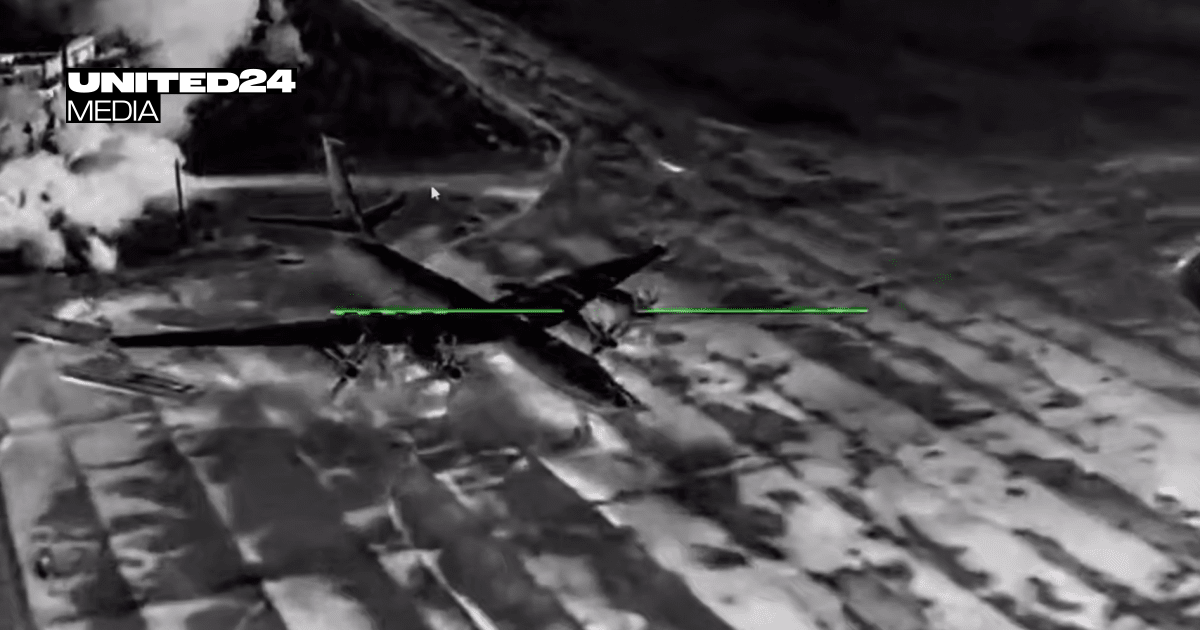
Ukrainian long-range strike drones belonging to the country's Unmanned Systems Forces destroyed two Russian Tu-142 maritime patrol aircraft and an Iskander tactical missile system at a military airfield in Taganrog, Rostov Oblast, overnight on May 29-30, 2026, the unit's commander Robert “Magyar” Brovdi said. Video released by the unit showed the aircraft and equipment burning after impacts; regional governor Yuri Slusar reported fires at the Port of Taganrog and said two people were injured. Ukrainian sources said the 1st Separate Unmanned Systems Center used FP-1/FP-2 class strike drones for the deep strike. The Tu-142, a scarce long-range anti-submarine and maritime surveillance platform derived from the Tu-95, is difficult to replace, while the Iskander system can launch short-range ballistic and cruise missiles up to several hundred kilometres. The operation continues a pattern of Ukrainian strikes on Russian airfields, fuel and maintenance facilities near the Azov and Black Sea coasts.

🤝 Social Media Insights

Social Summary
1 / 5
The comments highlight that Tu-142 losses matter because the type is scarce and central to Russia’s maritime surveillance and ASW, and their destruction both reduces detection of Ukrainian sea drones and forces Russia to reassign air-defence and logistics resources. Accurate correction: Ukraine does possess a navy and related maritime assets.

India Ready for Operation Sindoor 2.0, Army Chief

🏷️ Defense🌍 India🔗 3 sources16Digest ScoreiThis score reflects the story's reliability, bias neutrality, and public momentum.
India Ready for Operation Sindoor 2.0, Army Chief

📰 Full Story

India’s armed forces are prepared to resume "Operation Sindoor 2.0" if required, Army Chief General Upendra Dwivedi said on May 30, signalling that a temporary cessation of hostilities with Pakistan remains fragile. Speaking at the passing-out parade of the 150th National Defence Academy course in Pune, he said all three services are strengthening jointness and preparing for multi-domain warfare that will increasingly involve space, cyber and cognitive domains. Operation Sindoor was launched in May 2025 to target terror infrastructure in Pakistan after the April 2025 Pahalgam attack that killed 26 people. General Dwivedi stressed heightened force protection and caution in deployments because modern battlefields are highly transparent. He highlighted priorities including drone training under his “Eagle on the Arm” initiative, the creation of indigenous technology-enabled units, and a move toward networking and data-centric decision-making. He also noted that theatreisation reforms and a report to Defence Minister Rajnath Singh aim to reshape command structures under a new chief of defence staff framework.
Explore more on NewsDigest