NewsDigestFollow

India waives cotton import duty through October

🏷️ Finance & Economics🌍 India🔗 3 sources30Digest ScoreiThis score reflects the story's reliability, bias neutrality, and public momentum.
India waives cotton import duty through October

đź“° Full Story

The Indian government has exempted raw cotton imports from customs duty and the Agriculture Infrastructure and Development Cess (AIDC) for five months, effective June 1 through October 31, 2026. The finance ministry notification covers cotton under tariff heading 5201 and removes an effective duty of about 10.5% (5% basic customs duty, 5% AIDC and a 0.5% surcharge). The temporary relief aims to ease tight domestic supplies, lower input costs for textile and apparel manufacturers—particularly MSMEs—and boost export competitiveness amid global headwinds and higher domestic cotton prices. Industry bodies including the Apparel Export Promotion Council (AEPC), Confederation of Indian Textile Industry (CITI) and FISME welcomed the move. Critics from the cotton trade and some farmer interests warn of potential price pressure on growers, foreign exchange outflows and losses for state purchases such as the Cotton Corporation of India if inventories are liquidated at lower prices. The waiver follows a similar measure that ran to December 31, 2025. India’s raw cotton imports jumped about 54.6% in FY26 to $1.86 billion while textile and apparel exports fell modestly, underscoring sector stress driving the policy.

Seven top Indian firms lose Rs 1.54 lakh crore

🏷️ Finance & Economics🌍 India🔗 3 sources34Digest ScoreiThis score reflects the story's reliability, bias neutrality, and public momentum.
Seven top Indian firms lose Rs 1.54 lakh crore

đź“° Full Story

Seven of India’s 10 most valued companies saw a combined erosion of Rs 1.54 lakh crore in market valuation in the holiday-shortened week ended May 31, 2026, as investor sentiment turned risk-off and broader equity markets fell. The BSE Sensex slid 639.61 points (0.84%) and the NSE Nifty dropped 171.55 points (0.72%). Reliance Industries bore the largest hit, with market capitalisation falling by Rs 46,078.3 crore to Rs 17,87,039.40 crore. HDFC Bank lost Rs 33,333.06 crore to Rs 11,46,641.84 crore. Other decliners included Bharti Airtel (down Rs 25,408.96 crore), TCS (down Rs 22,920.58 crore), Hindustan Unilever (down Rs 13,169.46 crore), Bajaj Finance (down Rs 7,253.24 crore) and ICICI Bank (down Rs 6,311.41 crore). Offsetting gains came from Larsen & Toubro (up Rs 20,608.43 crore to Rs 5,60,836.64 crore), State Bank of India (up Rs 13,753.62 crore to Rs 8,89,831.54 crore) and LIC (up Rs 6,040.37 crore to Rs 5,20,484.06 crore). Despite the weekly falls, Reliance remained India’s most valued company.

AI IPOs Spur Hunt for Asian Suppliers

🏷️ Finance & Economics🔗 3 sources27Digest ScoreiThis score reflects the story's reliability, bias neutrality, and public momentum.
AI IPOs Spur Hunt for Asian Suppliers

đź“° Full Story

Fundraising and potential U.S. listings by AI leaders including SpaceX, OpenAI and Anthropic are prompting investors to target Asia’s broader AI supply chain beyond headline chipmakers. Analysts estimate the listings could unlock about $70 billion of additional AI-related spending on top of more than $750 billion already committed by hyperscalers, potentially funding a fresh wave of data‑centre capex. Money managers are shifting away from richly valued semiconductor leaders such as TSMC, Samsung and SK Hynix toward makers of server parts, electronic components, advanced packaging, optical connectivity, power and cooling systems. Stocks cited as beneficiaries include Samsung Electro‑Mechanics, Japan’s Ibiden, Hon Hai, Quanta and chip designer MediaTek; more distant plays range from industrial suppliers to energy firms such as HD Hyundai Energy Solutions and Daewoo Engineering & Construction. Investors point to emerging bottlenecks lower in the supply chain and growing electricity needs for data centres — boosting interest in renewables and nuclear-linked projects. Caution remains about stretched valuations and whether sustained demand will justify the scale of planned capex.

Probe Mounts Over CBSE Tender, Coempt Eduteck

🏷️ Finance & Economics🌍 India🔗 4 sources27Digest ScoreiThis score reflects the story's reliability, bias neutrality, and public momentum.
Probe Mounts Over CBSE Tender, Coempt Eduteck

đź“° Full Story

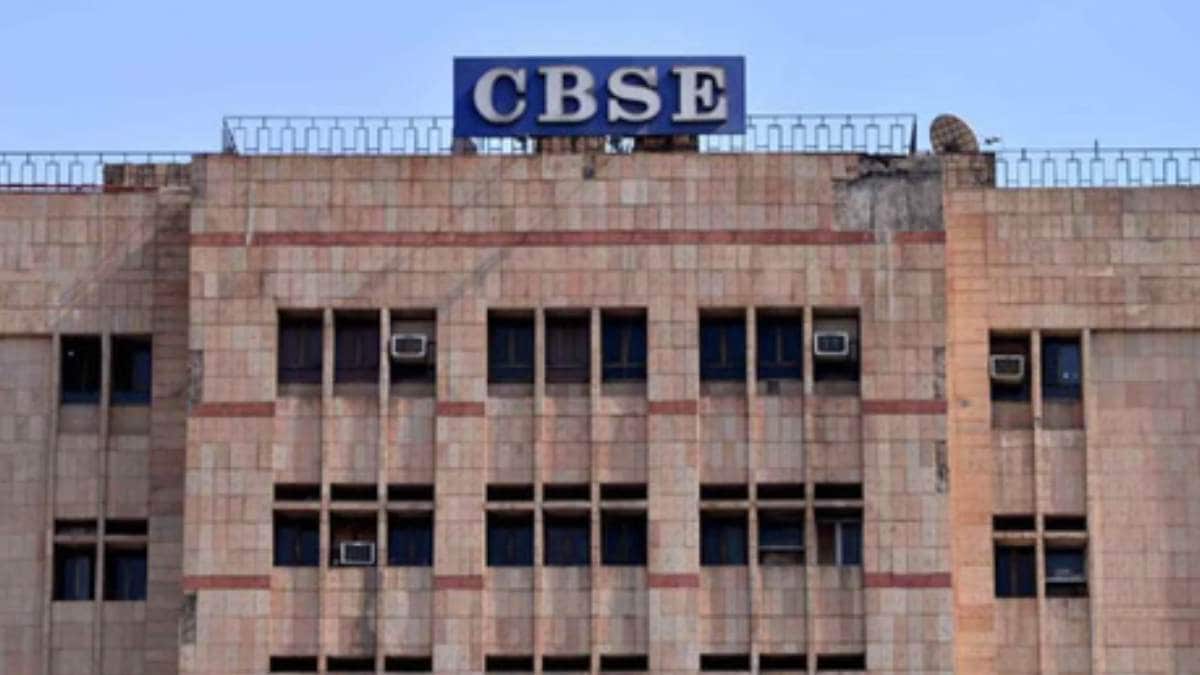
A widening controversy has engulfed India’s Central Board of Secondary Education (CBSE) after students complained of mismatched and blurred Class XII answer sheets processed under a new on-screen marking (OSM) system supplied by Hyderabad-based Coempt Edu Teck Pvt Ltd. A Class XII student, Sarthak Sidhant, published a detailed analysis on May 29 alleging that CBSE issued three rounds of tenders (Feb, May and Aug 2025) and progressively relaxed eligibility, technical and security requirements — including lowering CMMI certification from Level 5 to Level 3, reducing minimum scanning resolution, allowing third‑party cloud infrastructure instead of bidder-owned data centres, and narrowing blacklist clauses — which he says enabled Coempt (formerly Globarena Technologies) to qualify and win the August 2025 contract. Coempt’s earlier incarnation was linked to a 2019 Telangana exam crisis. Opposition politicians, notably Rahul Gandhi, have demanded an independent judicial probe. CBSE has denied manipulation, calling the allegations misleading. The row has also prompted scrutiny of Coempt’s ownership, past record and the board’s procurement process, while independent security researchers have flagged vulnerabilities in the OSM platform.

China factory activity stalls in May

🏷️ Finance & Economics🌍 China🔥 Trending🔗 5 sources24Digest ScoreiThis score reflects the story's reliability, bias neutrality, and public momentum.
China factory activity stalls in May

đź“° Full Story

China’s manufacturing PMI flattened at 50.0 in May, down from 50.3 in April, according to the National Bureau of Statistics, signaling that factory activity has lost momentum. The new orders sub-index dipped to 49.9 from 50.6 while production eased to 51.2 from 51.5; raw material stockpiles fell to 48.6 from 49.3. Input costs remain elevated — the purchase-price gauge stayed in expansionary territory — even as high-tech and equipment manufacturing outperformed the broader sector (PMIs above 52). The non-manufacturing PMI returned to expansion at 50.1 from 49.4, helped by services and holiday travel. Analysts cited weak domestic demand, a prolonged property slump, employment pressures and rising energy costs linked to the Iran war and Strait of Hormuz disruptions as headwinds. Exports have been a bright spot, driven by autos, technology and AI-related goods, and recent U.S.-China talks have opened channels for trade and investment cooperation. Policymakers have signalled targeted support, including monetary easing and measures to boost consumption, while Beijing kept a modest annual growth target for 2026.
Explore more on NewsDigest