NewsDigestFollow

Australia to take only used US submarines

🏷️ Defense🌍 Australia🔥 Trending🔗 10 sources33Digest ScoreiThis score reflects the story's reliability, bias neutrality, and public momentum.
Australia to take only used US submarines

📰 Full Story

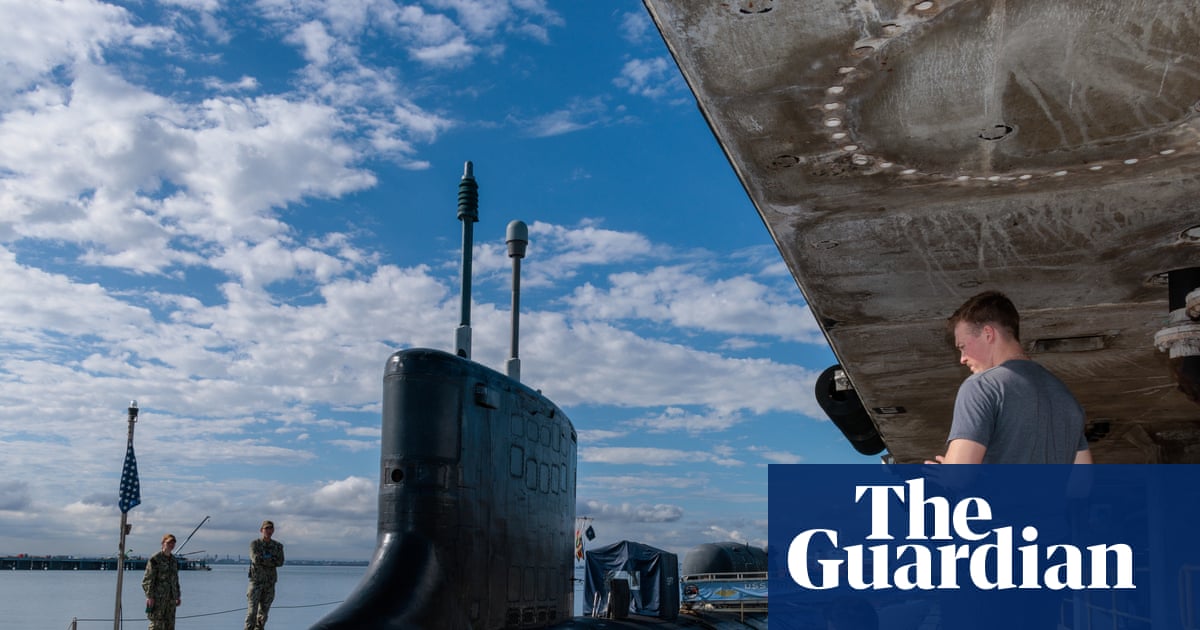
Australia, the United States and the United Kingdom announced a revised AUKUS arrangement at the IISS Shangri‑La Dialogue on May 31, 2026, under which Canberra will acquire three in‑service Virginia‑class nuclear‑powered submarines from the US rather than a mix of two used boats and one newly built vessel. Deputy Prime Minister and Defence Minister Richard Marles said the move prioritises simplicity and is “cost‑effective”, reducing logistical and maintenance complexity by having three boats of the same configuration. Canberra expects the first Virginia‑class to arrive in the early 2030s (around 2032) with follow‑ons at intervals, and aims to bridge to Australian‑built SSN‑AUKUS boats later in the decade. Analysts and opposition figures warned second‑hand hulls will be less capable and have shorter remaining service lives than a new build, and stressed the transfer still depends on US approval and the ability of American shipyards to boost Virginia production rates. Officials said the change should simplify supply chains and training but leaves questions over capability, timelines and whether more than three boats remain an option.

🤝 Social Media Insights

Social Summary
1 / 5
Choosing three in-service Virginias simplifies training and logistics and may accelerate delivery, but historical experience with second‑hand subs and Virginia availability concerns suggest higher lifetime costs and potential pressure on US fleet readiness.

🕰️ The Story So Far: An Evolving Timeline

Sunday, May 31, 2026 07:30 UTC
Australia to take only used US submarines
Saturday, May 30, 2026 13:39 UTC
AUKUS to deploy undersea drones from 2027

UK adopts SpaceX Starshield for military use

🏷️ Defense🌍 United Kingdom🔗 3 sources17Digest ScoreiThis score reflects the story's reliability, bias neutrality, and public momentum.
UK adopts SpaceX Starshield for military use

📰 Full Story

Britain has begun using SpaceX’s militarised Starshield satellite network for operational military traffic, sources told Reuters on June 2, making the UK one of the first countries beyond the United States to adopt the government-focused variant of Starlink. The Ministry of Defence said it would not comment on Starshield but emphasised that personnel still use Starlink for non-operational purposes and that it “is not used for military operations.” Sources said the MOD started transitioning operational traffic to Starshield around the start of 2026, using third-party distributors rather than contracting directly with SpaceX. It is unclear how widespread the deployment is or how much the UK pays; one industry source said Starshield costs only slightly more than Starlink. The move follows growing military use of Starlink since 2022, including in Ukraine, and comes after reports SpaceX raised Pentagon prices for Starlink services used to guide drones. SpaceX did not comment; the company is set to pursue a high-profile public listing in mid-June 2026. Other NATO members have also been reported to use Starlink to varying degrees for communications and non-weapons purposes.

US Weighs Expanding Nuclear Deployments in Europe

🏷️ Defense🔗 5 sources15Digest ScoreiThis score reflects the story's reliability, bias neutrality, and public momentum.
US Weighs Expanding Nuclear Deployments in Europe

📰 Full Story

U.S. officials have discussed whether to allow additional NATO allies to host U.S. nuclear-capable forces, the Financial Times reported on June 2-3, 2026. Citing people briefed on the talks, the report said Washington signalled openness to expanding NATO’s nuclear-sharing arrangements beyond the current group of European hosts, with Poland and some Baltic states among those expressing interest. Conversations are taking place within NATO channels but any agreement is not imminent, and U.S., Pentagon and NATO spokespeople did not immediately comment. The talks come amid Russia’s war in Ukraine, concerns on NATO’s eastern flank, planned U.S. reductions in conventional forces in Europe, and public U.S. pressure on allies to boost defence spending. Experts note that forward-deploying U.S. dual-capable aircraft and weapons would require years of planning, construction of specialised vaulting and security measures, and political approvals in host countries. The Financial Times is the primary source for the report; subsequent coverage has elaborated on operational and diplomatic implications.

🤝 Social Media Insights

Social Summary
1 / 5
Discussion clarifies that NATO nuclear-sharing is a joint, consent-based arrangement and that any move to expand hosting would be a slow, political process aimed at bolstering eastern deterrence and preserving U.S. influence in Europe, while likely increasing tensions with Russia and affecting intra-alliance dynamics.

Mach Industries Raises $300 Million, Valued $1.8 Billion

🏷️ Defense🌍 United States🔥 Trending🔗 5 sources10Digest ScoreiThis score reflects the story's reliability, bias neutrality, and public momentum.
Mach Industries Raises $300 Million, Valued $1.8 Billion

📰 Full Story

Huntington Beach-based defense startup Mach Industries said it raised $300 million in a Series C round that values the company at $1.8 billion. The round was led by Infinite Capital and Ribbit Capital and attracted participation from existing backers including Sequoia Capital, Khosla Ventures and Bedrock Capital. Founded in 2023 by Ethan Thornton, the company builds advanced unmanned systems — including Viper, Glide, Stratos, Dart and Pike — and supplies U.S. military customers such as the Army, Air Force and SOCOM as well as allied governments. Mach said the funds will expand its Forge flexible manufacturing network, advance propulsion and energetics work (following its acquisition of Exquadrum, now Mach Energetics), accelerate product development and scale production and headcount. Company executives have signalled plans to ramp production and enlarge its workforce to support transition from rapid development to scaled manufacture of strike and surveillance systems.

France restricts Israel at Eurosatory arms fair

🏷️ Defense🌍 France🔥 Trending🔗 10 sources5Digest ScoreiThis score reflects the story's reliability, bias neutrality, and public momentum.
France restricts Israel at Eurosatory arms fair

📰 Full Story

France has barred official Israeli participation and prohibited the display of offensive Israeli weapons at the Eurosatory defence exhibition in Villepinte near Paris, organisers and Israeli officials said in early June 2026. Under a decision by the French government and its Defence Council, Israeli government delegations will not be allowed to attend and Israel may not open a national pavilion. Private Israeli firms that have booked stands — around 30 companies — will be limited to showcasing air- and missile-defence systems; rockets, surface-to-surface missiles and other offensive systems are banned. The move follows France’s protests over Israeli military actions in Lebanon, including the seizure of the Beaufort fortress, and comes amid a wider deterioration in bilateral ties since 2023. Israel’s defence ministry condemned the decision as “disgraceful” and politically and commercially motivated; it has already cut some procurement ties with France. Eurosatory, scheduled for June 15-19, attracts thousands of exhibitors and hundreds of official delegations, making the restrictions significant for defence trade and export diplomacy.

Hegseth Blocks Navy Promotions of Women, Minorities

🏷️ Defense🌍 United States🔗 3 sources4Digest ScoreiThis score reflects the story's reliability, bias neutrality, and public momentum.
Hegseth Blocks Navy Promotions of Women, Minorities

📰 Full Story

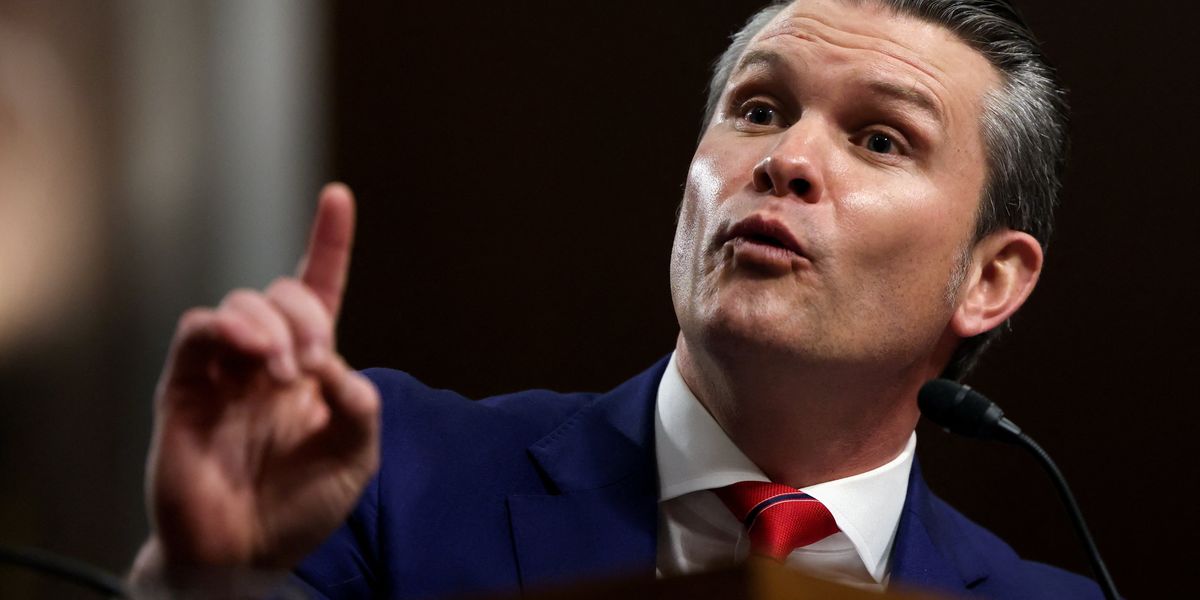
Defense Secretary Pete Hegseth personally intervened in the Navy’s recent promotion cycle, removing at least seven officers — including two women, two Black men and three white men — from a board-selected slate of one-star admiral nominees, according to reporting published June 1, 2026. The intervention left a 22-name promotion list with no women and only two nonwhite officers, despite roughly 21% of active-duty Navy officers being female and about 38% identifying as racial minorities. Current and former defense officials told The New York Times some removals followed scrutiny from a website identifying so-called “woke” service members; internal records also show Hegseth urged the inclusion of his special assistant, a Navy SEAL, who was ineligible. Critics say the moves breach Pentagon rules barring ideological grounds for blocking promotions and point to a pattern of sidelining senior officers — many of them women or Black — since Hegseth took office. The Pentagon has denied race- or gender-based motives, with a senior spokesman criticizing the reporting and saying promotions are merit-based. Congressional Democrats and senior military figures have expressed alarm and called for scrutiny.
Explore more on NewsDigest