
📰 Full Story
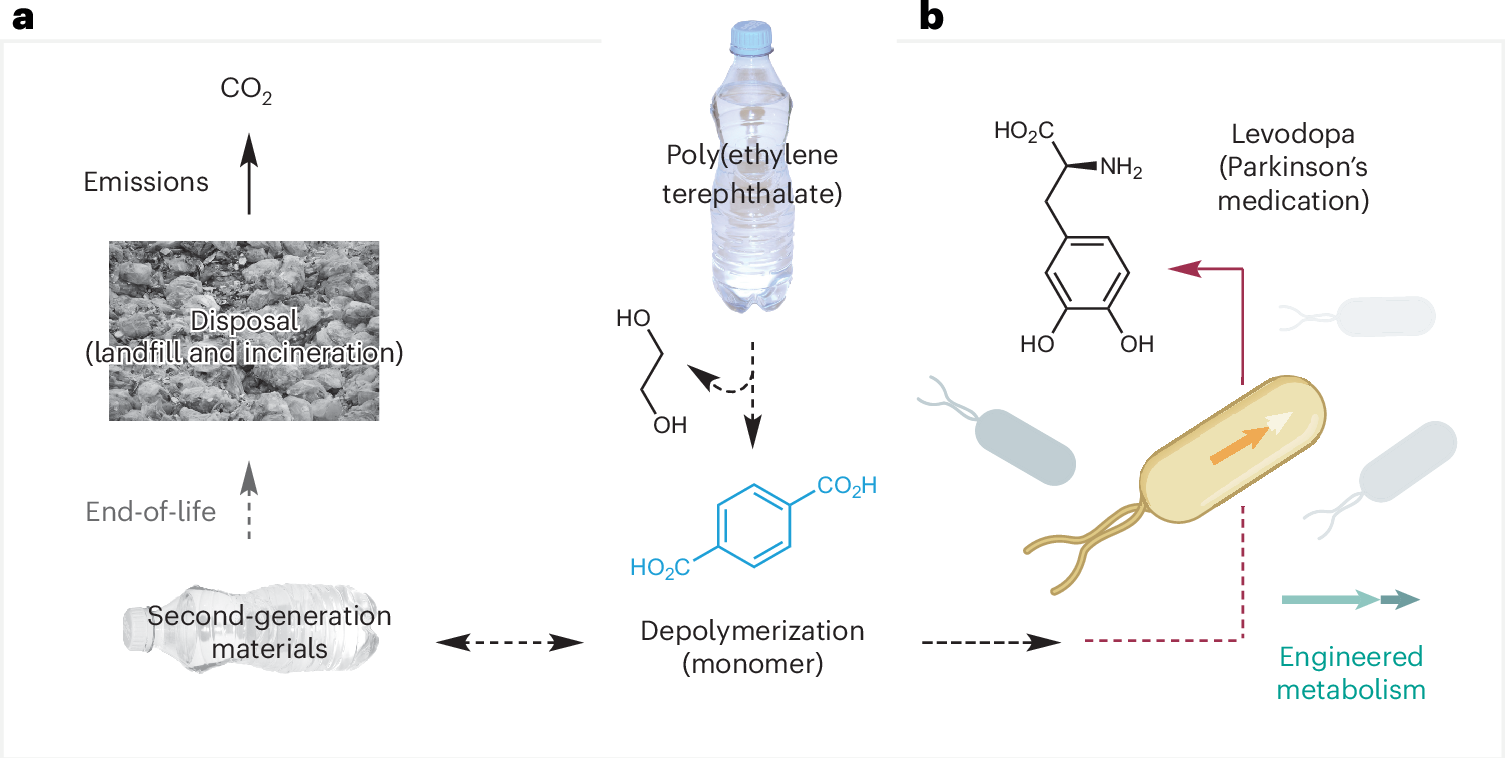
Researchers at the University of Edinburgh have demonstrated a proof-of-concept bioprocess that converts post-consumer PET plastic into levodopa (L‑DOPA), a frontline treatment for Parkinson’s disease.
Published in Nature Sustainability on March 16, 2026, the team engineered Escherichia coli with a four-step pathway split across two cooperating strains to overcome substrate transport limits and feedback inhibition.
The process uses terephthalic acid (TPA) derived from enzymatic PET depolymerisation and achieved isolated L‑DOPA titres of 5.0 g L−1 and conversion efficiencies reported up to 84% in optimized workflows using industrial waste feedstocks and a single post‑consumer bottle.
The work also demonstrated integration with the microalga Chlamydomonas reinhardtii to capture CO2 from the process, as part of a Carbon‑Loop Sustainable Biomanufacturing Hub programme.
The study was supported by UK Research and Innovation and the Industrial Biotechnology Innovation Centre and has drawn media coverage and institutional commentary noting potential for a new “bio‑upcycling” industry.
Authors caution the method remains to be scaled, economically validated and assessed for regulatory and manufacturing compliance before industrial deployment.
🔗 Based On
Biotechnology articles from across Nature PortfolioEngineered microbial hydrogels with confined architecture and binary microbes for efficient hydrogen production
SUR in English - Spanish news in EnglishScientists make Parkinson's drug from used plastic bottles
Venture Capital Financings and Technology StartupsRubi Raises $7.5M Financing Round
🕰️ The Story So Far: An Evolving Timeline
Monday, March 23, 2026 05:30 UTC
Scientists convert plastic bottles into Parkinson’s drug
Tuesday, March 17, 2026 10:59 UTC
Scientists convert plastic bottles into Parkinson’s drug





💬 Commentary