
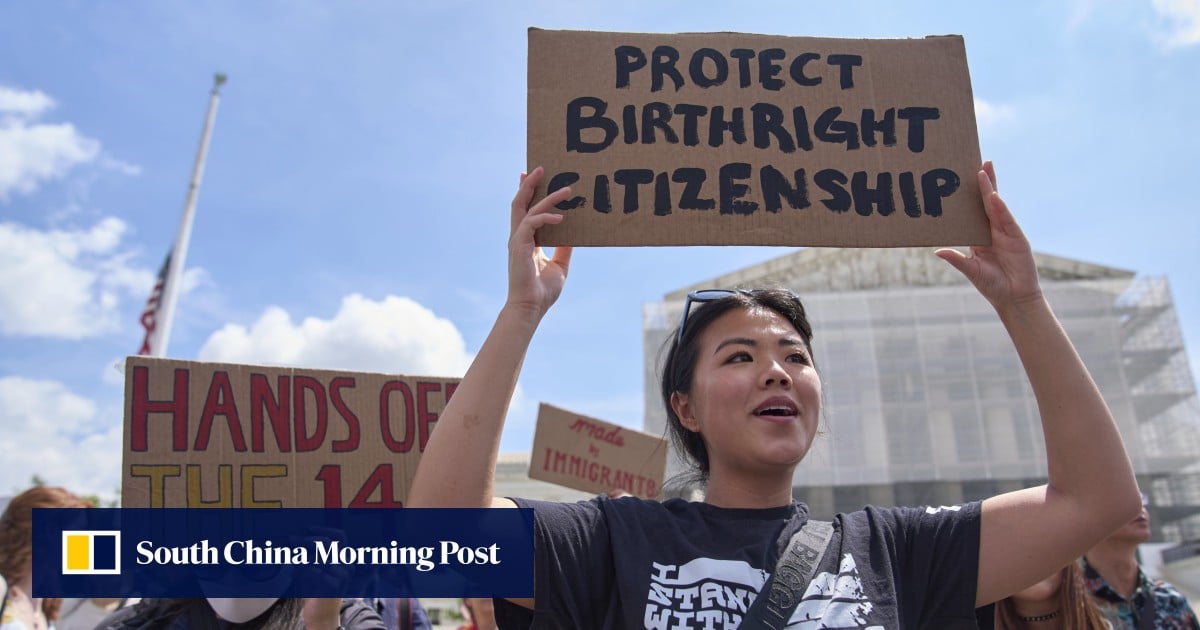
📰 Full Story
The U.S. Supreme Court this week heard arguments in a high-profile challenge to President Donald Trump’s executive order, signed Jan. 20, 2025, that seeks to end automatic birthright citizenship for children born in the United States to parents who are unlawfully present or temporarily here.
The consolidated case, argued on April 1, 2026, tests the Citizenship Clause of the 14th Amendment and longstanding precedent from United States v.
Wong Kim Ark (1898). The administration asks the court to limit the clause to persons “subject to the jurisdiction” in ways that would exclude many children of immigrants; lower courts have blocked the order from taking effect.
Critics, including civil-rights groups and legal scholars, say the government’s briefs recycle 19th-century arguments tied to anti-Black and anti-Chinese racism — citing figures such as Alexander Porter Morse and Francis Wharton — and warn that narrowing birthright citizenship could leave hundreds of thousands of U.S.-born children with insecure status and disrupt education, benefits, identity documents and elections.
The White House defends the move as restoring the amendment’s original meaning.
A decision is expected months from now.



💬 Commentary