NewsDigest

DESI completes largest 3D map of universe

🏷️ Science & Space🌍 United States🔥 Trending🔗 6 sources35Digest ScoreiThis score reflects the story's reliability, bias neutrality, and public momentum.
DESI completes largest 3D map of universe

📰 Full Story

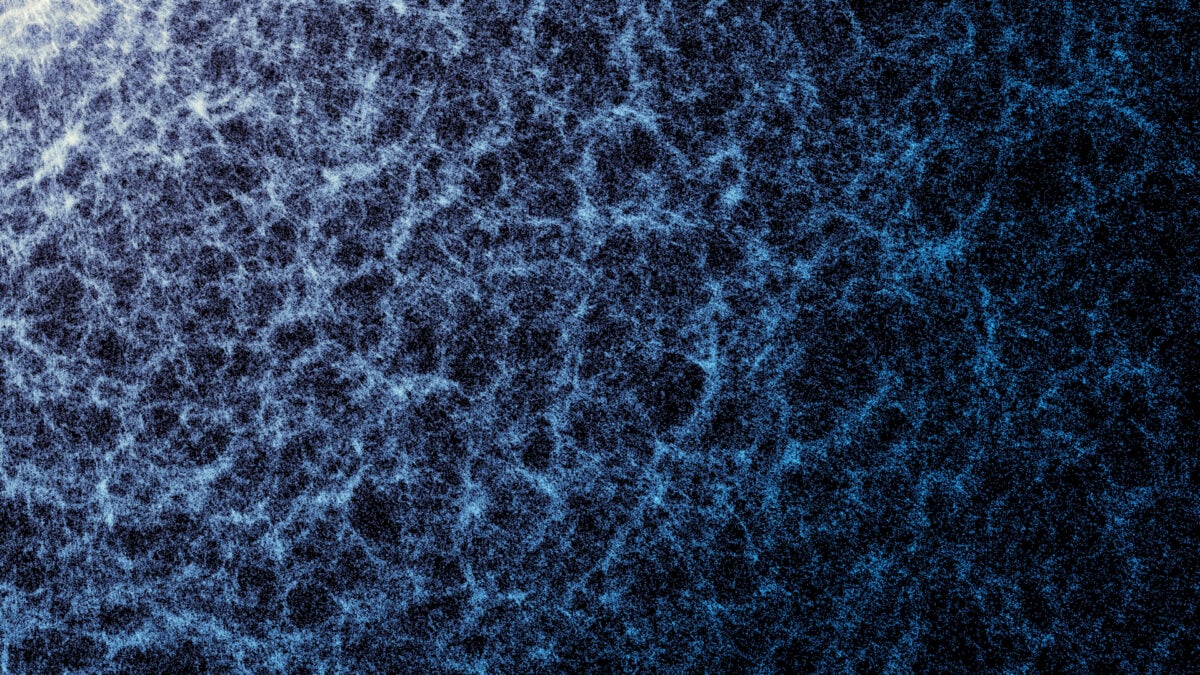
The Dark Energy Spectroscopic Instrument (DESI) has finished a five-year survey that produced the most detailed three-dimensional map of the observable universe to date, officials said in mid‑April 2026. Mounted on the Nicholas U. Mayall 4‑metre Telescope at Kitt Peak, Arizona, DESI recorded spectra for more than 47 million galaxies and quasars plus about 20 million Milky Way stars — far exceeding its original 34 million target. The dataset spans roughly 14,000 square degrees (with plans to extend coverage) and encodes positions, velocities and spectral information gathered via 5,000 robotically positioned fiber optics. The U.S. Department of Energy‑led collaboration involves about 900 scientists at 70 institutions worldwide. Teams will spend the next year processing the full dataset before broad release; first papers from the five‑year program are expected through 2027. Earlier, partial DESI results suggested a possible weakening of dark energy, a finding the full survey will now test. DESI operations are planned to continue through 2028 with potential upgrades to extend its lifespan.

Astronomers measure Cygnus X-1 jet power

🏷️ Science & Space🔗 4 sources25Digest ScoreiThis score reflects the story's reliability, bias neutrality, and public momentum.
Astronomers measure Cygnus X-1 jet power

📰 Full Story

Using 18 years of very long baseline interferometry (VLBI) radio observations, an international team has for the first time derived a real-time measurement of the kinetic power and speed of jets from the stellar-mass black hole Cygnus X-1. The system — a ~21-solar-mass black hole orbiting a ~40-solar-mass O-type star, HDE 226868 — shows jets bent repeatedly by the companion’s fierce stellar wind. By modelling the wind’s ram pressure and matching the observed jet deflection, researchers infer an instantaneous kinetic power of roughly 2×10^37 ergs per second (often translated as the equivalent output of ~10,000 Suns) and a jet speed near half the speed of light. The study finds the jets carry about 10% of the accretion energy. Results are reported in Nature Astronomy and rely on data from the European VLBI Network and collaborators including the International Centre for Radio Astronomy Research.

Coronal hole sparks geomagnetic storm, auroras possible

🏷️ Science & Space🌍 United States🔗 3 sources19Digest ScoreiThis score reflects the story's reliability, bias neutrality, and public momentum.
Coronal hole sparks geomagnetic storm, auroras possible

📰 Full Story

A fast stream of solar wind driven by a large coronal hole is expected to reach Earth on April 17–18, 2026, prompting NOAA’s Space Weather Prediction Center to issue a G2 (moderate) geomagnetic storm watch and the U.K. Met Office to warn of possible G3 (strong) bursts. Measured solar wind speeds are forecast at up to about 430 miles per second (700 km/s). If conditions intensify, auroras could be pushed into mid-latitudes and be visible across much of the northern United States — potentially as far south as Illinois and Oregon — during peak windows the evening of April 17 into the early hours of April 18. Forecast models note uncertainty because the southward component of the interplanetary magnetic field (Bz) will control how far south the aurora oval shifts. Operators have also been warned that G2 conditions can cause increased drag on low-Earth orbit satellites and voltage irregularities in high-latitude power systems; aviation and communications services may see intermittent impacts.

Study suggests lake spillover carved Grand Canyon

🏷️ Science & Space🌍 United States🔗 3 sources19Digest ScoreiThis score reflects the story's reliability, bias neutrality, and public momentum.
Study suggests lake spillover carved Grand Canyon

📰 Full Story

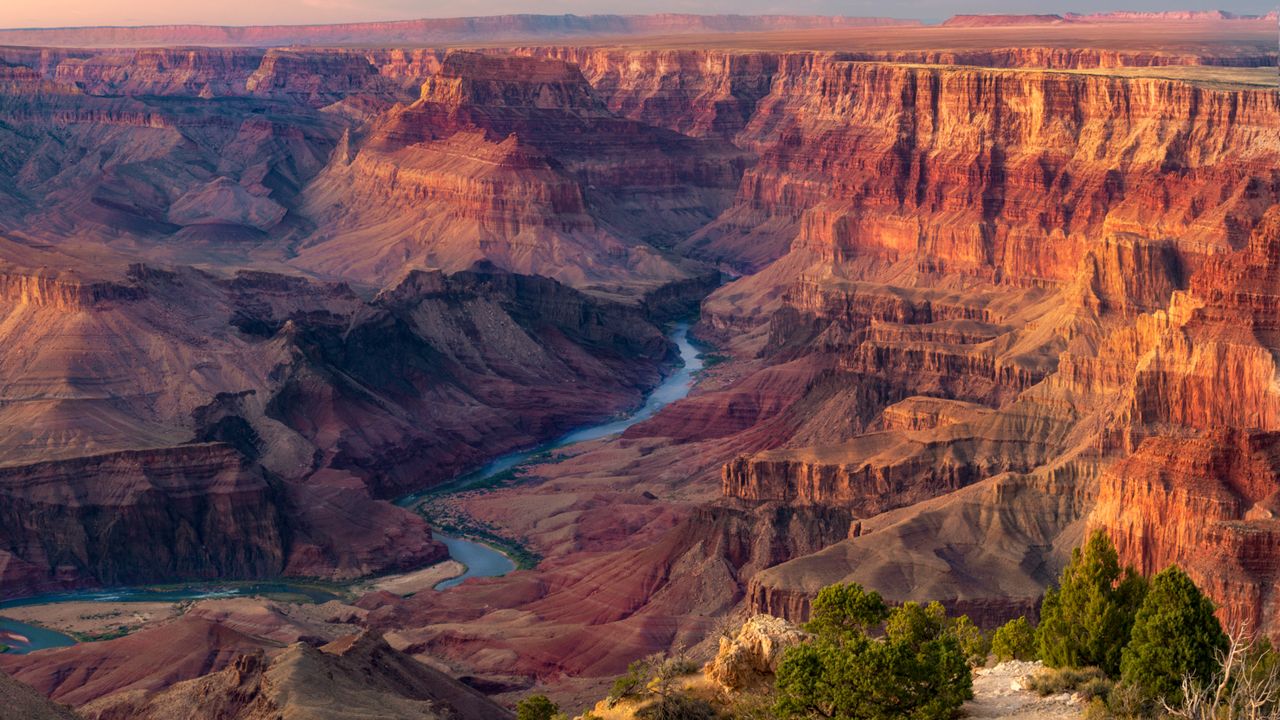
A multi-institution research team publishing in Science in April 2026 presents evidence that the ancestral Colorado River pooled in the Bidahochi Basin of northeastern Arizona before spilling westward and carving the Grand Canyon. Using detrital zircon geochronology and ash-bed dating, researchers matched tiny zircon grains in Bidahochi sediments to upstream Colorado River sources, showing river-borne material present about 6.6 million years ago. The authors infer a wide, shallow Bidahochi (Hopi) lake that filled and began spilling across the Colorado Plateau around 5.6 million years ago, routing incision through the Kaibab Arch and downstream basin spillovers that ultimately delivered the river to the Gulf of California by about 4.8 million years ago. Paleontological hints — fossils of fish with features seen in modern fast‑water species — and increased downstream sedimentation support a transition to a riverine system. The interpretation remains contested: other geologists argue alternative pathways and earlier notching of the Kaibab Arch by tributaries, so the lake‑spillover model is not universally accepted.

Geomagnetic Storm May Bring Auroras to Mid‑Latitudes

🏷️ Science & Space🌍 United States🔗 3 sources15Digest ScoreiThis score reflects the story's reliability, bias neutrality, and public momentum.
Geomagnetic Storm May Bring Auroras to Mid‑Latitudes

📰 Full Story

A surge of fast solar wind is expected to spark geomagnetic activity on April 17–18, 2026, potentially pushing northern lights far south into mid-latitude U.S. states. NOAA’s Space Weather Prediction Center has issued a moderate (G2) geomagnetic storm watch for the period, while the U.K. Met Office warns of possible strong (G3) bursts if activity intensifies. Forecasters say a co-rotating interaction region — where faster solar wind overtakes slower streams — is fueling the event, with speeds reported up to about 700 km/s. If the storm reaches G3 strength, aurora visibility could extend as far south as Illinois and Oregon; at G2 levels, states across the northern U.S. and roughly 20 states overall may see low northern-horizon glows. Peak viewing windows are late evening into the early hours (roughly 10 p.m. to 2 a.m. local time), and a new moon will improve dark-sky conditions. Observers are advised to seek north-facing, dark sites and use NOAA’s short-term aurora forecasts or space-weather apps. The Lyrid meteor shower is also active through April 25, offering additional skywatching opportunities.

Artemis II commander defends troubled space toilet

🏷️ Science & Space🌍 United States🔗 3 sources13Digest ScoreiThis score reflects the story's reliability, bias neutrality, and public momentum.
Artemis II commander defends troubled space toilet

📰 Full Story

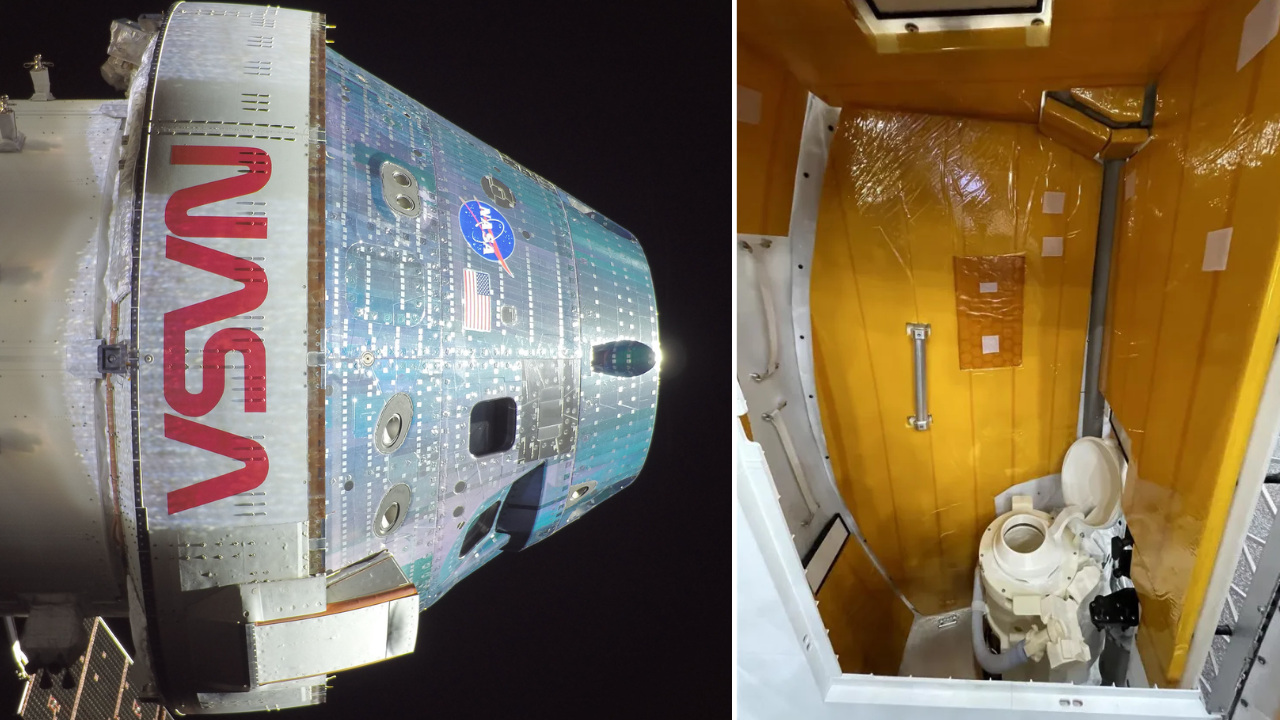
NASA’s Artemis II crew addressed a high-profile toilet malfunction during a news conference held April 16 at Johnson Space Center after the 10-day mission that launched April 1, looped around the Moon on April 6 and splashed down April 10. Commander Reid Wiseman said the Universal Waste Management System’s toilet “flushed just fine” but a primary vent line carrying urine to the capsule hull became clogged, forcing the crew of four — Wiseman, Victor Glover, Christina Koch and Canadian Jeremy Hansen — to use urine collection bags when the tank approached its limited capacity (Wiseman estimated under 10 urination events). Engineers initially suspected ice blockage; attention has shifted to a possible chemical reaction involving wastewater additives. The venting that did occur produced visible flecks of ice expelled into space. Crewmembers also reported brief smoke-alarm events that were cleared in-flight. Separately, Wiseman highlighted post-flight inspections of Orion’s heat shield, reporting only minor char loss and praising the vehicle’s performance on re-entry. NASA teams are conducting detailed examinations of the capsule and waste system to determine root causes.
Explore more on NewsDigest