NewsDigest

New Precise Measurement Deepens Hubble Tension

🏷️ Science & Space🔗 4 sources32Digest ScoreiThis score reflects the story's reliability, bias neutrality, and public momentum.
New Precise Measurement Deepens Hubble Tension

📰 Full Story

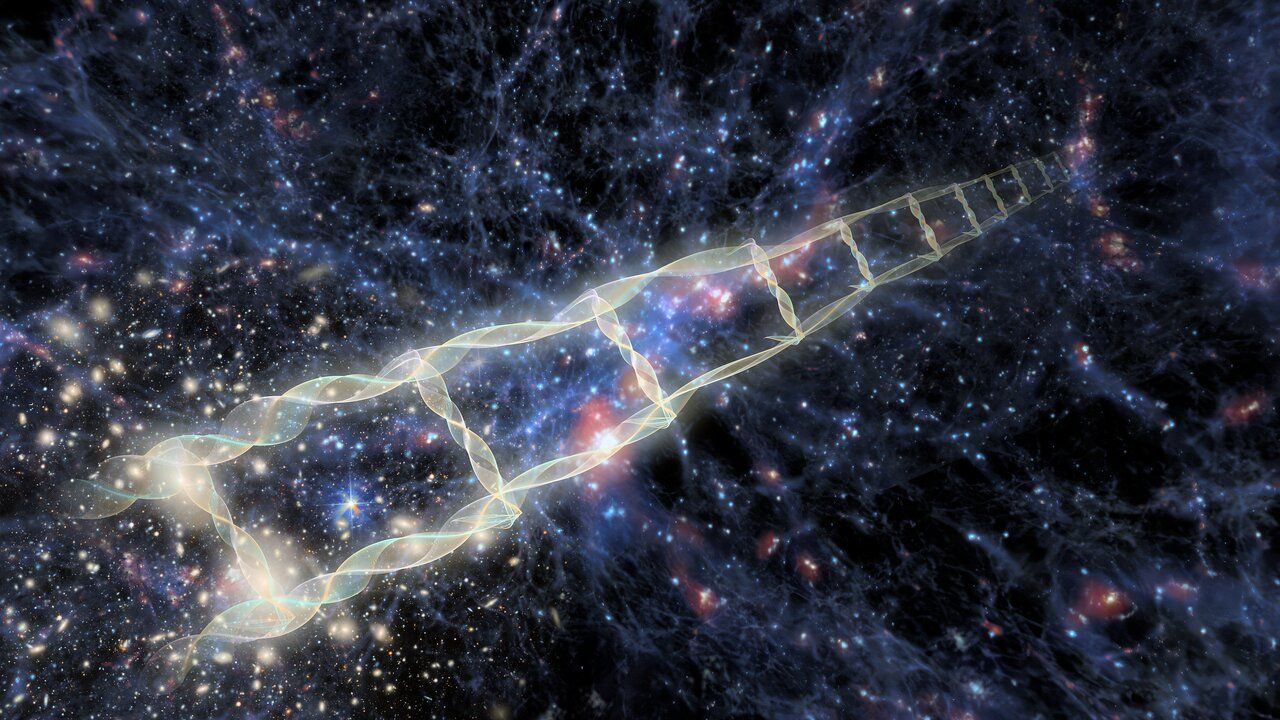
An international collaboration has produced the most precise local measurement yet of the universe’s expansion rate, strengthening a longstanding mismatch with early-universe estimates. Published April 10 in Astronomy & Astrophysics, the H0DN Collaboration’s Local Distance Network combined more than a dozen independent distance indicators — including parallax anchors, Cepheid and TRGB stars, Miras, megamasers, Type Ia and II supernovae, surface-brightness fluctuations, the Tully–Fisher relation and the Fundamental Plane — to derive a local Hubble constant of about 73.5 km/s/Mpc with roughly one-percent precision. Rigorous ‘leave-one-out’ and covariance tests showed the result is robust to removal of individual methods or datasets. That local value now sits at least seven standard deviations above the ~67.4 km/s/Mpc rate inferred from the cosmic microwave background under the standard Lambda-CDM model, reinforcing the so-called Hubble tension. The collaboration has released its code and datasets to enable independent checks.

Astronomers measure Cygnus X-1 jet power

🏷️ Science & Space🔗 4 sources24Digest ScoreiThis score reflects the story's reliability, bias neutrality, and public momentum.
Astronomers measure Cygnus X-1 jet power

📰 Full Story

Using 18 years of very long baseline interferometry (VLBI) radio observations, an international team has for the first time derived a real-time measurement of the kinetic power and speed of jets from the stellar-mass black hole Cygnus X-1. The system — a ~21-solar-mass black hole orbiting a ~40-solar-mass O-type star, HDE 226868 — shows jets bent repeatedly by the companion’s fierce stellar wind. By modelling the wind’s ram pressure and matching the observed jet deflection, researchers infer an instantaneous kinetic power of roughly 2×10^37 ergs per second (often translated as the equivalent output of ~10,000 Suns) and a jet speed near half the speed of light. The study finds the jets carry about 10% of the accretion energy. Results are reported in Nature Astronomy and rely on data from the European VLBI Network and collaborators including the International Centre for Radio Astronomy Research.

Coronal hole sparks geomagnetic storm, auroras possible

🏷️ Science & Space🌍 United States🔗 3 sources18Digest ScoreiThis score reflects the story's reliability, bias neutrality, and public momentum.
Coronal hole sparks geomagnetic storm, auroras possible

📰 Full Story

A fast stream of solar wind driven by a large coronal hole is expected to reach Earth on April 17–18, 2026, prompting NOAA’s Space Weather Prediction Center to issue a G2 (moderate) geomagnetic storm watch and the U.K. Met Office to warn of possible G3 (strong) bursts. Measured solar wind speeds are forecast at up to about 430 miles per second (700 km/s). If conditions intensify, auroras could be pushed into mid-latitudes and be visible across much of the northern United States — potentially as far south as Illinois and Oregon — during peak windows the evening of April 17 into the early hours of April 18. Forecast models note uncertainty because the southward component of the interplanetary magnetic field (Bz) will control how far south the aurora oval shifts. Operators have also been warned that G2 conditions can cause increased drag on low-Earth orbit satellites and voltage irregularities in high-latitude power systems; aviation and communications services may see intermittent impacts.

Study suggests lake spillover carved Grand Canyon

🏷️ Science & Space🌍 United States🔗 3 sources18Digest ScoreiThis score reflects the story's reliability, bias neutrality, and public momentum.
Study suggests lake spillover carved Grand Canyon

📰 Full Story

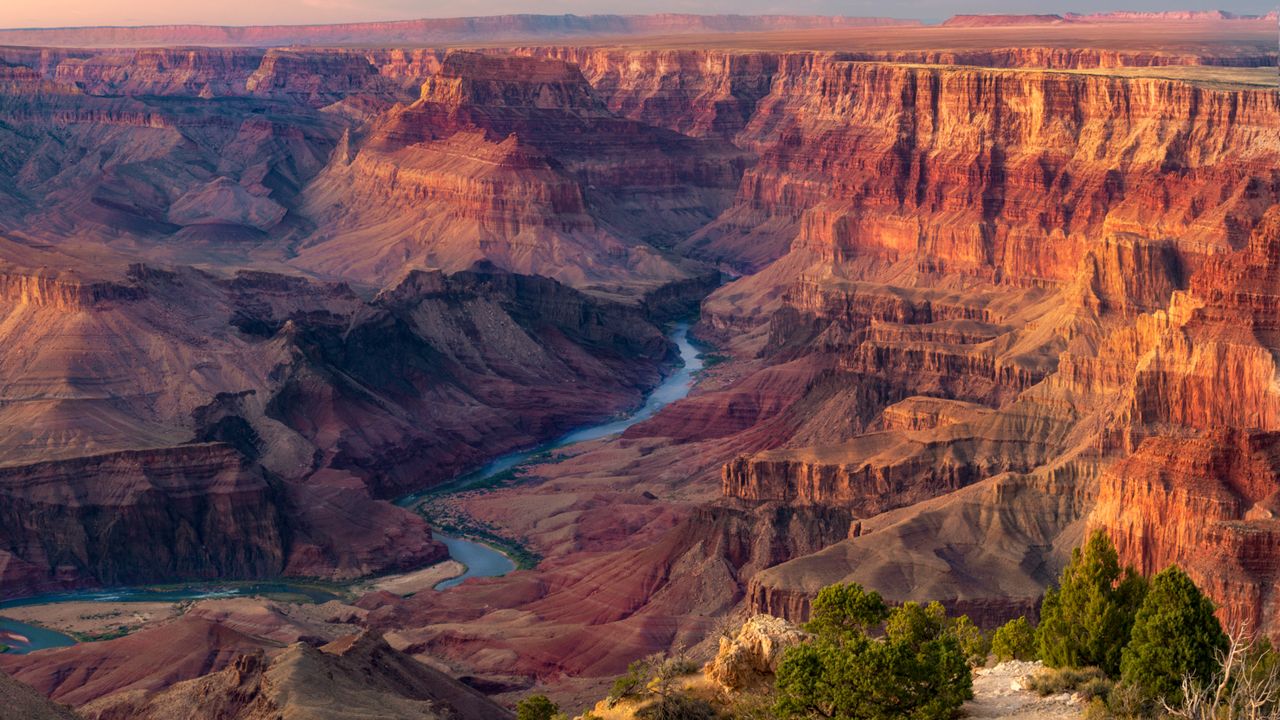
A multi-institution research team publishing in Science in April 2026 presents evidence that the ancestral Colorado River pooled in the Bidahochi Basin of northeastern Arizona before spilling westward and carving the Grand Canyon. Using detrital zircon geochronology and ash-bed dating, researchers matched tiny zircon grains in Bidahochi sediments to upstream Colorado River sources, showing river-borne material present about 6.6 million years ago. The authors infer a wide, shallow Bidahochi (Hopi) lake that filled and began spilling across the Colorado Plateau around 5.6 million years ago, routing incision through the Kaibab Arch and downstream basin spillovers that ultimately delivered the river to the Gulf of California by about 4.8 million years ago. Paleontological hints — fossils of fish with features seen in modern fast‑water species — and increased downstream sedimentation support a transition to a riverine system. The interpretation remains contested: other geologists argue alternative pathways and earlier notching of the Kaibab Arch by tributaries, so the lake‑spillover model is not universally accepted.

Geomagnetic Storm May Bring Auroras to Mid‑Latitudes

🏷️ Science & Space🌍 United States🔗 3 sources15Digest ScoreiThis score reflects the story's reliability, bias neutrality, and public momentum.
Geomagnetic Storm May Bring Auroras to Mid‑Latitudes

📰 Full Story

A surge of fast solar wind is expected to spark geomagnetic activity on April 17–18, 2026, potentially pushing northern lights far south into mid-latitude U.S. states. NOAA’s Space Weather Prediction Center has issued a moderate (G2) geomagnetic storm watch for the period, while the U.K. Met Office warns of possible strong (G3) bursts if activity intensifies. Forecasters say a co-rotating interaction region — where faster solar wind overtakes slower streams — is fueling the event, with speeds reported up to about 700 km/s. If the storm reaches G3 strength, aurora visibility could extend as far south as Illinois and Oregon; at G2 levels, states across the northern U.S. and roughly 20 states overall may see low northern-horizon glows. Peak viewing windows are late evening into the early hours (roughly 10 p.m. to 2 a.m. local time), and a new moon will improve dark-sky conditions. Observers are advised to seek north-facing, dark sites and use NOAA’s short-term aurora forecasts or space-weather apps. The Lyrid meteor shower is also active through April 25, offering additional skywatching opportunities.

Artemis II returns: crew praises heat shield performance

🏷️ Science & Space🌍 United States🔥 Trending🔗 33 sources13Digest ScoreiThis score reflects the story's reliability, bias neutrality, and public momentum.
Artemis II returns: crew praises heat shield performance

📰 Full Story

NASA’s Artemis II crew safely returned to Earth after a nine‑day lunar flyby and Pacific Ocean splashdown on April 10, 2026, completing the first crewed flight of the Space Launch System (SLS) and Orion capsule. Commander Reid Wiseman, pilot Victor Glover, mission specialist Christina Koch and Canadian astronaut Jeremy Hansen inspected Orion “Integrity” and reported only minor char loss on the heat shield’s shoulder after reentry at about 39 times the speed of sound. The crew’s free‑return trajectory carried them a record 252,756 miles from Earth during a far‑side lunar pass on April 6 and included a deep‑space solar eclipse. Preliminary visual checks were positive, but NASA has said detailed forensic analysis of the heat shield is underway. Artemis II validated Orion life‑support, navigation and crew operations with four humans aboard and delivered science and medical data during post‑flight testing at the Johnson Space Center. NASA says lessons from Artemis II support plans for Artemis III (mid‑2027 docking practice) and a crewed lunar landing mission (Artemis IV targeted 2028), while future Orion heat‑shield designs are already planned.
Explore more on NewsDigest