
NewsDigest

Moon and Jupiter pair in April sky

🏷️ Science & Space🔗 3 sources36Digest ScoreiThis score reflects the story's reliability, bias neutrality, and public momentum.
Moon and Jupiter pair in April sky

đź“° Full Story

On the evening of April 22, 2026, observers across wide swathes of the globe can spot a close visual pairing of the Moon and Jupiter in the western sky shortly after sunset. The Moon, waxing and approaching first quarter, will sit roughly 3 degrees above and to the right of Jupiter; the pair will be visible about 45 minutes after local sunset and will appear about two-thirds of the way from the horizon toward the zenith. Jupiter remains one of the brightest nighttime objects (around magnitude –2.1), easily seen with the naked eye; binoculars or a small telescope will reveal at least three Galilean moons. Timing of satellite events will vary by time zone — for example, on the U.S. east coast Io disappears behind Jupiter at about 10:39 p.m. EDT and Europa emerges from eclipse at about 11:36 p.m. EDT. The alignment sits near the Gemini constellation, with Castor and Pollux nearby. Skywatchers are advised to find an open western view and, for photography, to steady a phone or use a tripod and modest exposure settings to capture both bodies without overexposing the Moon.
NASA Targets September Launch for Roman Telescope

🏷️ Science & Space🌍 United States🔥 Trending🔗 10 sources39Digest ScoreiThis score reflects the story's reliability, bias neutrality, and public momentum.
NASA Targets September Launch for Roman Telescope

đź“° Full Story

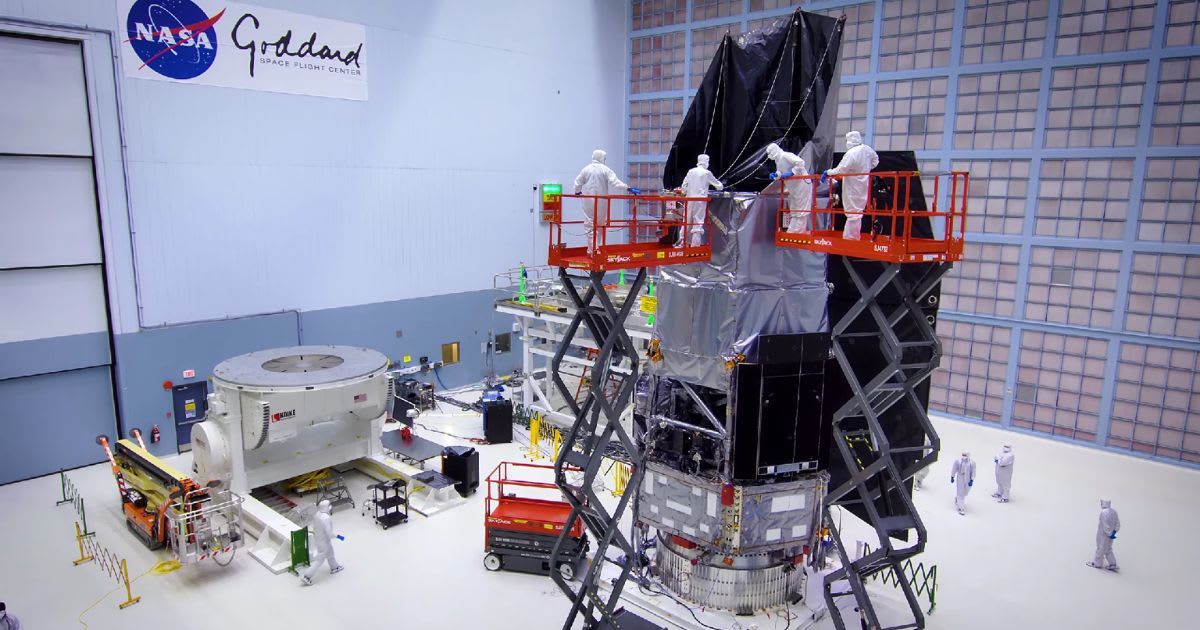
NASA unveiled the completed Nancy Grace Roman Space Telescope at Goddard Space Flight Center on April 21, 2026 and is targeting an early September 2026 launch, with a contractual latest launch date of May 2027. The observatory, built for wide-field infrared surveys, pairs a 300-megapixel Wide Field Instrument with a high-contrast coronagraph to hunt exoplanets and map the large-scale structure of the cosmos to probe dark matter and dark energy. NASA expects Roman to amass an enormous archive during its five-year primary mission — on the order of tens of thousands of terabytes — and to identify hundreds of millions of galaxies and tens of thousands of exoplanets. The telescope will lift off on a SpaceX Falcon Heavy from Launch Complex 39A at Kennedy Space Center and is managed by Goddard with participation from JPL, Caltech/IPAC and the Space Telescope Science Institute. The project, named for astronomer Nancy Grace Roman, was completed ahead of schedule and under budget after more than a decade and about $4 billion of investment.

Study finds 98% of meat and dairy pledges are greenwashing

🏷️ Science & Space🌍 United States🔗 3 sources37Digest ScoreiThis score reflects the story's reliability, bias neutrality, and public momentum.
Study finds 98% of meat and dairy pledges are greenwashing

đź“° Full Story

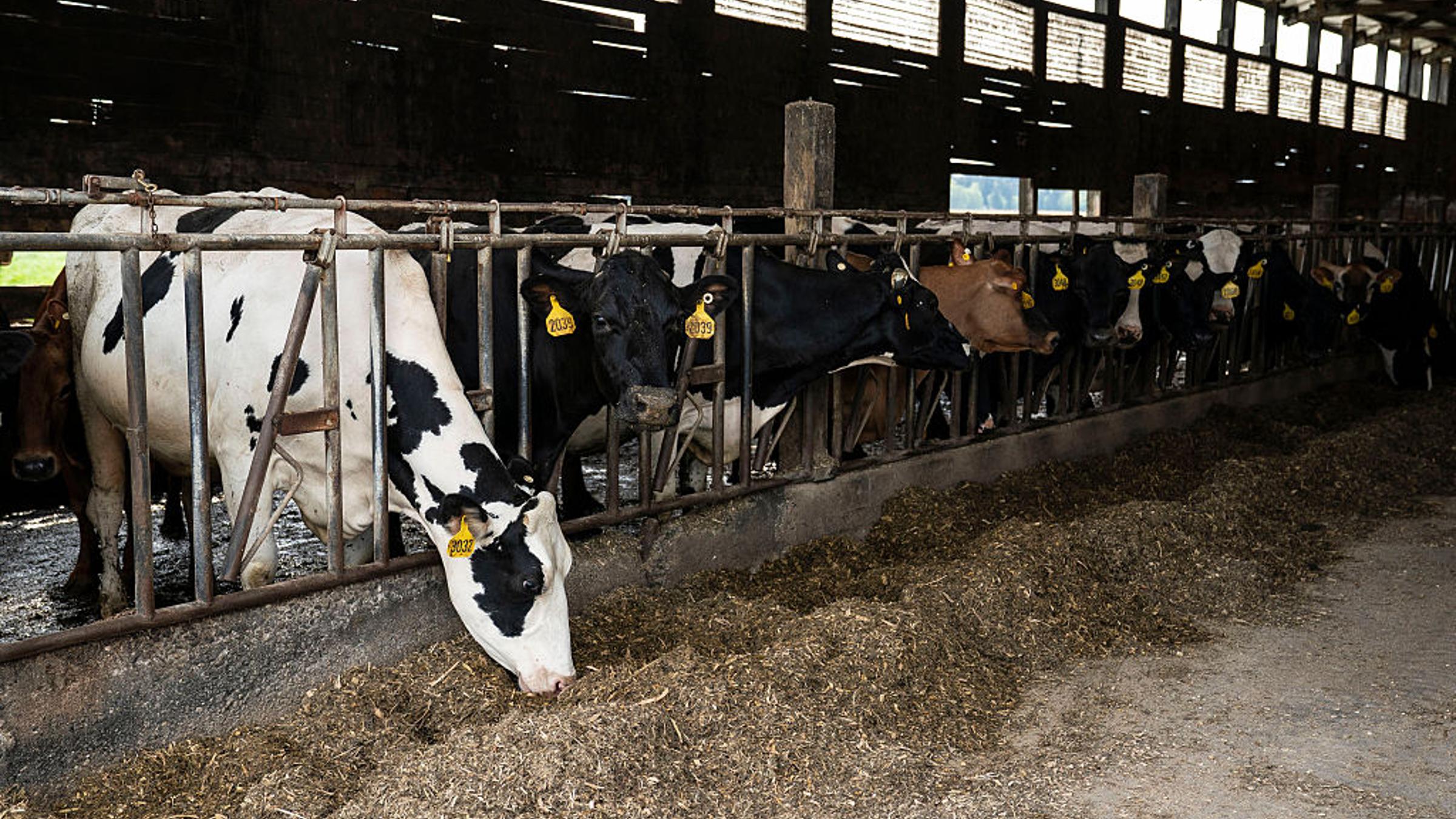
Researchers led by Maya Bach and Jennifer Jacquet published a PLOS Climate paper on April 22, 2026, analysing 1,233 environmental claims from 33 of the world’s largest meat and dairy companies across 2021–2024. Using a validated greenwashing framework, the team found 98% of claims were deceptive or misleading; 68% were climate‑related, only 356 (29%) had company‑provided supporting evidence, and scholarly literature backed just three claims. Seventeen companies now hold net‑zero pledges, but these largely rely on offsets rather than direct emissions reductions. The authors highlight token initiatives — a regenerative pilot covering 24 farms (0.0019% of operations) and trivial packaging tweaks — that contrast with the sector’s disproportionate emissions role: animal agriculture accounts for at least 16.5% of global greenhouse gases and a large share of food‑system emissions. The paper warns that vague, unverifiable promises risk misleading consumers and policymakers and may delay substantive action needed to meet climate targets.

Judge Blocks Trump Actions Curtailing Renewables

🏷️ Science & Space🌍 United States🔗 5 sources21Digest ScoreiThis score reflects the story's reliability, bias neutrality, and public momentum.
Judge Blocks Trump Actions Curtailing Renewables

đź“° Full Story

A federal judge on April 21 issued a preliminary injunction blocking a suite of Trump administration permitting policies that renewable energy groups say have stymied new wind and solar projects across the United States. Chief U.S. District Judge Denise J. Casper found the Interior Department and other agencies likely acted unlawfully by adopting measures — including a memorandum requiring elevated three‑appointee signoffs for nearly every step of wind and solar permitting, stricter interpretations of offshore authorities, a sector‑wide permit freeze and rules disadvantaging “capacity dense” projects — that prompted developers to cancel or delay projects. The injunction, sought by nine regional industry associations including RENEW Northeast, Alliance for Clean Energy New York, the Southern Renewable Energy Association and Interwest, applies to members of those groups while litigation proceeds. The Interior Department declined to comment on the case. The ruling follows several recent judicial setbacks to the administration’s attempts to curb offshore wind and comes as the White House has pushed fossil fuel production and used measures such as the Defense Production Act to support oil, coal and gas.

Lyrid Meteor Shower Peaks, Captured From Earth and Space

🏷️ Science & Space🔥 Trending🔗 14 sources20Digest ScoreiThis score reflects the story's reliability, bias neutrality, and public momentum.
Lyrid Meteor Shower Peaks, Captured From Earth and Space

đź“° Full Story

The annual Lyrid meteor shower peaked on the night of April 21–22, 2026, producing bright, fast meteors visible across much of the Northern Hemisphere. Earth passed through debris left by long‑period comet C/1861 G1 (Thatcher), whose 415‑year orbit replenishes the stream that creates the display each mid‑April. Observers reported typical rates of about 10–20 meteors per hour under dark skies, with occasional bright fireballs; historical surges have pushed counts far higher. A slim waxing crescent moon and widespread clear weather in many regions improved viewing conditions. Amateur and professional photographers documented colorful streaks and short dust trains from ground locations in North America, Europe and Asia, while NASA astronaut Jessica Meir aboard the International Space Station photographed meteors ablating above Earth’s limb, offering rare orbital perspectives. Networks such as the Global Meteor Network and spaceborne imagery helped corroborate fireball activity; the shower remains active through late April and is followed by the stronger Eta Aquariids in early May.
Explore more on NewsDigest