NewsDigestFollow

Google unveils split TPUs and enterprise agent platform

🏷️ Tech News🌍 United States🔗 27 sources72Digest ScoreiThis score reflects the story's reliability, bias neutrality, and public momentum.
Google unveils split TPUs and enterprise agent platform

đź“° Full Story

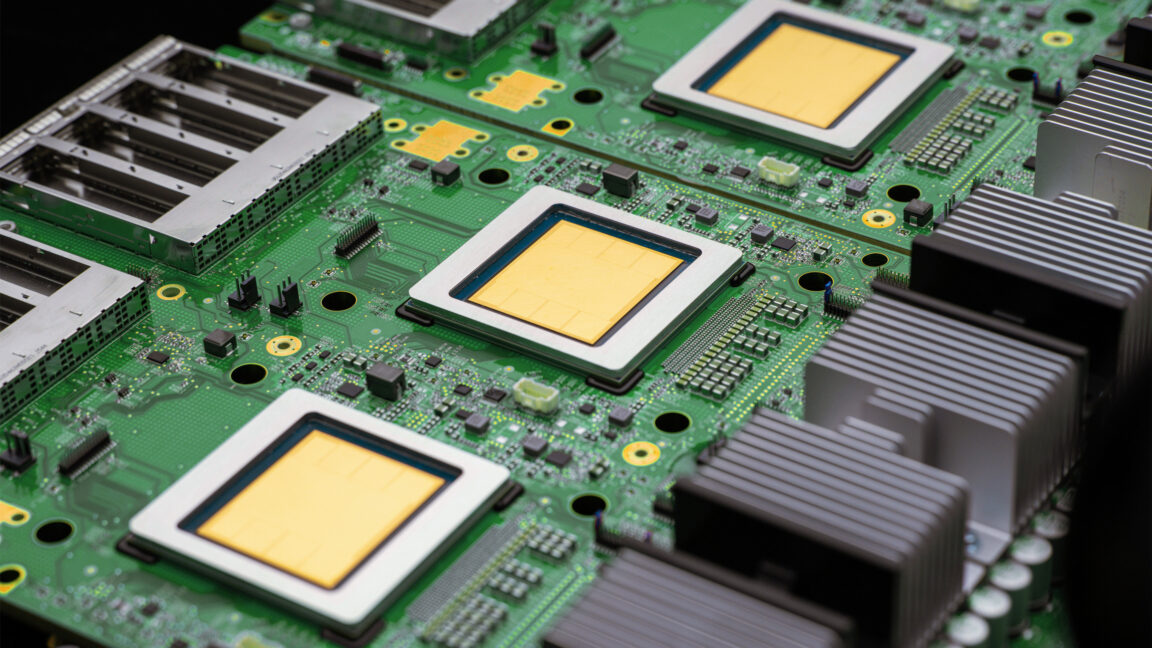
At Google Cloud Next in Las Vegas on April 22-23, 2026, Alphabet unveiled a major push across AI hardware and enterprise software: eighth-generation tensor processing units split into two purpose-built chips — TPU 8t for model training and TPU 8i for low-latency inference — and a unified Gemini Enterprise Agent Platform to build, run and govern AI agents. Google touted up to roughly 3x faster training and an 80% improvement in performance-per-dollar for inference versus prior generations, larger on-chip SRAM on the inference part (cited at 384MB), and superpod and cluster scaling capabilities (superpods of ~9,600 chips and architectures intended to interconnect far larger fleets). Design partners named include Broadcom and MediaTek, with reports of talks with Marvell to diversify suppliers; customers and partners cited include Anthropic, Meta and national labs. Google also announced tools such as Workspace Studio, Agent Designer, a 200+ model Model Garden (including Anthropic models), an A2A protocol for agent-to-agent communication, and a $750m fund to accelerate enterprise adoption. Google said it will continue to offer Nvidia hardware and is collaborating on networking improvements.

Xpeng plans flying cars, humanoid robots and robotaxis

🏷️ Tech News🌍 China🔗 4 sources41Digest ScoreiThis score reflects the story's reliability, bias neutrality, and public momentum.
Xpeng plans flying cars, humanoid robots and robotaxis

đź“° Full Story

Chinese EV maker Xpeng told Reuters on April 23, 2026 that it expects large-scale production of its detachable two-seat “flying” vehicle, the AeroHT, to begin in 2027, after securing more than 7,000 orders and pursuing certification from Chinese aviation authorities. The company also plans mass production of humanoid robots in the fourth quarter of 2026 and will begin robotaxi trials in Guangzhou this year, with 2027 marked as a "critical year" for international testing with partners. Xpeng operates in about 60 countries, generated roughly 15% of revenue from overseas last year and says it aims for more than half its revenue to come from outside China within five to ten years. Executives have signalled tighter ties with partners such as Volkswagen even as analysts note weak domestic auto demand — China’s car sales fell sharply in early 2026 — prompting Chinese automakers to push abroad. Financial coverage flags mixed investor signals, with strong growth metrics but concerns about profitability and balance-sheet stress at some peer levels.

Rishi Sunak Warns AI Is Cutting Youth Jobs

🏷️ Tech News🌍 United Kingdom🔗 4 sources37Digest ScoreiThis score reflects the story's reliability, bias neutrality, and public momentum.
Rishi Sunak Warns AI Is Cutting Youth Jobs

đź“° Full Story

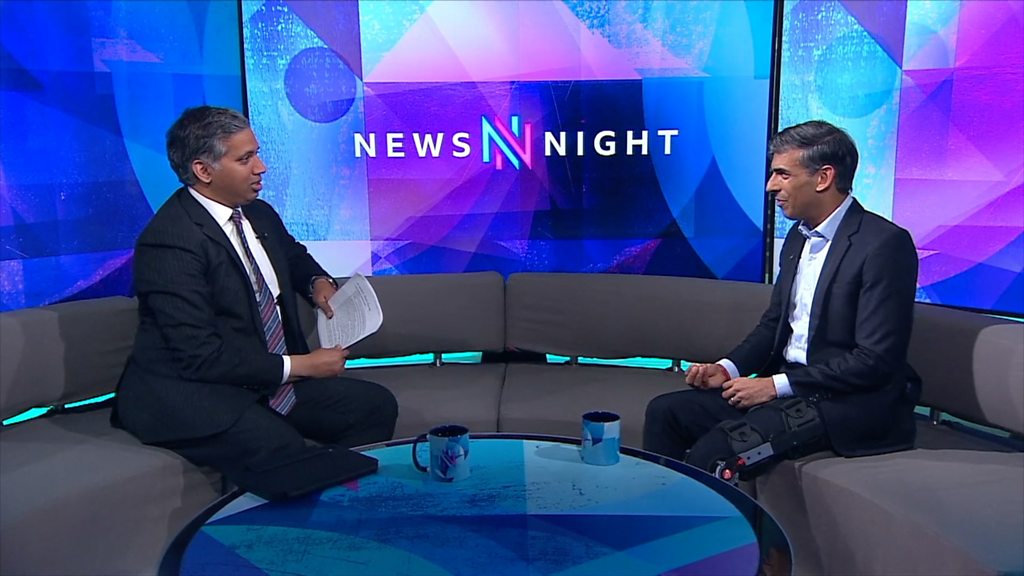
Former UK prime minister Rishi Sunak told the BBC on April 23, 2026 that artificial intelligence is already leading to fewer jobs for young people, raising fresh alarm about labour-market disruption as AI tools spread through businesses. The comments were broadcast in a BBC video segment shared multiple times on the day. Sunak — a prominent political figure with recent government experience — framed AI as an active force altering entry-level and early-career roles rather than a distant threat, saying automation and AI adoption are already reducing opportunities for younger workers. The remarks add to a growing chorus of political and industry voices calling attention to the social and economic effects of generative AI and other automation technologies. The short BBC pieces did not include detailed policy proposals from Sunak but underline public concern over youth employment and the pace of technological change.

Tesla to Use Intel's 14A in Terafab Plan

🏷️ Tech News🌍 United States🔗 16 sources35Digest ScoreiThis score reflects the story's reliability, bias neutrality, and public momentum.
Tesla to Use Intel's 14A in Terafab Plan

đź“° Full Story

Elon Musk said on April 22-23, 2026, that Tesla plans to use Intel’s next‑generation 14A semiconductor process to make chips for its Terafab project, making Tesla the first major external customer for the technology. Intel has joined Musk’s Terafab initiative alongside SpaceX to produce processors for vehicles, humanoid robots and space data centres. Musk also announced a roughly $3 billion research chip facility at Tesla’s Giga Texas campus to run a pilot line that would process a few thousand wafers a month; SpaceX would lead high‑volume manufacturing. Intel’s shares rose in after‑hours trading on the news. The move is framed as validation of Intel’s foundry efforts after years of yield and supply challenges; company leaders have said securing outside customers is crucial to sustaining their contract manufacturing push. Analysts and investors will watch production timing, yield performance for Intel’s 18A/14A nodes, who will fund and operate large‑scale fabs, and whether the Terafab plan involves licensing Intel technology or using Intel facilities.

Microsoft pledges A$25 billion for Australian AI expansion

🏷️ Tech News🌍 Australia🔥 Trending🔗 14 sources34Digest ScoreiThis score reflects the story's reliability, bias neutrality, and public momentum.
Microsoft pledges A$25 billion for Australian AI expansion

đź“° Full Story

Microsoft said on April 23, 2026 it will invest A$25 billion (about US$17.9 billion) in Australia by the end of 2029 to expand Azure AI supercomputing and cloud infrastructure, strengthen cybersecurity and boost AI skills training. The package — the company’s largest-ever commitment in Australia and building on a prior A$5 billion pledge in 2023 — includes plans to increase local Azure AI capacity by more than 140%, extend the Microsoft‑ASD Cyber‑Shield to additional government agencies, and train three million Australians in workforce-ready AI skills by 2028. The announcement, made in Sydney by CEO Satya Nadella alongside Prime Minister Anthony Albanese, is underpinned by a memorandum of understanding with the government. Analysts note the move is part of a broader global hyperscaler build‑out as rivals step up AI capex. Critics and local officials have flagged missing details on data‑centre locations, power sourcing, how much spending will stay in the domestic supply chain, and the likely number of permanent local jobs. NSW has launched scrutiny of the sector, with a parliamentary inquiry due to report in September 2026.
Explore more on NewsDigest