NewsDigestFollow

Anthropic's Claude Adds Personal App Connectors

🏷️ Tech News🌍 United States🔗 3 sources46Digest ScoreiThis score reflects the story's reliability, bias neutrality, and public momentum.
Anthropic's Claude Adds Personal App Connectors

📰 Full Story

Anthropic on April 23, 2026 expanded its Claude AI with a suite of lifestyle and consumer app connectors, linking the chatbot to services such as Spotify, Uber Eats, Instacart, TurboTax, AllTrails, TripAdvisor, Booking.com, Audible, Resy, StubHub, Taskrabbit, Thumbtack, Viator and others. The company said connectors will now be suggested dynamically in conversations so relevant services appear without explicit prompting. The additions — available to all Claude plans with mobile support in beta — extend a directory that has grown to more than 200 connectors since July 2025 and shift the focus from primarily work-oriented integrations to everyday personal tasks. Anthropic says data retrieved via connectors will not be used to train its models, that connectors won’t produce paid placements, and that Claude will ask users to confirm before taking actions such as purchases or reservations. The move follows similar integrations from rivals (OpenAI’s ChatGPT and Google’s Gemini) and is intended to let Claude execute multi-step, cross-app tasks on users’ behalf while allowing users to disconnect services at any time.

🕰️ The Story So Far: An Evolving Timeline

Friday, April 24, 2026 02:58 UTC
Anthropic's Claude Adds Personal App Connectors
Tuesday, April 21, 2026 24:57 UTC
Amazon pledges up to $25 billion to Anthropic

OpenAI launches GPT-5.5, a step toward a super app

🏷️ Tech News🌍 United States🔥 Trending🔗 13 sources53Digest ScoreiThis score reflects the story's reliability, bias neutrality, and public momentum.
OpenAI launches GPT-5.5, a step toward a super app

📰 Full Story

OpenAI on April 23, 2026 launched GPT-5.5, its newest base model designed to execute multi‑step, agentic tasks across coding, computer use, knowledge work and early scientific research. The company said GPT‑5.5 is faster, more token‑efficient and sets new benchmark scores versus prior OpenAI releases and some rival models. It is rolling out immediately to paid ChatGPT and Codex tiers (Plus, Pro, Business, Enterprise) with two variants — “Thinking” and a higher‑accuracy “Pro” — while API access is being staged pending additional safety work and partner testing. OpenAI emphasized expanded safety measures, third‑party red‑teaming and stricter classifiers for cybersecurity risks even as analysts note a rapid cadence of model releases and intensifying competition from Anthropic, Google and others. OpenAI also flagged commercial implications: gains in per‑token latency and Codex token efficiency that could lower cost per task despite higher list pricing for some 5.5 offerings reported by outlets. The company positions GPT‑5.5 as foundational to a future unified desktop “super app” that would combine ChatGPT, Codex and browser agents for sustained, autonomous workflows.

Microsoft offers voluntary retirement buyouts to US staff

🏷️ Tech News🌍 United States🔥 Trending🔗 12 sources49Digest ScoreiThis score reflects the story's reliability, bias neutrality, and public momentum.
Microsoft offers voluntary retirement buyouts to US staff

📰 Full Story

Microsoft has launched a one-time voluntary retirement buyout for select U.S. employees, the company announced in a memo reported on April 23, 2026. The program — the first of its kind in Microsoft’s 51-year history — uses a “Rule of 70” eligibility test: an employee’s age plus years of service must total at least 70. It applies to staff at the senior director level and below, excludes some sales‑incentive roles, and is expected to cover about 7% of Microsoft’s U.S. workforce (roughly 8,750 of some 125,000 U.S. employees). Eligible workers and managers will receive details on May 7 and will have 30 days to decide. Microsoft’s chief people officer Amy Coleman framed the offer as giving long‑tenured employees an option to leave “on their own terms” with company support. The move comes after rounds of layoffs in 2025 and amid heavy capital spending on AI infrastructure and selective hiring freezes; the company is also simplifying pay tiers and decoupling stock awards from bonuses. Financial specifics of the buyout package and healthcare provisions have not been disclosed publicly.

🤝 Social Media Insights

Social Summary
1 / 5
The Rule of 70 buyout targets long‑tenured, near‑retirement employees and is likely to reduce compulsory layoffs if uptake is high, but could deplete institutional expertise. Terms often restrict rehire and include benefits like accelerated vesting or health bridges, which will shape uptake and any subsequent staffing moves.

Google unveils split TPUs and enterprise agent platform

🏷️ Tech News🌍 United States🔗 27 sources41Digest ScoreiThis score reflects the story's reliability, bias neutrality, and public momentum.
Google unveils split TPUs and enterprise agent platform

📰 Full Story

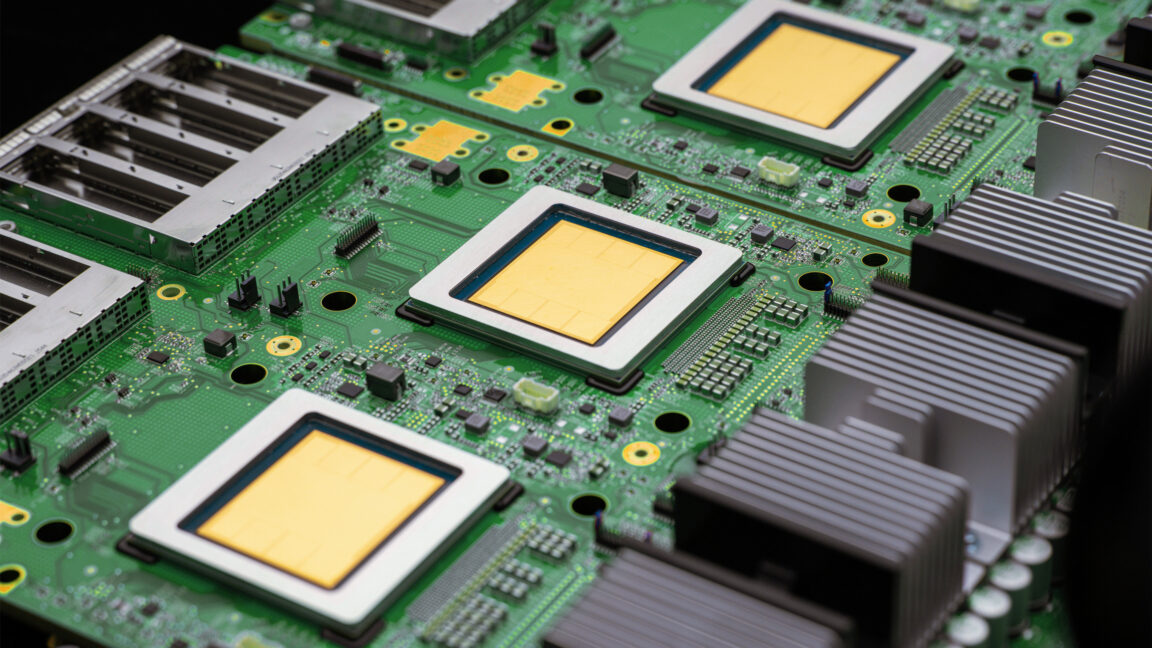
At Google Cloud Next in Las Vegas on April 22-23, 2026, Alphabet unveiled a major push across AI hardware and enterprise software: eighth-generation tensor processing units split into two purpose-built chips — TPU 8t for model training and TPU 8i for low-latency inference — and a unified Gemini Enterprise Agent Platform to build, run and govern AI agents. Google touted up to roughly 3x faster training and an 80% improvement in performance-per-dollar for inference versus prior generations, larger on-chip SRAM on the inference part (cited at 384MB), and superpod and cluster scaling capabilities (superpods of ~9,600 chips and architectures intended to interconnect far larger fleets). Design partners named include Broadcom and MediaTek, with reports of talks with Marvell to diversify suppliers; customers and partners cited include Anthropic, Meta and national labs. Google also announced tools such as Workspace Studio, Agent Designer, a 200+ model Model Garden (including Anthropic models), an A2A protocol for agent-to-agent communication, and a $750m fund to accelerate enterprise adoption. Google said it will continue to offer Nvidia hardware and is collaborating on networking improvements.

Meta adds parental Insights for teens' AI topics

🏷️ Tech News🌍 United States🔥 Trending🔗 7 sources31Digest ScoreiThis score reflects the story's reliability, bias neutrality, and public momentum.
Meta adds parental Insights for teens' AI topics

📰 Full Story

Meta on April 23 rolled out a new "Insights" tab in its Family Center supervision tools that lets parents supervising Teen Accounts see the topics their children have discussed with Meta AI across Facebook, Messenger and Instagram over the previous seven days. The feature lists broad topics (school, entertainment, lifestyle, travel, writing, health and wellbeing) and allows parents to drill into subcategories (for example, fitness, mental health or fashion) but does not provide word‑for‑word transcripts. Insights is initially available in the United States, United Kingdom, Australia, Canada and Brazil, with a global rollout planned in coming weeks. Meta said the move complements other controls introduced since pausing AI characters for teens, and accompanies a new AI Wellbeing Expert Council and parent conversation prompts developed with the Cyberbullying Research Center. The company framed the feature as a safety tool amid lawsuits and regulatory scrutiny over teen safety, including recent legal losses tied to alleged harms to minors.
Explore more on NewsDigest