
NewsDigestFollow

Global response to Andes hantavirus on cruise ship

🏷️ Medical🌍 Spain🔥 Trending🔗 269 sources30Digest ScoreiThis score reflects the story's reliability, bias neutrality, and public momentum.
Global response to Andes hantavirus on cruise ship

📰 Full Story

Health authorities from across Europe, the United States, Australia and other countries have coordinated the evacuation, repatriation and quarantine of passengers from the Dutch‑flagged MV Hondius after an outbreak of Andes hantavirus was detected aboard the vessel. The ship, which carried 147 passengers and crew from 23 countries and had travelled from southern Argentina, has been linked to at least eight illnesses (six confirmed by PCR), including three deaths. The vessel anchored off Tenerife in the Canary Islands where national and WHO teams oversaw disembarkation into sealed transport for direct flights home. Governments have set up managed isolation: UK evacuees face initial hospital isolation, U.S. citizens were flown to Nebraska for quarantine and monitoring, Australia is arranging a charter and states are finalising quarantine sites, and Germany is monitoring contacts at specialist units. The European CDC classified all passengers as high‑risk contacts as a precaution and WHO has recommended a 42‑day follow‑up period. The U.S. CDC issued a clinical advisory stressing repeat testing after 72 hours, airborne precautions in healthcare settings and clinician awareness of the virus’s long incubation window and potential for rare person‑to‑person transmission.

Genomic test could spare millions from chemotherapy

🏷️ Medical🌍 United Kingdom🔗 4 sources37Digest ScoreiThis score reflects the story's reliability, bias neutrality, and public momentum.
Genomic test could spare millions from chemotherapy

📰 Full Story

A large international trial led by University College London (OPTIMA) found a genomic test can safely identify many people with hormone‑sensitive breast cancer who do not benefit from adjuvant chemotherapy. The study enrolled 4,429 patients aged 40 and over across the UK, Norway, Sweden, Australia, New Zealand and Thailand and used Veracyte’s Prosigna test, which measures the activity of 50 genes. More than two‑thirds (68%) of participants had a low Prosigna score and were treated with hormone therapy alone; five‑year recurrence‑free survival was 94.8% for those given chemotherapy plus hormone therapy versus 93.6% for those treated with hormone therapy alone. Investigators say the difference is within predefined limits for non‑inferiority. Results will be presented at the American Society of Clinical Oncology meeting in Chicago. Researchers estimate the approach could spare more than 5,000 NHS patients chemotherapy each year. Findings do not yet apply to people under 40 and numbers of men in the trial were too small for firm conclusions.

🤝 Social Media Insights

Social Summary
1 / 5
Key takeaways: readers flag the importance of checking trial funding for conflicts of interest, and many expect insurers to push adoption of a cost-saving genomic test — but access and affordability concerns persist and will influence real-world uptake.

Tafasitamab, Lenalidomide Added to R‑CHOP Improves PFS

🏷️ Medical🌍 United States🔗 3 sources31Digest ScoreiThis score reflects the story's reliability, bias neutrality, and public momentum.
Tafasitamab, Lenalidomide Added to R‑CHOP Improves PFS

📰 Full Story

The phase III frontMIND trial presented at the 2026 ASCO annual meeting found that adding tafasitamab (Monjuvi) and lenalidomide (Revlimid) to standard R‑CHOP chemotherapy reduced the risk of progression or death by 25% versus R‑CHOP alone in 899 adults with newly diagnosed high‑risk diffuse large B‑cell lymphoma (DLBCL) or high‑grade B‑cell lymphoma (HGBL). At a median follow‑up of 35.2 months the hazard ratio for progression‑free survival (PFS) was 0.75 (95% CI 0.59–0.96, P=0.0194); 2‑year PFS was 71.1% versus 62.9% and 3‑year PFS 67.3% versus 60.7%. Event‑free survival also improved (HR 0.79, P=0.0260). Interim overall survival trended favorably (HR 0.85) but was not statistically significant. Complete response rates were similar (65.2% each) and overall response rate favored the combination (80.4% vs 76.1%). Grade ≥3 treatment‑emergent adverse events were higher with the triplet (86.7% vs 76.1%), with more cytopenias, infections and treatment discontinuations in the experimental arm. Investigators said the benefit was consistent across molecular subtypes and could support regulatory applications to make the combination a new frontline option for high‑risk patients.

Omitting Axillary Dissection Safe in Many Patients

🏷️ Medical🌍 United States🔗 3 sources31Digest ScoreiThis score reflects the story's reliability, bias neutrality, and public momentum.
Omitting Axillary Dissection Safe in Many Patients

📰 Full Story

A large randomized trial presented at the 2026 ASCO meeting found that skipping completion axillary lymph node dissection (ALND) after a positive sentinel lymph node biopsy is noninferior for overall survival in selected breast cancer patients. The SENOMAC trial randomized 2,766 patients (2,540 evaluable) with clinically node‑negative T1–T3 tumors and one or two sentinel node macrometastases across hospitals in Sweden, Denmark, Germany, Greece and Italy. After a median follow‑up of about 60 months, 5‑year overall survival was 94.4% with omission versus 93.4% with completion ALND (hazard ratio 0.84), meeting noninferiority. Most participants received regional nodal radiotherapy. Omitting ALND substantially reduced arm morbidity: severe arm physical‑function problems at five years were far less common (3.6% vs. 12.6%). Completion ALND did detect additional nodal disease in roughly one‑third of cases. The trial included patients undergoing mastectomy and some with larger (T3) tumors, broadening applicability. Investigators from Karolinska Institute (lead author Jana de Boniface) noted ongoing trials (T‑REX, SENOMAC‑ULTRA) to evaluate the role of nodal radiotherapy and other subgroups.

FDA Approves Inhaled Insulin for Children

🏷️ Medical🌍 United States🔗 4 sources25Digest ScoreiThis score reflects the story's reliability, bias neutrality, and public momentum.
FDA Approves Inhaled Insulin for Children

📰 Full Story

The U.S. Food and Drug Administration on May 29, 2026 approved an expanded label for MannKind Corporation’s rapid‑acting inhaled insulin Afrezza for pediatric patients aged six and older with type 1 or type 2 diabetes. The decision, based on the phase 3 INHALE‑1 trial (230 children, randomized, 26 weeks plus extension), relied on a prespecified sensitivity analysis showing noninferiority in HbA1c among children who completed and used inhaled insulin as directed. Afrezza uses MannKind’s Technosphere platform — ultra‑small FDKP particles that deliver insulin to the lungs in a two‑second breath, with systemic uptake within about one minute, peak action at 35–45 minutes and duration of roughly 1.5–3 hours. The product was already approved for adults in 2014. Company shares rose about 6% after the news and MannKind said eligible patients can access Afrezza for about $35 or less per month. Regulators and investigators note safety caveats: potential for sudden lung problems, contraindications for smokers and not for treating diabetic ketoacidosis; Type 1 patients still require basal insulin.

Trump signs order to curb childhood vaccine schedule

🏷️ Medical🌍 United States🔥 Trending🔗 6 sources23Digest ScoreiThis score reflects the story's reliability, bias neutrality, and public momentum.
Trump signs order to curb childhood vaccine schedule

📰 Full Story

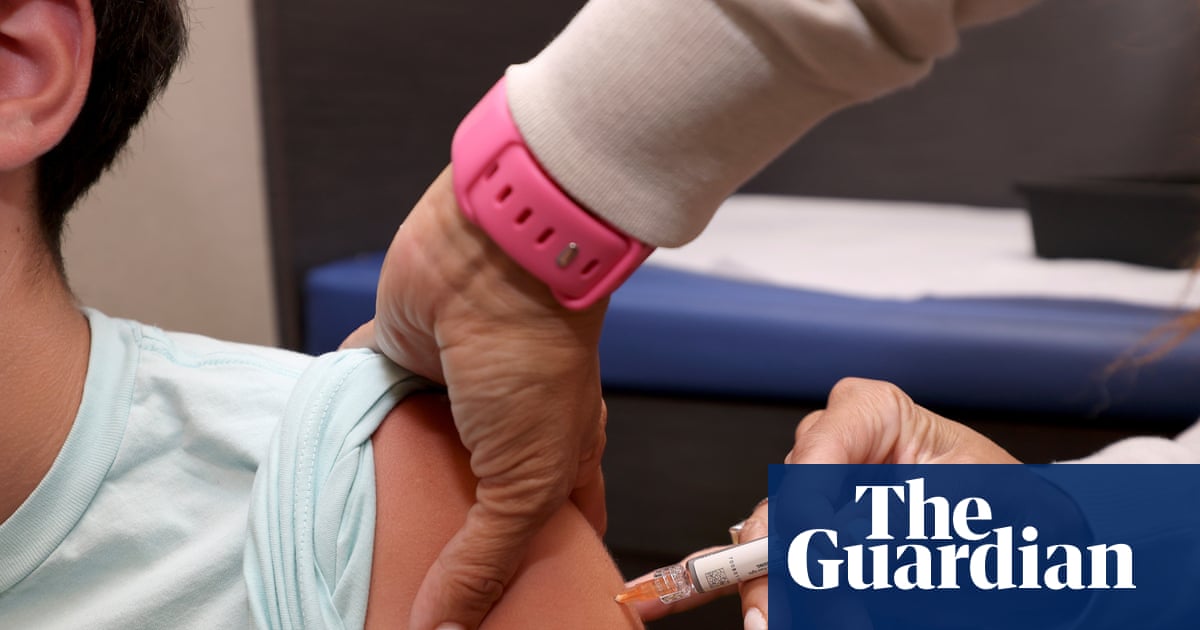
President Donald Trump on May 29 signed an executive order directing the U.S. Department of Health and Human Services (HHS) scientific assessment on childhood immunisations to be used as a federal guide and instructing the Centers for Disease Control and Prevention (CDC) and its Advisory Committee on Immunization Practices (ACIP) to review that assessment and clinical data. The HHS paper, issued in January under Health Secretary Robert F. Kennedy Jr., concluded the United States recommends more childhood vaccines than many peer nations and informed a CDC guidance earlier this year that reduced the routine schedule from 17 to 11 vaccines. The assessment and subsequent CDC changes recommended limiting routine shots for some illnesses — including hepatitis A and B, meningococcal disease, rotavirus, influenza, COVID-19 and RSV — to high‑risk groups. The White House said the order aims to align the U.S. schedule with “peer, developed countries” while preserving vaccine access and parental flexibility. The policy has provoked sharp criticism from medical groups, state attorneys general and public health experts and has resulted in litigation and a federal court ruling challenging aspects of the new process.
Explore more on NewsDigest