
📰 Full Story
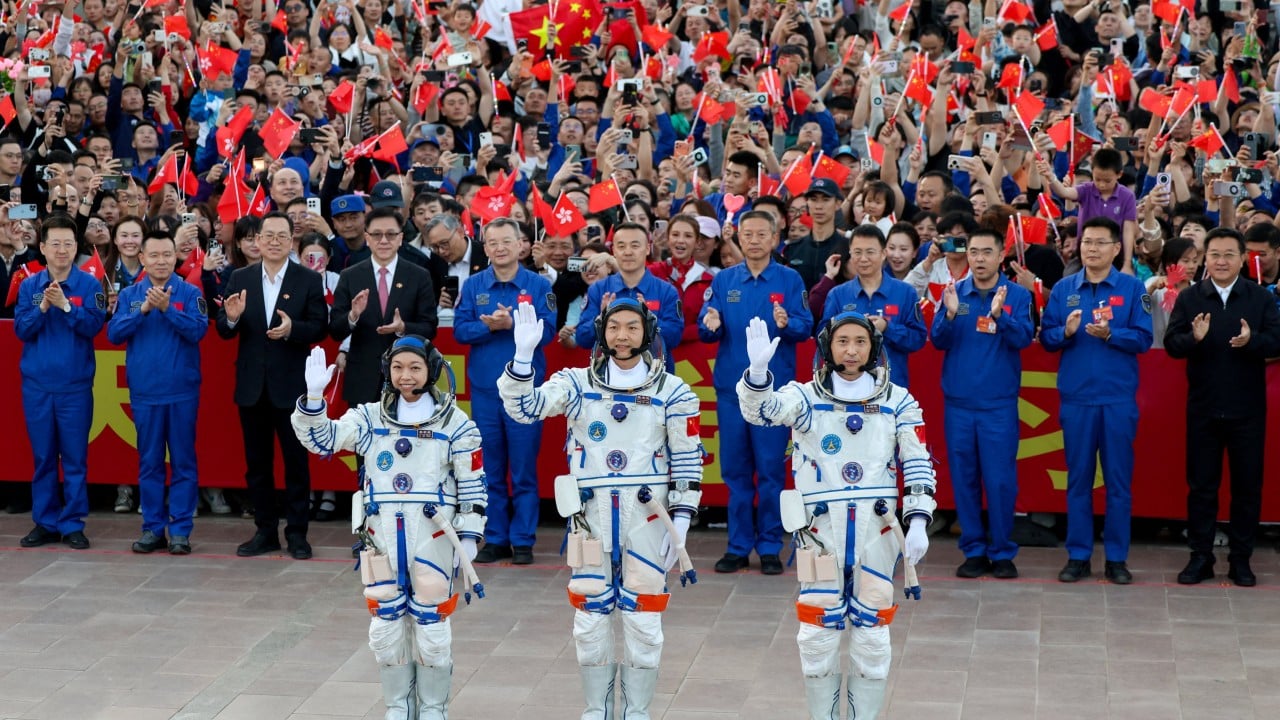
China on May 24 launched the Shenzhou-23 spacecraft from the Jiuquan Satellite Launch Center, sending three astronauts to its Tiangong space station in a mission that includes the country’s first planned year‑long human flight.
The Long March‑2F Y23 rocket lifted off at 23:08 local time (1508 GMT) and the crew — commander Zhu Yangzhu, pilot Zhang Zhiyuan and payload specialist Li Jiaying (also reported as Lai Ka‑ying) — successfully docked with Tiangong.
Li is the first person from Hong Kong to fly on a Chinese crewed mission.
China’s space agency said one crew member will remain aboard Tiangong for a full year to study long‑duration effects on human physiology, including radiation exposure, bone density loss and psychological stress, and to carry out more than 100 experiments reported to include embryonic and plant growth studies.
The flight is presented by Beijing as a preparatory step for an ambitious goal of a crewed lunar landing by 2030 and testing procedures and hardware — including rapid autonomous rendezvous and docking — intended to support future lunar operations.
🔗 Based On
🕰️ The Story So Far: An Evolving Timeline
Saturday, May 23, 2026 05:57 UTC
China launches Shenzhou-23 with yearlong mission
Tuesday, May 19, 2026 05:27 UTC
Europe-China SMILE mission launches to study magnetosphere



💬 Commentary