NewsDigestFollow

Psyche probe returns vivid Mars images during flyby

🏷️ Science & Space🔥 Trending🔗 4 sources32Digest ScoreiThis score reflects the story's reliability, bias neutrality, and public momentum.
Psyche probe returns vivid Mars images during flyby

📰 Full Story

NASA’s Psyche spacecraft captured extensive, high-resolution images of Mars during a critical gravity-assist flyby on May 15, 2026, as it continues toward the metal-rich asteroid 16 Psyche. Passing roughly 2,864 miles (about 4,600 km) above the surface, the solar-electric probe obtained thousands of frames including crescent views of the planet, a close-up of the double-ringed Huygens crater, wind-streaked terrain in Syrtis Major, the south polar ice cap at ~1.14 km/pixel resolution and Valles Marineris. Mission teams used the dataset to calibrate Psyche’s multispectral imagers and other instruments (magnetometer, gamma-ray and neutron spectrometers). The Mars gravity assist increased Psyche’s speed by roughly 1,000 mph (1,600 km/h) and adjusted its orbital plane by about one degree, with trajectory confirmed via NASA’s Deep Space Network. Launched Oct. 13, 2023, Psyche aims to arrive and orbit asteroid 16 Psyche in August 2029 to study what may be an exposed planetary core.

🕰️ The Story So Far: An Evolving Timeline

Sunday, May 24, 2026 11:44 UTC
Psyche probe returns vivid Mars images during flyby
Wednesday, May 20, 2026 14:42 UTC
NASA’s Psyche Completes Mars Flyby, Captures Images


Scientists discover tiny blue octopus in Galápagos

🏷️ Science & Space🌍 Ecuador🔗 3 sources12Digest ScoreiThis score reflects the story's reliability, bias neutrality, and public momentum.
Scientists discover tiny blue octopus in Galápagos

📰 Full Story

Researchers have described a new, golf ball–sized octopus species discovered near Darwin Island in the Galápagos, publishing the find on May 25, 2026. The cerulean cephalopod, named Microeledone galapagensis, was first filmed by a remotely operated submersible in 2015 at roughly 1,800 metres (about 5,800 feet) depth. The Charles Darwin Research Station collected and preserved a single specimen; two similar animals were captured on video. Octopus expert Janet Voight at the Field Museum led the analysis using high-resolution CT scans rather than destructive dissection, enabling 3D study of internal anatomy. Distinctive traits include tiny size, smooth dorsal skin, a single row of suckers on stubby arms, an unusually large funnel-associated gland and a light blue dorsal surface with deep purple underside. Although related to Southern Ocean Megaleledonidae, the animal’s combination of external and internal features warranted placement in the genus Microeledone and its formal description in the journal Zootaxa. Authors say the discovery underscores how much of the deep sea remains undocumented, and raises conservation questions as climate change and increasing deep-sea resource activity threaten unstudied ecosystems.

China launches Shenzhou-23 with yearlong mission

🏷️ Science & Space🌍 China🔥 Trending🔗 30 sources2Digest ScoreiThis score reflects the story's reliability, bias neutrality, and public momentum.
China launches Shenzhou-23 with yearlong mission

📰 Full Story

China on May 24 launched the Shenzhou-23 spacecraft from the Jiuquan Satellite Launch Center, sending three astronauts to its Tiangong space station in a mission that includes the country’s first planned year‑long human flight. The Long March‑2F Y23 rocket lifted off at 23:08 local time (1508 GMT) and the crew — commander Zhu Yangzhu, pilot Zhang Zhiyuan and payload specialist Li Jiaying (also reported as Lai Ka‑ying) — successfully docked with Tiangong. Li is the first person from Hong Kong to fly on a Chinese crewed mission. China’s space agency said one crew member will remain aboard Tiangong for a full year to study long‑duration effects on human physiology, including radiation exposure, bone density loss and psychological stress, and to carry out more than 100 experiments reported to include embryonic and plant growth studies. The flight is presented by Beijing as a preparatory step for an ambitious goal of a crewed lunar landing by 2030 and testing procedures and hardware — including rapid autonomous rendezvous and docking — intended to support future lunar operations.

Nicki Minaj at Scrubbed Starship V3 Launch

🏷️ Science & Space🌍 United States🔥 Trending🔗 12 sources2Digest ScoreiThis score reflects the story's reliability, bias neutrality, and public momentum.
Nicki Minaj at Scrubbed Starship V3 Launch

📰 Full Story

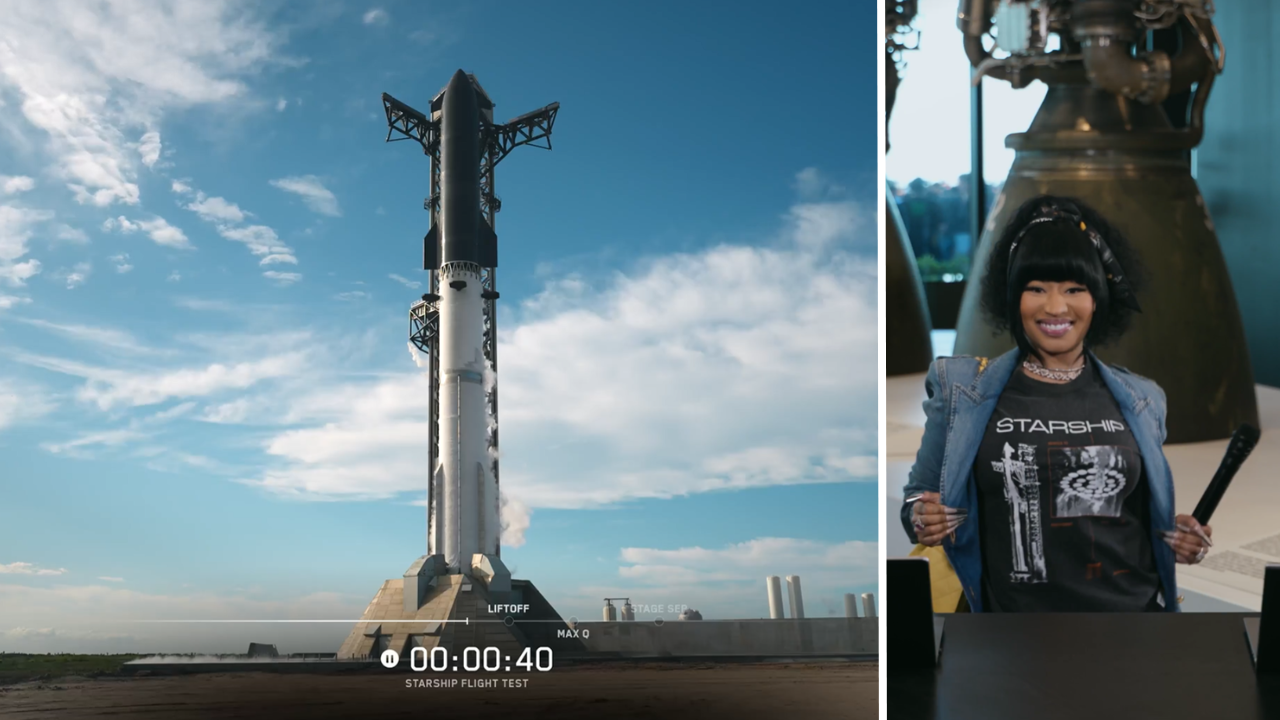
SpaceX’s first planned liftoff of its overhauled Starship V3 was scrubbed late in the countdown on May 21, 2026, at the company’s Starbase facility in Texas after engineers encountered last‑second technical faults. Company spokespeople and Elon Musk cited a malfunctioning hydraulic pin on the launch tower and related pad hardware issues that could not be resolved within the launch window, and SpaceX said it would attempt another launch the following day. The high‑profile test was the inaugural integrated flight attempt for the V3 configuration and the first from Pad 2 — milestones tied to future lunar missions and heavier commercial payloads. Rap star Nicki Minaj made a surprise appearance on the live webcast, wearing a Starship T‑shirt and praising Musk and the project on camera. Her cameo, widely circulated on social media and re‑shared by Musk, added a celebrity and political dimension to the test; Minaj has been publicly aligned with conservative figures in recent months. SpaceX is conducting the test campaign as it prepares for more ambitious crewed and commercial operations and moves toward a proposed public offering.

🤝 Social Media Insights

Social Summary
1 / 5
The scrub should be seen primarily as a routine prototype test pause that provides diagnostic data rather than a definitive failure. Celebrity attendance heightened public and investor attention, but engineering teams are likely to attempt another launch quickly after targeted repairs.

Crypto Billionaire Chun Wang to Lead Mars Flyby

🏷️ Science & Space🌍 United States🔗 3 sources1Digest ScoreiThis score reflects the story's reliability, bias neutrality, and public momentum.
Crypto Billionaire Chun Wang to Lead Mars Flyby

📰 Full Story

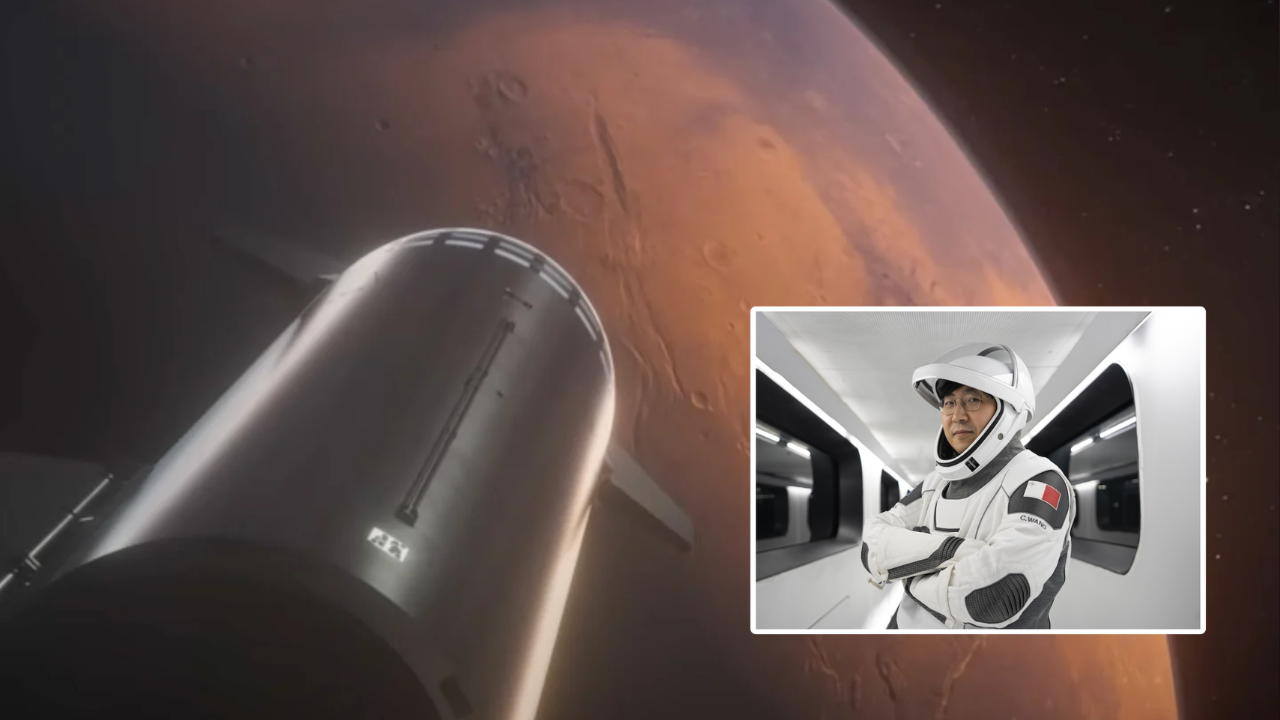
During SpaceX’s aborted Starship V3 test launch on May 21, 2026, the company revealed plans for a private interplanetary flyby of the Moon and Mars led by cryptocurrency billionaire Chun Wang. Wang, who funded and commanded the private Fram2 Crew Dragon mission in 2025, appeared in a recorded announcement broadcast during the countdown from Bouvet Island. SpaceX described the mission as a Mars flyby that will also pass the Moon, with the round-trip profile expected to take roughly two years; no firm launch date, vehicle certification status or additional crew have been disclosed. The reveal came amid ongoing technical work on Starship V3 — the company’s largest megarocket, whose development is closely watched by NASA because of its potential role in lunar landings under the Artemis programme. SpaceX said the May 21 launch attempt was scrubbed for a ground-side mechanical issue and indicated further test flights are forthcoming. Wang’s backing and prior private-flown experience underline the growing role of wealthy patrons in commercial deep-space plans, even as Starship has yet to achieve orbital operations.
Explore more on NewsDigest