
NewsDigestFollow

Scientists revive Ötzi yeasts and bake sourdough

🏷️ Science & Space🌍 Italy🔥 Trending🔗 15 sources46Digest ScoreiThis score reflects the story's reliability, bias neutrality, and public momentum.
Scientists revive Ötzi yeasts and bake sourdough

📰 Full Story

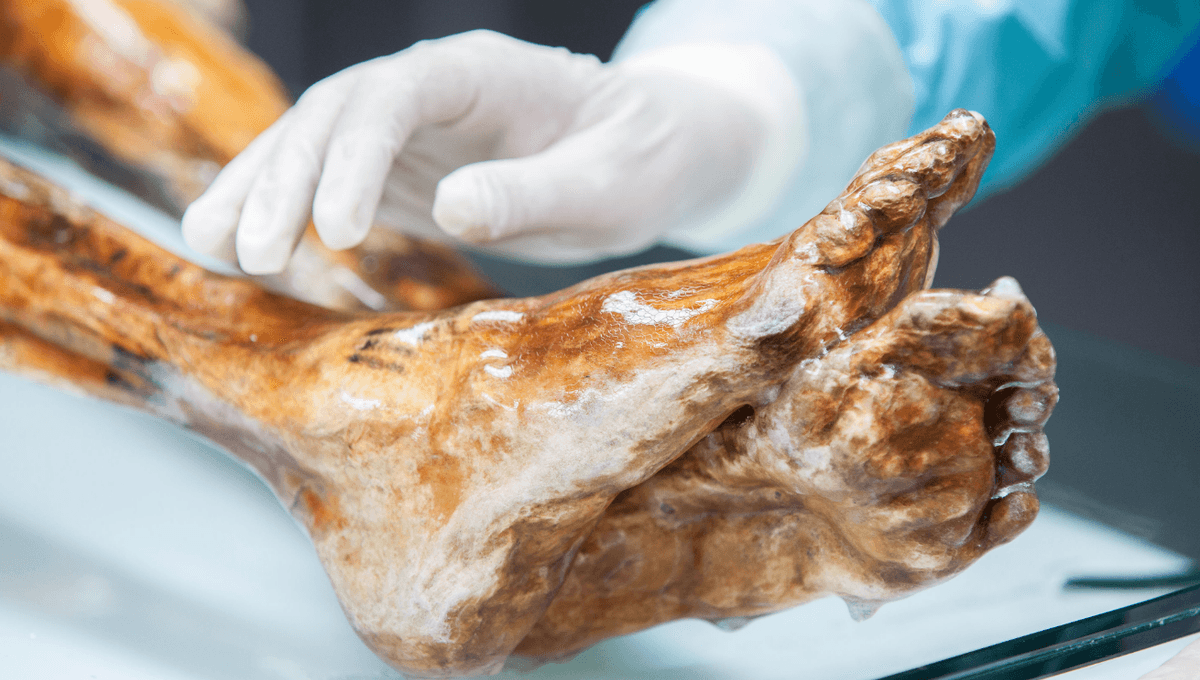
A multinational team led by researchers at Italy’s Eurac Research reported on June 3, 2026 that Ötzi the Iceman’s remains host living, cold‑adapted yeasts and a mix of ancient and modern microbes. Published in the journal Microbiome, the study analysed swabs, tissue and meltwater taken from the 5,300‑year‑old Alpine mummy and associated glacier soil and storage environment. Scientists identified four psychrophilic yeast species (including Glaciozyma) that could be cultured from samples taken in 2010 and 2019; one strain increased markedly between those dates. Lab cultures were used to ferment a sourdough loaf after months of work. Genetic signatures in other bacteria point to gut microbes typical of pre‑industrial, high‑fiber diets. Researchers warn that some cold‑loving yeasts can metabolise phenol — a chemical applied to Ötzi after discovery — raising both conservation concerns and potential bioremediation applications. Ötzi is kept at about −6°C in the South Tyrol Museum of Archaeology in Bolzano, Italy, and the team says ongoing microbiological monitoring and further study are needed to assess long‑term impacts on preservation and to clarify whether the organisms have been reproducing over millennia or colonised more recently.

🤝 Social Media Insights

Social Summary
1 / 5
Key takeaways: the study isolated viable cold-adapted yeasts that were cultured in lab and tested (including in sourdough), raising both biotech interest (brewing/baking) and conservation concerns. Observers emphasise methodological clarity and the need for ongoing microbial monitoring.

NASA Declares MAVEN Mars Orbiter Mission Over

🏷️ Science & Space🌍 United States🔥 Trending🔗 16 sources47Digest ScoreiThis score reflects the story's reliability, bias neutrality, and public momentum.
NASA Declares MAVEN Mars Orbiter Mission Over

📰 Full Story

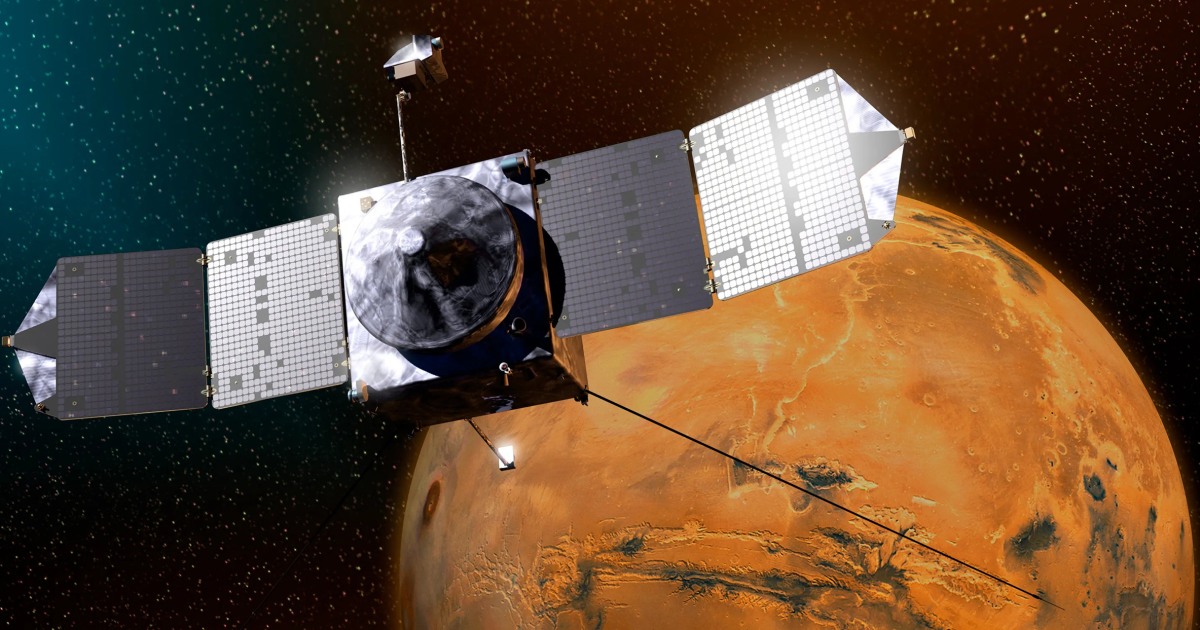
NASA confirmed on June 3–4, 2026 that its Mars Atmosphere and Volatile Evolution (MAVEN) orbiter is no longer recoverable after losing contact following a pass behind Mars on Dec. 6, 2025. An anomaly review board concluded a fragment of telemetry captured by the Deep Space Network indicated the spacecraft emerged in safe mode and was rotating at an unusually high rate (about 2.7 revolutions per minute), which likely drained its batteries and left communications powerless. Launched in November 2013 and in orbit since September 2014, MAVEN exceeded its one‑year primary mission to collect 11 years of measurements of the upper atmosphere, auroras and atmospheric escape processes including sputtering. The agency has begun formal decommissioning and archiving of MAVEN’s dataset and will publish a final investigation report later in 2026. MAVEN’s relay duties for rovers will be handled by remaining orbiters — Mars Odyssey, Mars Reconnaissance Orbiter and European spacecraft — and the probe is expected to remain in orbit for decades before eventual decay.

UN warns AI will strain global water and energy

🏷️ Science & Space🔗 6 sources29Digest ScoreiThis score reflects the story's reliability, bias neutrality, and public momentum.
UN warns AI will strain global water and energy

📰 Full Story

A United Nations University report published 3 June 2026 warns that the rapid expansion of artificial intelligence could place severe strains on electricity, water and land. The UNU‑INWEH study projects that data centres powering AI could consume about 945 terawatt‑hours of electricity by 2030, require roughly 9.3 trillion litres of water (equivalent to the basic annual needs of 1.3 billion people in sub‑Saharan Africa) and occupy about 14,500 square kilometres of land. Inference—the day‑to‑day queries users send to deployed models—now accounts for an estimated 80–90% of AI energy use. The report cites examples such as ChatGPT processing some 2.5 billion prompts daily, using about 383 GWh a year. It warns that carbon‑focused metrics alone hide trade‑offs: moving to bioenergy can lower CO2 but greatly increase water and land footprints. Projected e‑waste could reach up to 2.5 million tonnes annually by 2030. UNU‑INWEH urges standardized environmental disclosure by AI firms, regulatory reporting, siting rules to protect water‑stressed regions, efficiency improvements, and behavioural changes by users (for example, shorter prompts or avoiding energy‑heavy image/video generation).

Queen-cell wax helps shape honeybee queens

🏷️ Science & Space🔗 4 sources28Digest ScoreiThis score reflects the story's reliability, bias neutrality, and public momentum.
Queen-cell wax helps shape honeybee queens

📰 Full Story

New research published June 3, 2026 in Nature shows that the waxed chambers where honeybee queens develop — not just royal jelly — play a critical role in queen formation. Scientists led by researchers at the University of California, Riverside and collaborators compared peanut‑shaped queen cells with ordinary worker comb in western (Apis mellifera) and eastern (Apis cerana) honeybees. They found queen‑cell wax is physically and chemically distinct: softer, less dense and containing different fatty acids and scent compounds. A previously unrecognized class of young “queen cell builder” workers appears specialized for constructing these nurseries, maintaining higher body temperatures and distinct gene expression while working. Experimental tests raised larvae on identical royal jelly but capped artificial cells with either queen or worker wax; larvae under worker wax suffered higher mortality and produced smaller queens. The team used thermal imaging, chemical and materials analyses, behavioral tracking and tracer experiments to show workers selectively gather and modify materials for royal cells. The findings suggest social niche construction — the hive’s built environment and attendant workers — actively engineers queen development, expanding understanding of insect caste determination.

Swiss physicists create certifiably perfect randomness

🏷️ Science & Space🌍 Switzerland🔗 3 sources20Digest ScoreiThis score reflects the story's reliability, bias neutrality, and public momentum.
Swiss physicists create certifiably perfect randomness

📰 Full Story

Researchers at ETH Zurich have demonstrated a laboratory method to generate certifiably perfect randomness using two entangled superconducting qubits, publishing their results in Nature. The team, led by Renato Renner and Andreas Wallraff, linked two chips by a 30-metre supercooled microwave guide and performed more than a billion Bell-test trials over roughly nine hours. Starting from an imperfect random source to choose measurement settings, the experiment used entanglement and a randomness-amplification protocol to produce output bit sequences that the authors say are provably free of bias and device-independent. The setup operated at temperatures near absolute zero and is described as substantially lowering computational costs compared with software-based pseudo-random generators. The paper argues the output can serve as a physically certified reference for randomness, with possible applications in cryptographic key generation, secure digital identities, public randomness services for lotteries, and blockchain systems. The team cautions the approach is currently a networked, lab-scale technique best suited where nodes can access a dedicated server implementing the protocol.

🤝 Social Media Insights

Social Summary
1 / 5
The experiment is significant not because it first produced random bits, but because it produced device-independent, provably certified randomness by amplifying a weak source via Bell tests. It’s costly and currently best suited as a high-assurance reference for cryptography and auditing, not as a mass-market RNG.

China's Long March 12B debuts in surprise launch

🏷️ Science & Space🌍 China🔗 3 sources18Digest ScoreiThis score reflects the story's reliability, bias neutrality, and public momentum.
China's Long March 12B debuts in surprise launch

📰 Full Story

China conducted the maiden flight of its Long March 12B rocket on June 1, 2026, sending multiple Qianfan (“Thousand Sails”) internet satellites into low Earth orbit. The two-stage, partially reusable vehicle — roughly 70–72 metres tall and visually similar to SpaceX’s Falcon 9 — reached orbit successfully but did not attempt a booster recovery on the first flight; officials said recovery tests will come later. State aerospace entities announced the launch after liftoff and, according to multiple reports, did not issue routine advance airspace or maritime notices ahead of the mission. The flight marks another step in China’s push to field commercial reusable launchers and rapidly expand a domestic megaconstellation to provide internet services and other orbital capabilities. Observers flagged concerns about transparency and safety for civil aviation, the potential for increased orbital congestion and debris, and the brightness of Qianfan satellites, which may affect astronomical observations.
Explore more on NewsDigest