NewsDigest

NASA's SPHEREx Maps Vast Interstellar Ice Reservoirs

🏷️ Science & Space🔗 3 sources32Digest ScoreiThis score reflects the story's reliability, bias neutrality, and public momentum.
NASA's SPHEREx Maps Vast Interstellar Ice Reservoirs

📰 Full Story

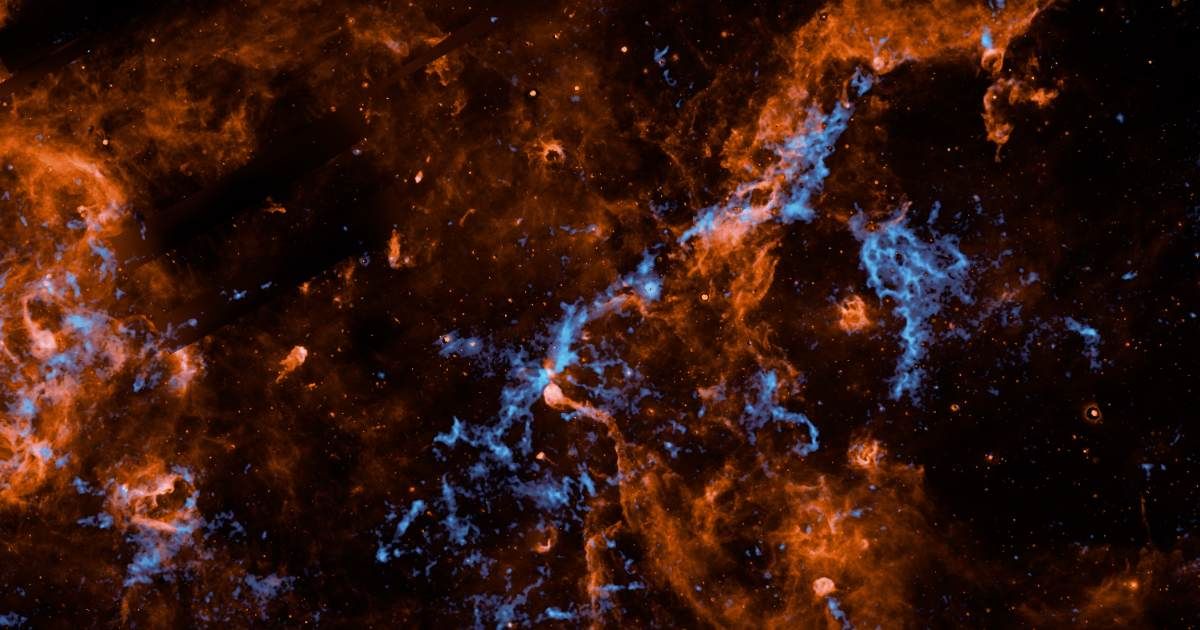
NASA’s SPHEREx mission has produced the largest near-infrared maps to date of interstellar ices, revealing extensive water, carbon dioxide and carbon monoxide ices embedded on microscopic dust grains across regions of the Milky Way more than 600 light-years across. A study published April 15, 2026 in The Astrophysical Journal presents SPHEREx observations of Cygnus X and the North American Nebula that show the densest ice concentrations coincide with the dustiest, filamentary lanes that shield ices from ultraviolet radiation emitted by newborn stars. SPHEREx, launched March 11, 2025 and operating in 102 infrared bands, completed its first all-sky spectral map by late 2025. Unlike targeted telescopes, SPHEREx’s wide spectral survey identifies icy molecules and polycyclic aromatic hydrocarbons across broad swaths of the galactic plane, supporting the idea that interstellar “glaciers” on dust grains are major reservoirs of the water that can be delivered to nascent planetary systems. The mission is managed by JPL with science analysis across U.S., South Korean and Taiwanese institutions; processed data are archived at IPAC and are publicly available.
New Precise Measurement Deepens Hubble Tension

🏷️ Science & Space🔗 4 sources21Digest ScoreiThis score reflects the story's reliability, bias neutrality, and public momentum.
New Precise Measurement Deepens Hubble Tension

📰 Full Story

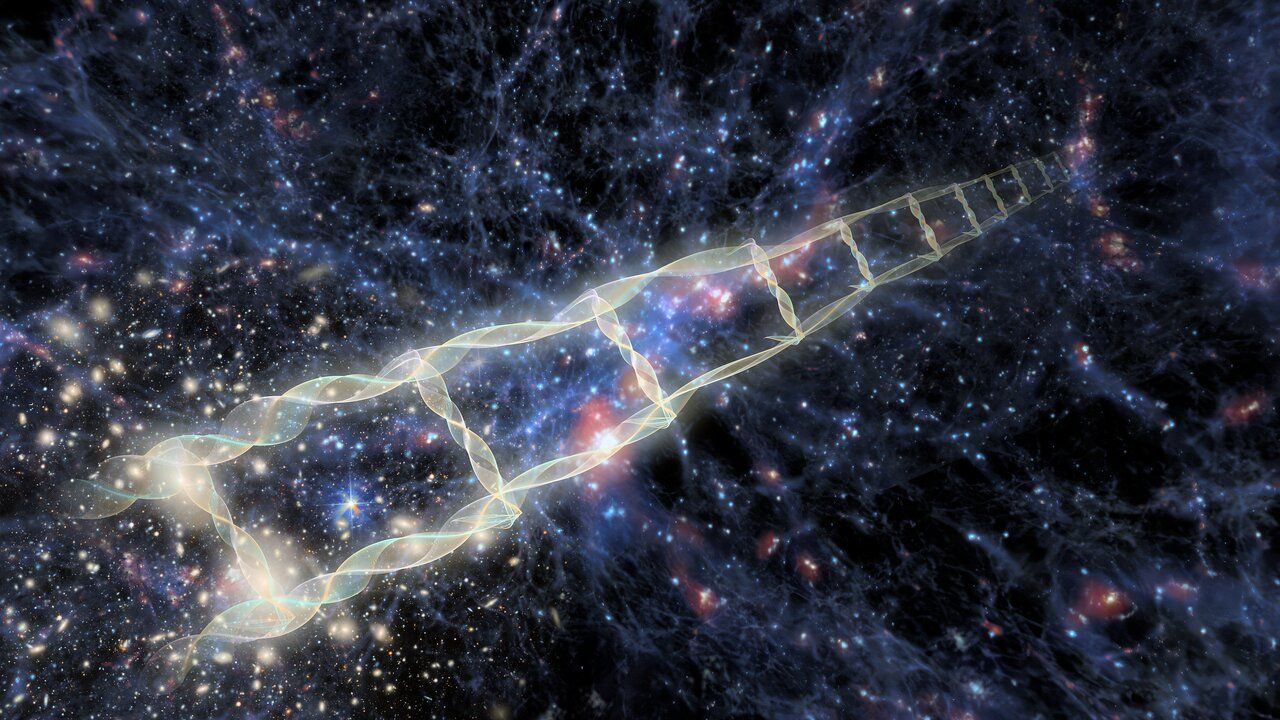
An international collaboration has produced the most precise local measurement yet of the universe’s expansion rate, strengthening a longstanding mismatch with early-universe estimates. Published April 10 in Astronomy & Astrophysics, the H0DN Collaboration’s Local Distance Network combined more than a dozen independent distance indicators — including parallax anchors, Cepheid and TRGB stars, Miras, megamasers, Type Ia and II supernovae, surface-brightness fluctuations, the Tully–Fisher relation and the Fundamental Plane — to derive a local Hubble constant of about 73.5 km/s/Mpc with roughly one-percent precision. Rigorous ‘leave-one-out’ and covariance tests showed the result is robust to removal of individual methods or datasets. That local value now sits at least seven standard deviations above the ~67.4 km/s/Mpc rate inferred from the cosmic microwave background under the standard Lambda-CDM model, reinforcing the so-called Hubble tension. The collaboration has released its code and datasets to enable independent checks.

White House Orders Nuclear Reactors to Moon, Orbit

🏷️ Science & Space🌍 United States🔗 6 sources20Digest ScoreiThis score reflects the story's reliability, bias neutrality, and public momentum.
White House Orders Nuclear Reactors to Moon, Orbit

📰 Full Story

The White House on April 14–15, 2026 directed NASA, the Department of Defense and the Department of Energy to accelerate development of space nuclear reactors, aiming for orbital demonstrations by 2028 and lunar surface power by 2030, with a Pentagon demonstration mission by 2031. A newly published OSTP memo (the National Initiative for American Space Nuclear Power) calls for parallel NASA and DoD design competitions for low- to mid-power reactors (minimum 20 kWe for at least three years in orbit and five years on the lunar surface), designs scalable to about 100 kWe, and consideration of low‑power (≈1 kWe) variants. The DOE must assess industrial capacity to produce up to four reactors within five years and ensure fuel, infrastructure and safety requirements. Agencies have tight timelines to submit roadmaps and use-case analyses, and the plan envisions public–private partnerships and use of commercial launch providers. Officials framed the initiative as essential for sustained lunar bases, nuclear electric propulsion and U.S. space superiority, while noting that funding, industrial readiness and safety will shape feasibility.

🤝 Social Media Insights

Social Summary
1 / 5
Key technical context: RTGs have powered past probes but are distinct from fission reactors, and space reactors are not unprecedented. Main engineering issues flagged are thermal rejection and mass tradeoffs versus solar+battery solutions, making location and hybrid designs central to feasibility.

Over half of UK butterfly species in decline

🏷️ Science & Space🌍 United Kingdom🔗 3 sources18Digest ScoreiThis score reflects the story's reliability, bias neutrality, and public momentum.
Over half of UK butterfly species in decline

📰 Full Story

Data from the UK Butterfly Monitoring Scheme (UKBMS) — the world’s largest long‑running insect survey — shows a worrying loss of butterfly diversity across Britain over the past 50 years. The scheme, which has gathered more than 44 million records from hundreds of thousands of volunteer surveys since 1976 at over 7,600 sites, reports that of the 59 native species monitored 33 have declined, 25 have increased and one lacks sufficient data. Some generalist species have expanded or benefited from warmer winters and longer seasons (the red admiral has risen by over 300%, the purple emperor and comma have also surged), while many habitat specialists have plunged (white‑letter hairstreak c.‑80% down, pearl‑bordered fritillary c.‑70% down, small tortoiseshell c.‑87% down). Conservation interventions have delivered notable recoveries — the large blue has rebounded dramatically since reintroduction — but experts say accelerating land‑use change, loss of specialised habitats, pollution and climate‑driven plant community shifts mean urgent habitat restoration and scaled‑up management are needed to halt further losses.

DESI completes largest 3D map of universe

🏷️ Science & Space🌍 United States🔥 Trending🔗 6 sources16Digest ScoreiThis score reflects the story's reliability, bias neutrality, and public momentum.
DESI completes largest 3D map of universe

📰 Full Story

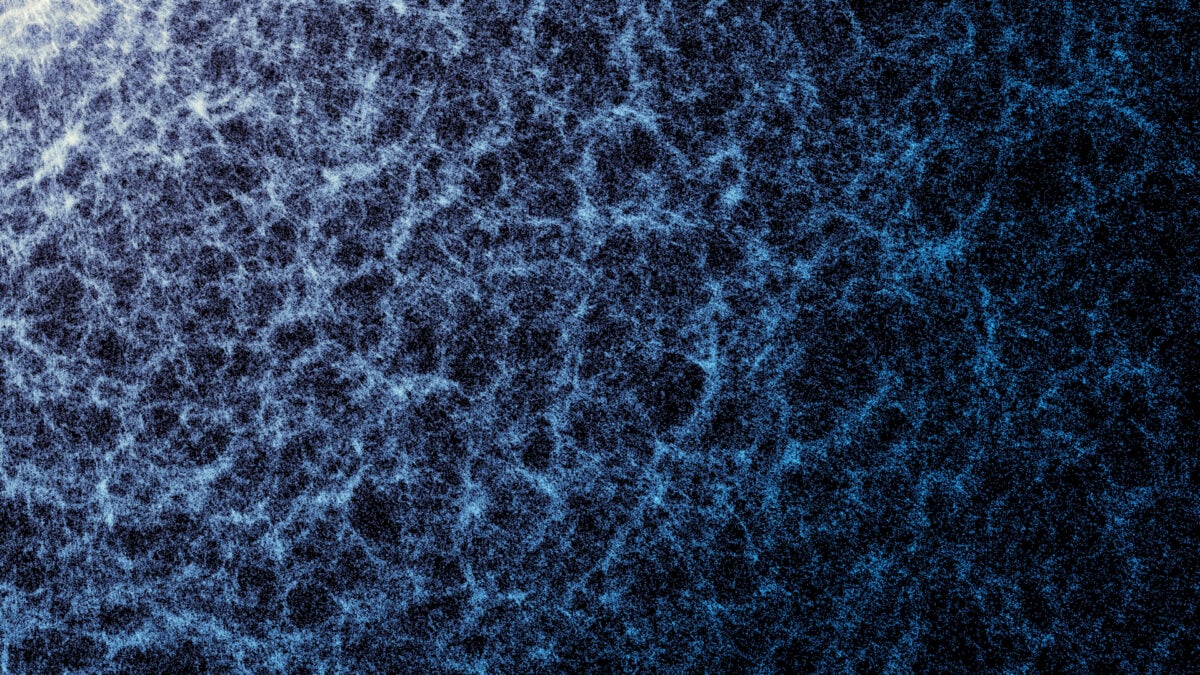
The Dark Energy Spectroscopic Instrument (DESI) has finished a five-year survey that produced the most detailed three-dimensional map of the observable universe to date, officials said in mid‑April 2026. Mounted on the Nicholas U. Mayall 4‑metre Telescope at Kitt Peak, Arizona, DESI recorded spectra for more than 47 million galaxies and quasars plus about 20 million Milky Way stars — far exceeding its original 34 million target. The dataset spans roughly 14,000 square degrees (with plans to extend coverage) and encodes positions, velocities and spectral information gathered via 5,000 robotically positioned fiber optics. The U.S. Department of Energy‑led collaboration involves about 900 scientists at 70 institutions worldwide. Teams will spend the next year processing the full dataset before broad release; first papers from the five‑year program are expected through 2027. Earlier, partial DESI results suggested a possible weakening of dark energy, a finding the full survey will now test. DESI operations are planned to continue through 2028 with potential upgrades to extend its lifespan.
Explore more on NewsDigest