
NewsDigest

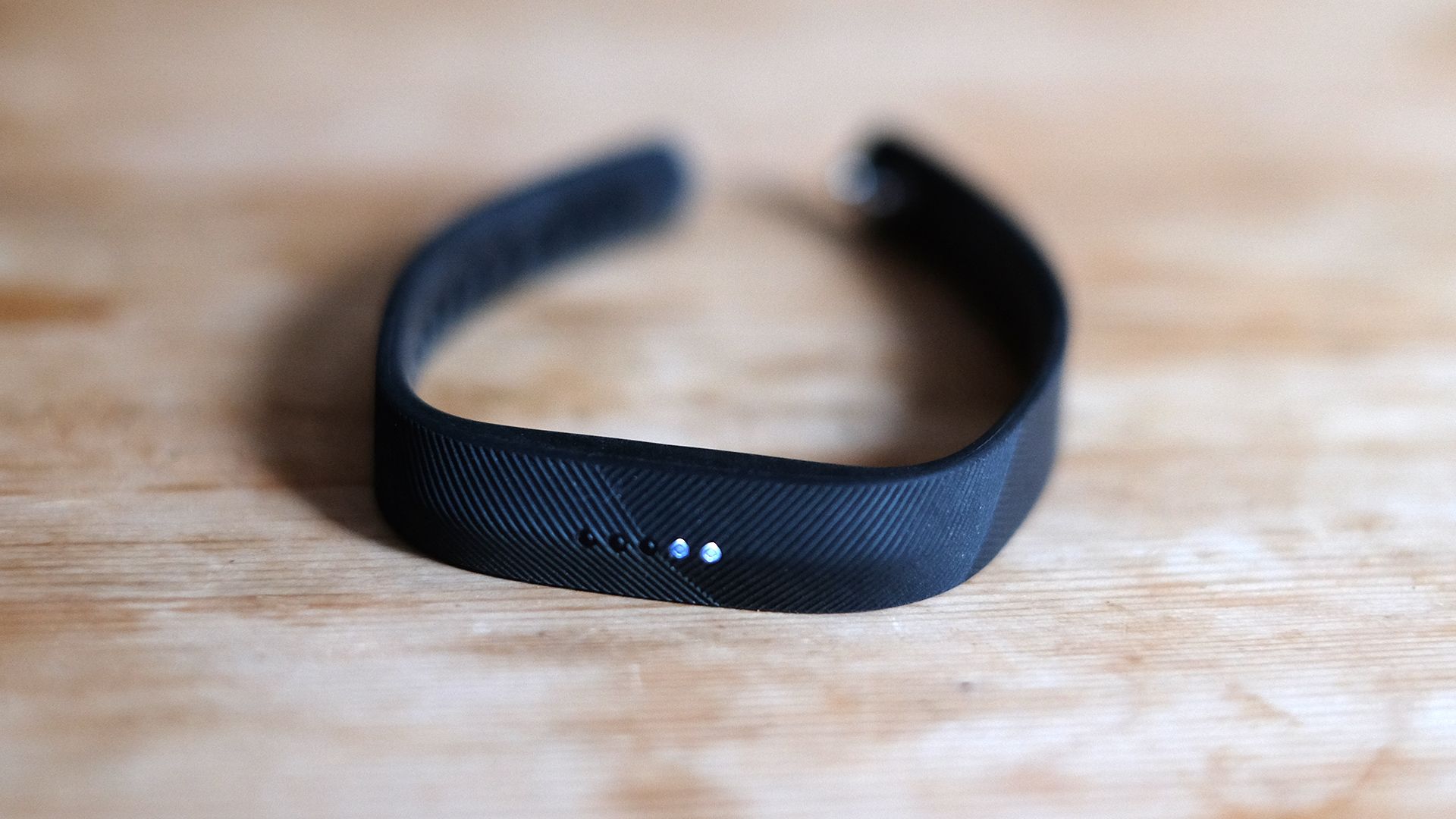
Google to Launch Screenless Fitbit Air Band

🏷️ Tech News🌍 United States🔗 3 sources36Digest ScoreiThis score reflects the story's reliability, bias neutrality, and public momentum.
Google to Launch Screenless Fitbit Air Band

📰 Full Story

Multiple technology outlets reported on April 20, 2026, that Google plans to market a screen-less fitness band as the “Google Fitbit Air,” positioning it as a direct rival to Whoop. Leaks, attributed to sources cited by 9to5Google and amplified by TechRadar and Android Police, show NBA star Stephen Curry already wearing the device. The Air is said to be an ultra-light, screenless band focused on all-day wear, sleep, strain and recovery metrics. Google reportedly will rebrand Fitbit Premium as “Google Health” and integrate its Gemini AI into the Fitbit app to power new personalised features, including an Ask Coach tool that will sit behind a paid subscription; basic functions may remain free. The AI-backed Fitbit Health Coach is already in public preview in some markets. The launch could plausibly coincide with Google I/O, though Google has not confirmed timing or specifications. Observers note the device must deliver multi-day battery life and high-quality biometric tracking to credibly challenge Whoop and maintain athlete interest.

Huawei launches Pura X Max and Pura 90 series

🏷️ Tech News🌍 China🔗 5 sources35Digest ScoreiThis score reflects the story's reliability, bias neutrality, and public momentum.
Huawei launches Pura X Max and Pura 90 series

📰 Full Story

Huawei unveiled multiple new Pura-series phones in China on April 20, 2026, led by the Pura X Max — promoted as the first commercially available “wide” passport-style foldable. The Pura X Max features a 5.4-inch 3:2 cover display and a 7.7-inch internal 3:2 (landscape) panel, both LTPO OLED (1–120Hz) with peak brightness up to 3,500/3,000 nits; a HiSilicon Kirin 9030 Pro chip; a 5,300 mAh battery with 66W wired and 50W wireless charging; triple cameras (50MP main with variable aperture, 50MP telephoto, 12.5MP ultrawide); HarmonyOS 6.1 and M‑Pen stylus support. Prices in China start at 10,999 CNY for the base model. Alongside it Huawei launched the mid-range Pura 90 (12GB/256GB from 4,699 CNY; shipping from May 9) with a 6,500 mAh battery, 50MP main and 50MP periscope telephoto (3.7x optical) and Kirin 9010S, and the Pura 90 Pro Max flagship (200MP telephoto sensor, 6,000 mAh, 100W wired/80W wireless) priced from 6,499–8,599 CNY. International availability has not been confirmed.

GoPro launches Mission 1 series at premium prices

🏷️ Tech News🌍 United States🔗 3 sources35Digest ScoreiThis score reflects the story's reliability, bias neutrality, and public momentum.
GoPro launches Mission 1 series at premium prices

📰 Full Story

GoPro has unveiled its new Mission 1 camera family, positioning the devices as high-resolution, cinema-capable action cameras aimed at professional and prosumer users. The lineup centers on a 50MP 1-inch sensor and the new GP3 processor. U.S. pricing starts at $599.99 for the Mission 1 and $699.99 for the Mission 1 Pro, with a $100 subscriber discount on both; an interchangeable-lens Mission 1 Pro ILS is due in Q3 and will carry similar pricing. GoPro says pre-orders are open now and that orders will ship on or before May 28. The Mission 1 offers 8K and high-frame-rate 4K capture (with limits versus the Pro), while the Mission 1 Pro boosts frame rates (including 8K/60 and higher 4K rates) and supports 4:3 Open Gate recording for flexible cropping. Accessories and pricing were also disclosed: a wireless mic system (~$159.99), Media Mod (~$149.99) and Enduro 2 battery (~$34.99); early pre-orders include a bundled grip while supplies last. GoPro is marketing the line as “the world’s smallest, lightest and most durable high-resolution cinematic camera system.”

Deezer says 44% of uploads are AI-generated

🏷️ Tech News🌍 France🔗 3 sources29Digest ScoreiThis score reflects the story's reliability, bias neutrality, and public momentum.
Deezer says 44% of uploads are AI-generated

📰 Full Story

Deezer on April 20, 2026, said AI-generated tracks now make up 44% of all daily uploads to its platform — roughly 75,000 synthetic songs a day or more than two million a month. The Paris-headquartered streamer said consumption of AI tracks remains low (1-3% of streams) and that around 85% of those streams are detected as fraudulent and demonetized. Deezer has been tagging AI content since June 2025 and says it tagged more than 13.4 million AI tracks in 2025. It has stopped storing hi-res versions of flagged AI songs, excludes them from algorithmic recommendations and editorial playlists, and is licensing its detection technology to partners including collecting society Sacem and other third parties. The company noted rapid growth from 10,000 daily AI tracks in January 2025 to 60,000 in January 2026 and 75,000 now. Deezer urged rival platforms to adopt similar measures as industry players pursue different transparency approaches, while AI-made tracks have already topped charts in several countries.

Utah Republican Defies Trump on AI Preemption

🏷️ Tech News🌍 United States🔗 3 sources29Digest ScoreiThis score reflects the story's reliability, bias neutrality, and public momentum.
Utah Republican Defies Trump on AI Preemption

📰 Full Story

A brewing clash over who should set rules for artificial intelligence has crystallised in Utah, where state Rep. Doug Fiefia — a Republican and former Google employee — resisted White House pressure to abandon state-level AI oversight. The Biden-era administration’s successor has pushed a national policy framework and executive actions aimed at preempting state laws, creating a Department of Justice AI Litigation Task Force (operational Jan. 10, 2026) and a Commerce Department review of state statutes. The administration says a single, “minimally burdensome” federal standard is needed to avoid a patchwork that would hurt U.S. competitiveness; it has carved out narrow exceptions for child safety and procurement. States, meanwhile, have accelerated activity — more than 1,200 AI bills were introduced in 2025 with scores enacted — and state measures in California, New York and Colorado are singled out for scrutiny. Fiefia’s HB 286, aimed at frontier model transparency and child protections, passed a committee but stalled after White House objections. The dispute has exposed tensions within the GOP over states’ rights and prompted a near-unanimous Senate rebuke of a proposed AI moratorium packaged in a must-pass bill.
Explore more on NewsDigest