
NewsDigest

OpenAI launches ChatGPT workspace agents for teams

🏷️ Tech News🌍 United States🔗 3 sources35Digest ScoreiThis score reflects the story's reliability, bias neutrality, and public momentum.
OpenAI launches ChatGPT workspace agents for teams

📰 Full Story

OpenAI on April 22, 2026 introduced Workspace Agents — cloud-based, shared AI agents in ChatGPT that can plan, execute and persist through multi-step workflows for teams. Available to Business, Enterprise, Edu and Teachers plan subscribers, the agents can access files, run code, connect to third‑party tools (Slack, Gmail, Salesforce, Google Drive, Microsoft apps, Notion, Atlassian, GitLab and others) and be embedded in channels such as Slack. Built on OpenAI’s Codex substrate and a growing plugin ecosystem, Workspace Agents support background execution, scheduling, persistent memory and cross‑platform action (for example generating reports, drafting emails, reconciling data and pushing summaries). OpenAI positions them as an evolution of its 2023 GPTs, with conversion tools and a shared team directory for reusing and improving agents. The company said Workspace Agents will be free until May 6, 2026, after which credit‑based pricing begins. The launch comes amid competition from Anthropic’s Claude Cowork and the arrival of developer talent from other agent projects.
Google launches split-design TPUs for training, inference

🏷️ Tech News🌍 United States🔗 14 sources54Digest ScoreiThis score reflects the story's reliability, bias neutrality, and public momentum.
Google launches split-design TPUs for training, inference

📰 Full Story

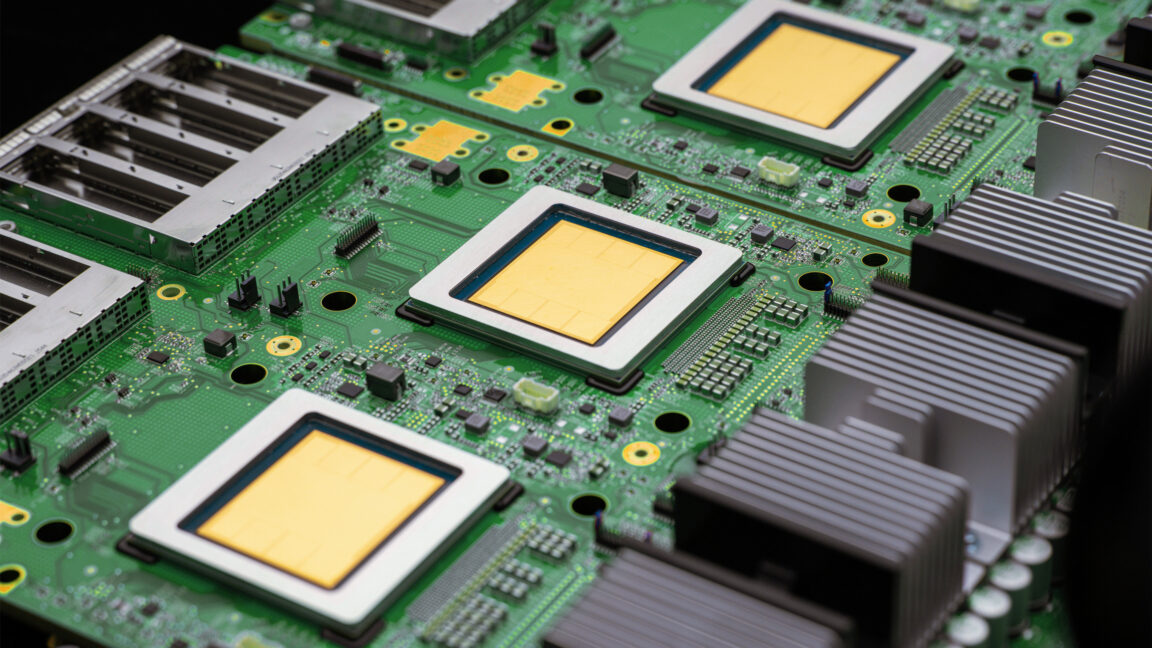
Alphabet’s Google Cloud on April 22 unveiled its eighth-generation tensor processing units (TPUs), splitting the line into two purpose-built chips: the TPU 8t for large‑scale model training and the TPU 8i for low‑latency inference and AI agents. Google said 8t delivers roughly 2.8x the training throughput of the prior generation and can be clustered into 9,600‑chip pods with networking to scale to logical clusters of more than one million chips. TPU 8i prioritises on‑chip memory and latency (including up to 384 MB SRAM and expanded HBM) and offers an estimated ~80% improvement in performance‑per‑dollar for inference. Google also flagged infrastructure updates — new network topologies and storage paths — to support the chips, confirmed continued availability of Nvidia GPUs in its cloud, and highlighted partner design and supply relationships with Broadcom, MediaTek and potential talks with Marvell. The systems and chips are due to be made generally available later this year.

Microsoft pours A$25 billion into Australian AI

🏷️ Tech News🌍 Australia🔥 Trending🔗 13 sources49Digest ScoreiThis score reflects the story's reliability, bias neutrality, and public momentum.
Microsoft pours A$25 billion into Australian AI

📰 Full Story

April 22-23, 2026 — Microsoft announced a A$25 billion (about US$17.9 billion) commitment to Australia to be deployed by the end of 2029, its largest investment in the country to date. The company said funds will expand Azure AI supercomputing and cloud infrastructure, boost GPU capacity (more than 140% growth planned by 2029), strengthen cybersecurity and deliver AI skills training — including a pledge to train three million Australians by 2028. The move builds on a prior A$5 billion investment in 2023 that expanded Microsoft’s local data centre footprint to 29 sites across three Azure regions. Microsoft CEO Satya Nadella and Prime Minister Anthony Albanese announced the plan in Sydney. Separately, Microsoft announced wider AI and security initiatives — new Microsoft 365 E7 Frontier features and a collaboration with Anthropic on Project Glasswing to use the Mythos model for vulnerability discovery. Analysts have reacted with mixed investor signals: some firms maintained buy ratings while adjusting targets. Local reporting highlighted gaps in disclosure on data-centre locations, energy sourcing, long-term local job creation and tax flows, and has prompted parliamentary scrutiny in New South Wales.

Sony's Ace robot reaches expert table tennis level

🏷️ Tech News🌍 Japan🔥 Trending🔗 15 sources38Digest ScoreiThis score reflects the story's reliability, bias neutrality, and public momentum.
Sony's Ace robot reaches expert table tennis level

📰 Full Story

Sony AI’s autonomous robot Ace has reached expert-level performance in competitive table tennis, the company and a study published in Nature reported on April 22, 2026. Built and tested at Sony’s Tokyo facility, Ace combines an eight-jointed robotic arm, multiple high-speed camera arrays (including event-based gaze systems) and a model-free reinforcement learning control system trained in simulation. In April 2025 Ace won three of five matches against elite-level human players; Sony AI says the system went on to beat professional opponents in December 2025 and again in March 2026, including victories over top-ranked professionals. Ace operates under official International Table Tennis Federation rules, uses multi-view vision to estimate ball position and spin, and executes shots with reaction times far faster than human players. Human competitors praised its unpredictability and precision but noted that humans can exploit certain tactical weaknesses. The researchers and company highlight potential transfers of the perception-and-control techniques to manufacturing, service robotics, sports training and other real-time physical tasks, while observers have flagged possible military or security applications as the technology matures.

OpenAI to commit up to $1.5 billion to DeployCo JV

🏷️ Tech News🌍 United States🔗 4 sources33Digest ScoreiThis score reflects the story's reliability, bias neutrality, and public momentum.
OpenAI to commit up to $1.5 billion to DeployCo JV

📰 Full Story

April 22, 2026 — OpenAI is preparing to commit up to $1.5 billion of its own capital to a new joint venture with private equity firms, Financial Times and other outlets reported. The venture, known internally as DeployCo, will be a Delaware-registered LLC initially valued at about $10 billion in a funding round expected to close in early May. OpenAI would put in $500 million of equity upfront with an option to add a further $1 billion later; private equity partners including TPG, Bain Capital, Advent International, Brookfield and Goanna Capital are reported to be contributing roughly $4 billion. OpenAI will hold super-voting shares in DeployCo and has guaranteed backers an annual return of 17.5% on their commitments; PE investors are locked in for five years. DeployCo is designed to accelerate adoption of OpenAI’s workplace tools across PE portfolio companies by embedding technical teams and offering services-plus-software deployment. Reports note the move is strategic distribution rather than fundraising and could expose OpenAI to material downside if deployment revenues fall short.

VAST Data raises $1 billion, valued at $30 billion

🏷️ Tech News🌍 United States🔗 6 sources32Digest ScoreiThis score reflects the story's reliability, bias neutrality, and public momentum.
VAST Data raises $1 billion, valued at $30 billion

📰 Full Story

VAST Data said on April 22 it raised about $1 billion in a Series F round that values the company at $30 billion, more than triple its 2023 valuation. The round was led by Drive Capital and Access Industries and included participation from existing backers such as Nvidia, Fidelity and NEA, with the financing comprising both primary and secondary proceeds. The New York–based vendor builds a unified data platform used to store and process massive datasets for AI training and inference. VAST counts customers including xAI, CoreWeave and the U.S. Air Force and in November signed a $1.17 billion commercial agreement with CoreWeave. Company-reported metrics cited in coverage include more than $4 billion in cumulative bookings, over $500 million in committed annual recurring revenue and rapidly expanding revenue, with management saying proceeds will fund global expansion, partnerships and strategic transactions. Investors and partners highlighted VAST’s role in easing data bottlenecks that can limit the performance of large GPU clusters powering generative AI.
Explore more on NewsDigest