NewsDigest

OpenAI to commit up to $1.5 billion to DeployCo JV

🏷️ Tech News🌍 United States🔗 4 sources33Digest ScoreiThis score reflects the story's reliability, bias neutrality, and public momentum.
OpenAI to commit up to $1.5 billion to DeployCo JV

📰 Full Story

April 22, 2026 — OpenAI is preparing to commit up to $1.5 billion of its own capital to a new joint venture with private equity firms, Financial Times and other outlets reported. The venture, known internally as DeployCo, will be a Delaware-registered LLC initially valued at about $10 billion in a funding round expected to close in early May. OpenAI would put in $500 million of equity upfront with an option to add a further $1 billion later; private equity partners including TPG, Bain Capital, Advent International, Brookfield and Goanna Capital are reported to be contributing roughly $4 billion. OpenAI will hold super-voting shares in DeployCo and has guaranteed backers an annual return of 17.5% on their commitments; PE investors are locked in for five years. DeployCo is designed to accelerate adoption of OpenAI’s workplace tools across PE portfolio companies by embedding technical teams and offering services-plus-software deployment. Reports note the move is strategic distribution rather than fundraising and could expose OpenAI to material downside if deployment revenues fall short.
Tesla to Use Intel's 14A in Terafab Plan

🏷️ Tech News🌍 United States🔗 16 sources47Digest ScoreiThis score reflects the story's reliability, bias neutrality, and public momentum.
Tesla to Use Intel's 14A in Terafab Plan

📰 Full Story

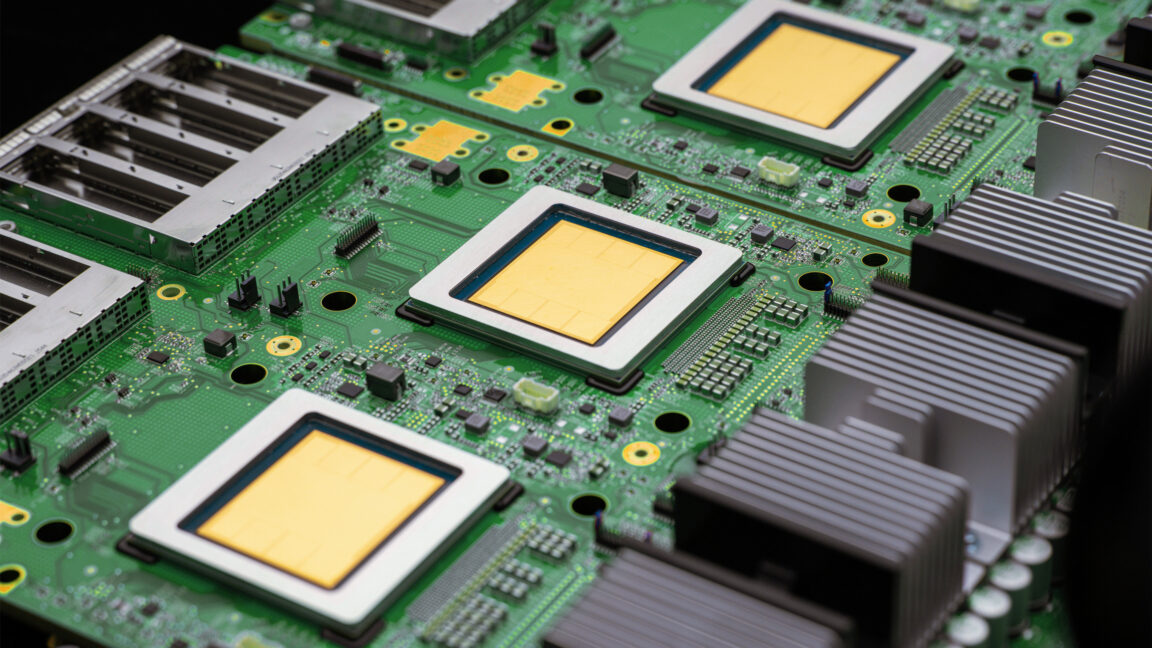
Elon Musk said on April 22-23, 2026, that Tesla plans to use Intel’s next‑generation 14A semiconductor process to make chips for its Terafab project, making Tesla the first major external customer for the technology. Intel has joined Musk’s Terafab initiative alongside SpaceX to produce processors for vehicles, humanoid robots and space data centres. Musk also announced a roughly $3 billion research chip facility at Tesla’s Giga Texas campus to run a pilot line that would process a few thousand wafers a month; SpaceX would lead high‑volume manufacturing. Intel’s shares rose in after‑hours trading on the news. The move is framed as validation of Intel’s foundry efforts after years of yield and supply challenges; company leaders have said securing outside customers is crucial to sustaining their contract manufacturing push. Analysts and investors will watch production timing, yield performance for Intel’s 18A/14A nodes, who will fund and operate large‑scale fabs, and whether the Terafab plan involves licensing Intel technology or using Intel facilities.

Google launches split-design TPUs for training, inference

🏷️ Tech News🌍 United States🔗 14 sources44Digest ScoreiThis score reflects the story's reliability, bias neutrality, and public momentum.
Google launches split-design TPUs for training, inference

📰 Full Story

Alphabet’s Google Cloud on April 22 unveiled its eighth-generation tensor processing units (TPUs), splitting the line into two purpose-built chips: the TPU 8t for large‑scale model training and the TPU 8i for low‑latency inference and AI agents. Google said 8t delivers roughly 2.8x the training throughput of the prior generation and can be clustered into 9,600‑chip pods with networking to scale to logical clusters of more than one million chips. TPU 8i prioritises on‑chip memory and latency (including up to 384 MB SRAM and expanded HBM) and offers an estimated ~80% improvement in performance‑per‑dollar for inference. Google also flagged infrastructure updates — new network topologies and storage paths — to support the chips, confirmed continued availability of Nvidia GPUs in its cloud, and highlighted partner design and supply relationships with Broadcom, MediaTek and potential talks with Marvell. The systems and chips are due to be made generally available later this year.

Microsoft pours A$25 billion into Australian AI

🏷️ Tech News🌍 Australia🔥 Trending🔗 13 sources44Digest ScoreiThis score reflects the story's reliability, bias neutrality, and public momentum.
Microsoft pours A$25 billion into Australian AI

📰 Full Story

April 22-23, 2026 — Microsoft announced a A$25 billion (about US$17.9 billion) commitment to Australia to be deployed by the end of 2029, its largest investment in the country to date. The company said funds will expand Azure AI supercomputing and cloud infrastructure, boost GPU capacity (more than 140% growth planned by 2029), strengthen cybersecurity and deliver AI skills training — including a pledge to train three million Australians by 2028. The move builds on a prior A$5 billion investment in 2023 that expanded Microsoft’s local data centre footprint to 29 sites across three Azure regions. Microsoft CEO Satya Nadella and Prime Minister Anthony Albanese announced the plan in Sydney. Separately, Microsoft announced wider AI and security initiatives — new Microsoft 365 E7 Frontier features and a collaboration with Anthropic on Project Glasswing to use the Mythos model for vulnerability discovery. Analysts have reacted with mixed investor signals: some firms maintained buy ratings while adjusting targets. Local reporting highlighted gaps in disclosure on data-centre locations, energy sourcing, long-term local job creation and tax flows, and has prompted parliamentary scrutiny in New South Wales.

Musk: Millions of Teslas Require Hardware Upgrades

🏷️ Tech News🌍 United States🔗 3 sources30Digest ScoreiThis score reflects the story's reliability, bias neutrality, and public momentum.
Musk: Millions of Teslas Require Hardware Upgrades

📰 Full Story

On Tesla’s Q1 2026 earnings call (April 22–23), CEO Elon Musk acknowledged that vehicles equipped with the company’s Hardware 3 (HW3) — roughly four million cars produced through 2023 — cannot run an unsupervised version of Full Self‑Driving (FSD). Musk said HW3 has only one‑eighth the memory bandwidth of Tesla’s Hardware 4 (AI4) and lacks the processing and camera capability required for unsupervised autonomy. Tesla will offer discounted trade‑ins and retrofit options — including replacing the onboard computer and cameras — and plans to build “microfactories” in major metropolitan areas to perform mass upgrades more efficiently than service centers. The company said it will continue to deliver incremental FSD feature updates to HW3 cars but that anything approaching unsupervised FSD will require hardware replacement. The admission comes amid customer frustration and pending legal actions in some markets from owners who bought FSD expecting future software‑only enablement.

🤝 Social Media Insights

Social Summary
1 / 5
Tesla’s reversal highlights a technical and messaging gap: a deliberate shift to vision‑only sensing and earlier claims about HW3’s sufficiency are now at odds with reality. Owners face real retrofit costs and legal/regulatory risks as the company mounts a logistical response with trade‑ins and microfactories.

French startup Univity raises €27m for VLEO constellation

🏷️ Tech News🌍 France🔗 6 sources29Digest ScoreiThis score reflects the story's reliability, bias neutrality, and public momentum.
French startup Univity raises €27m for VLEO constellation

📰 Full Story

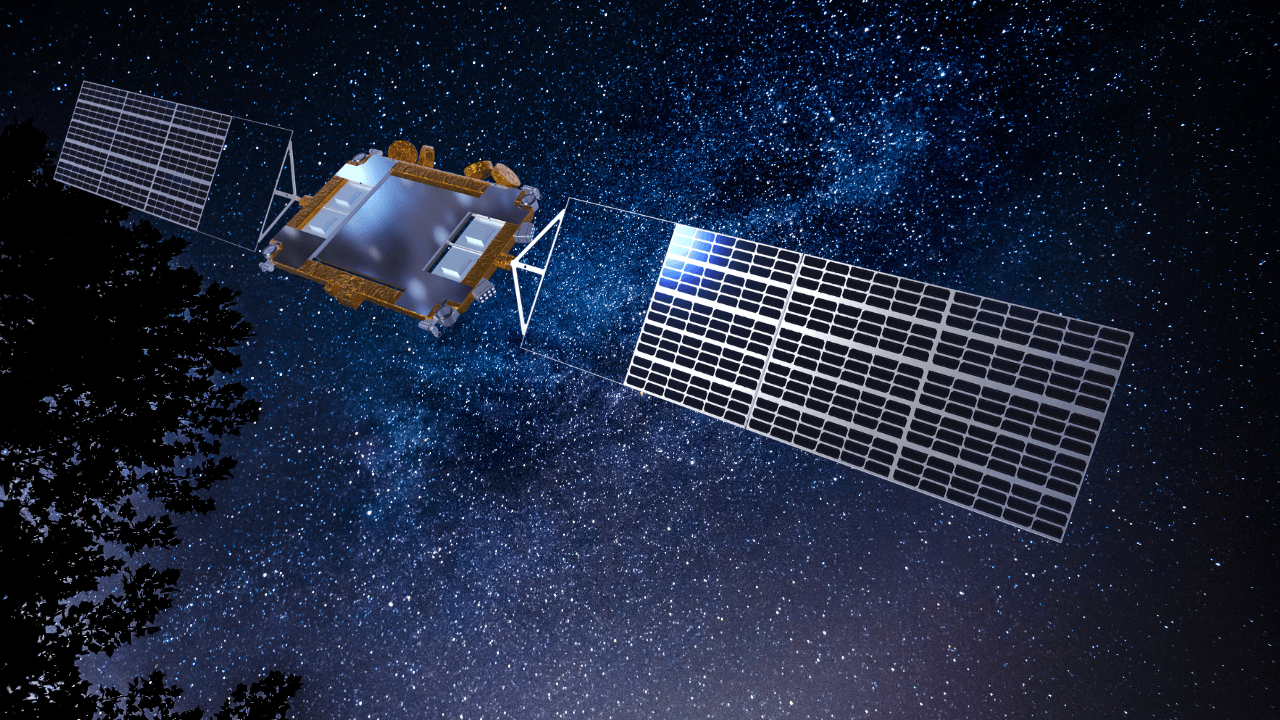
Paris-based satellite startup Univity said on April 23, 2026 it closed a €27 million Series A round, bringing total secured funding to about €68 million when combined with a prior €31 million contract from the French space agency CNES. Investors in the round include Bpifrance’s Deeptech 2030 fund, venture firm Blast, Expansion and two family offices. Founded in 2022, Univity is developing a very low Earth orbit (VLEO) wholesale network intended to sell space-based internet and mobile services to telecom operators rather than direct to consumers. The company plans a fleet of up to 3,400 satellites in VLEO (roughly 375 km altitude), has signed commercial agreements with 16 operators across four continents, and intends to manufacture satellites near Toulouse to control costs. Current funds will support building and launching its first two demonstration satellites in a 2027–28 timeframe and the uniShape VLEO 5G demonstrator, ahead of a planned scale-up from 2028 that would use infrastructure financing from large investors and operators. Univity positions itself as a European alternative to consumer-facing systems like Starlink and Amazon Kuiper.
Explore more on NewsDigest