

NewsDigest

NASA selects Voyager for seventh private ISS mission

🏷️ Science & Space🌍 United States🔗 3 sources31Digest ScoreiThis score reflects the story's reliability, bias neutrality, and public momentum.
NASA selects Voyager for seventh private ISS mission

đź“° Full Story

On April 15, 2026 NASA announced it has selected Voyager Technologies to conduct the seventh private astronaut mission (PAM) to the International Space Station, a contract targeted to launch no earlier than 2028 from Florida. The mission, named VOYG-1, would carry up to four privately sponsored crew for as many as 14 days aboard the orbital laboratory; Voyager will submit proposed crew members to NASA and international partners for review and train with the agency and the launch provider. The Denver-based company will purchase mission services from NASA—including crew consumables, cargo delivery, storage and access to cold-chain sample return capacity—while NASA secures the ability to return scientific samples. Voyager is the third private provider chosen for PAMs after Axiom and Vast, selected from responses to a March 2025 research announcement. NASA Administrator Jared Isaacman said the award advances a commercial low-Earth orbit economy and supports technology development for future deep-space efforts. A specific launch date will depend on station traffic and planning considerations as NASA transitions toward multiple commercially operated space stations.
Blue Origin reuses New Glenn but misplaces satellite

🏷️ Science & Space🌍 United States🔗 23 sources74Digest ScoreiThis score reflects the story's reliability, bias neutrality, and public momentum.
Blue Origin reuses New Glenn but misplaces satellite

đź“° Full Story

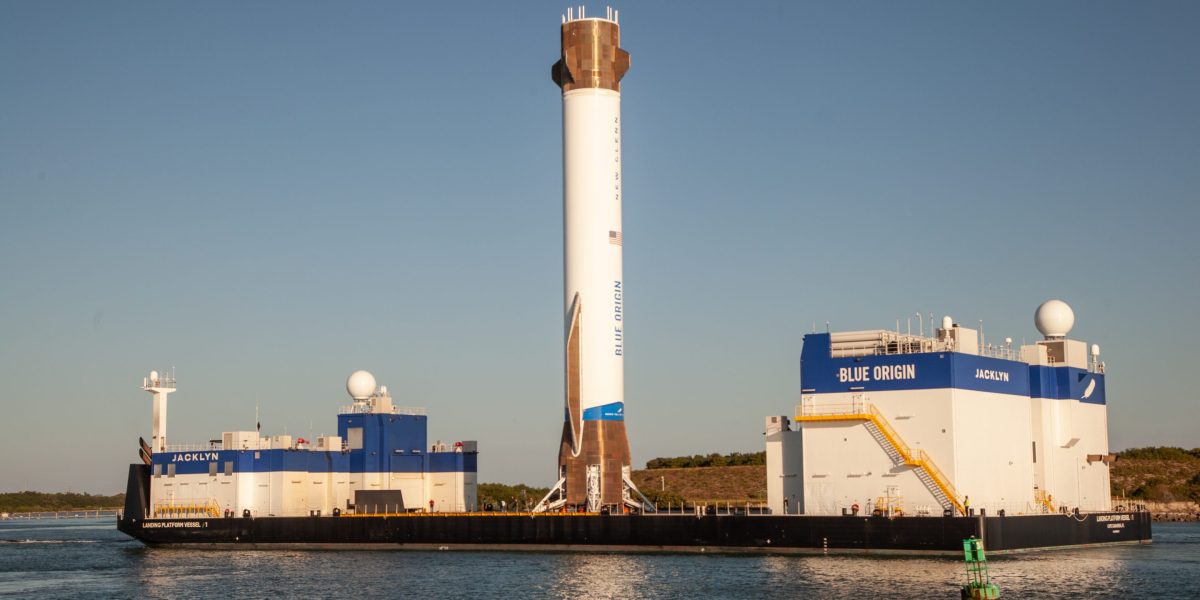
Blue Origin’s New Glenn rocket completed its third flight on April 19, 2026, marking the company’s first reuse of an orbital-class first stage. The booster, nicknamed “Never Tell Me The Odds,” successfully landed on the company droneship Jacklyn after liftoff from Cape Canaveral, Florida, at about 7:25 a.m. EDT. The mission carried AST SpaceMobile’s BlueBird 7 — a 2,400-square-foot direct-to-cellphone communications satellite — but the rocket’s upper stage placed the payload into an off‑nominal, lower-than-planned orbit. AST SpaceMobile confirmed the satellite powered on but said its on‑board thrusters could not raise it to an operational altitude and that the craft will be de‑orbited; the company expects the loss to be covered by insurance and said replacement satellites are in production. Blue Origin acknowledged the off‑nominal insertion and said it is assessing the anomaly. The mixed outcome — a milestone for booster reuse paired with a mission‑critical upper stage failure — will prompt investigations and could influence customer confidence and launch manifest planning for both Blue Origin and its commercial partners.

🤝 Social Media Insights

Social Summary
1 / 5
Independent tracking shows the satellite in a low 154x494 km orbit, indicating a missed upper-stage burn and a perigee low enough for reentry in days–weeks. The craft powered on but cannot be salvaged by its thrusters. Insurers and reinsurers are likely to absorb the financial loss, while Blue Origin faces investigations and likely higher insurance costs and customer scrutiny.

Lyrid Meteor Shower Peaks in Moonless Skies

🏷️ Science & Space🔥 Trending🔗 7 sources11Digest ScoreiThis score reflects the story's reliability, bias neutrality, and public momentum.
Lyrid Meteor Shower Peaks in Moonless Skies

đź“° Full Story

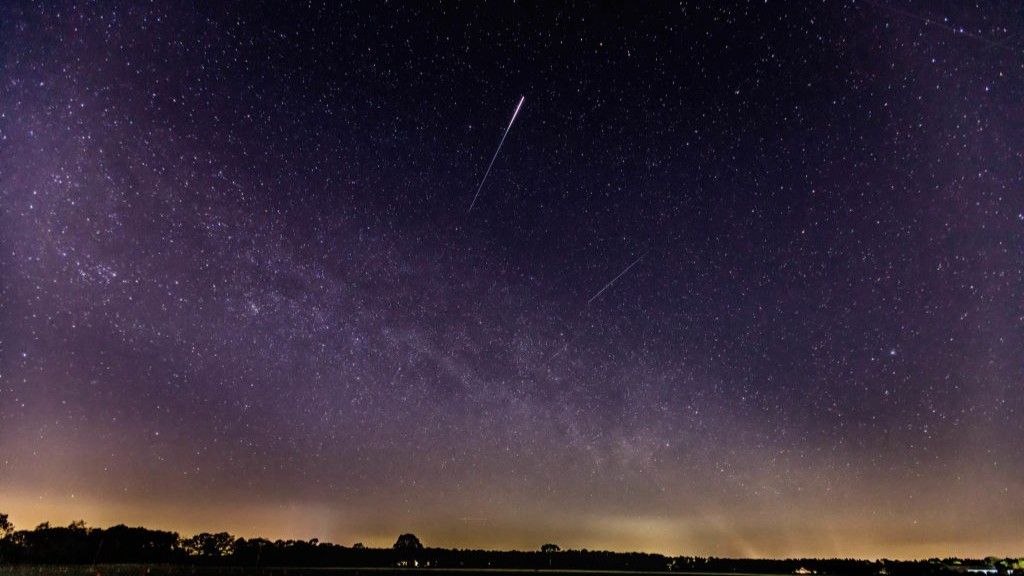
The annual Lyrid meteor shower will peak in moonless skies overnight April 21–22, 2026, offering skywatchers a good opportunity to see fast, bright meteors and occasional fireballs. The Lyrids run April 14–30 and typically produce about 10–20 meteors per hour under ideal, dark-sky conditions; some outlets cite peak rates of 15–20 per hour. The shower’s radiant lies in the constellation Lyra near the bright star Vega. This year’s favourable timing — with a new moon on April 17 leaving dark pre-dawn hours for the peak — should improve visibility, especially across Northern Hemisphere latitudes. The Lyrids originate from debris shed by Comet C/1861 G1 (Thatcher), a long‑period comet with an ~415‑year orbit. Historical outbursts have occasionally produced much higher rates, but such spikes are rare and unpredictable. Recommended viewing advice includes finding a dark, unobstructed site, allowing 20–30 minutes for night‑vision adaptation, facing away from city lights, and scanning wide areas of sky rather than staring at the radiant.

Light winds could drive 10-foot waves on Titan

🏷️ Science & Space🔗 3 sources8Digest ScoreiThis score reflects the story's reliability, bias neutrality, and public momentum.
Light winds could drive 10-foot waves on Titan

đź“° Full Story

A new wave-physics model developed by researchers at MIT predicts that gentle breezes on Saturn’s moon Titan could generate waves up to about 3 metres (10 feet) high on its hydrocarbon lakes. The model, dubbed PlanetWaves, extends traditional wind-wave theory by incorporating atmospheric pressure and the liquids’ properties—density, viscosity and surface tension—then was validated against 20 years of Lake Superior buoy data. Low gravity (about 14% of Earth’s) and the light nature of methane-ethane mixtures mean modest winds can build large, slow-moving swells over long fetches. The result helps reconcile Cassini’s largely smooth radar returns with geomorphic evidence for shoreline erosion and transient radar-bright patches observed in some flybys. Lead authors including Una Schneck and collaborators Andrew Ashton and Taylor Perron note the findings matter for interpreting Titan’s coastal features and for engineering any future lake-going or floatation probes; they also have implications for modeling waves on other worlds and some exoplanet scenarios.

Astronomers measure Cygnus X-1 jet power

🏷️ Science & Space🔗 4 sources4Digest ScoreiThis score reflects the story's reliability, bias neutrality, and public momentum.
Astronomers measure Cygnus X-1 jet power

đź“° Full Story

Using 18 years of very long baseline interferometry (VLBI) radio observations, an international team has for the first time derived a real-time measurement of the kinetic power and speed of jets from the stellar-mass black hole Cygnus X-1. The system — a ~21-solar-mass black hole orbiting a ~40-solar-mass O-type star, HDE 226868 — shows jets bent repeatedly by the companion’s fierce stellar wind. By modelling the wind’s ram pressure and matching the observed jet deflection, researchers infer an instantaneous kinetic power of roughly 2×10^37 ergs per second (often translated as the equivalent output of ~10,000 Suns) and a jet speed near half the speed of light. The study finds the jets carry about 10% of the accretion energy. Results are reported in Nature Astronomy and rely on data from the European VLBI Network and collaborators including the International Centre for Radio Astronomy Research.

Blue Origin reuses New Glenn but satellite placed low

🏷️ Science & Space🌍 United States🔥 Trending🔗 22 sources4Digest ScoreiThis score reflects the story's reliability, bias neutrality, and public momentum.
Blue Origin reuses New Glenn but satellite placed low

đź“° Full Story

Blue Origin’s New Glenn rocket launched from Cape Canaveral on April 19, 2026, achieving the company’s first reuse of a New Glenn first stage but failing to place its customer payload into the intended orbit. Liftoff occurred at about 7:25 a.m. EDT; the booster — nicknamed “Never Tell Me The Odds” — successfully returned to and landed on the droneship Jacklyn. AST SpaceMobile’s BlueBird 7 satellite separated and powered on, but Blue Origin and AST said the upper stage placed it into a lower-than-planned, off-nominal orbit. AST SpaceMobile said the altitude is too low for the satellite’s on‑board thrusters to correct and the craft will be de‑orbited; the firm expects the financial loss to be covered by insurance. BlueBird 7 is one of AST’s large “Block 2” direct-to-cellphone relay satellites, featuring a roughly 2,400 sq ft phased-array antenna and intended to expand the company’s space‑based cellular broadband constellation. Both companies have opened investigations; Blue Origin is assessing the second‑stage performance and the implications for future New Glenn missions, including planned launches tied to NASA and Blue Origin’s lunar lander program.
Explore more on NewsDigest