NewsDigest

Curiosity Finds New Organic Molecules on Mars

🏷️ Science & Space🔥 Trending🔗 11 sources78Digest ScoreiThis score reflects the story's reliability, bias neutrality, and public momentum.
Curiosity Finds New Organic Molecules on Mars

📰 Full Story

NASA’s Curiosity rover has detected more than 20 organic molecules in 3.5‑billion‑year‑old clay‑bearing sandstones in Gale Crater’s Glen Torridon region, scientists reported on April 21, 2026 in Nature Communications. The discovery came from the rover’s Sample Analysis at Mars (SAM) suite using a tetramethylammonium hydroxide (TMAH) thermochemolysis experiment — the first time that wet‑chemistry thermochemolysis has been run on another planet. Identified compounds include benzothiophene, methyl benzoate and a suite of single and dicyclic aromatic molecules, plus nitrogen‑ and sulfur‑bearing species; researchers interpret many as breakdown products of preserved macromolecular carbon. The sample came from the “Mary Anning 3” drill target in the Knockfarrill Hill member. Scientists emphasize the molecules are not direct evidence of past life: they could be native abiotic products, or delivered by meteorites. The paper was led by Amy Williams (Univ. of Florida) and confirms that complex organics can survive deep geologic time in Mars’ shallow subsurface. Results will inform future TMAH experiments planned for ESA’s Rosalind Franklin rover and NASA’s Dragonfly mission.
Curiosity finds complex organics on Mars

🏷️ Science & Space🔥 Trending🔗 13 sources47Digest ScoreiThis score reflects the story's reliability, bias neutrality, and public momentum.
Curiosity finds complex organics on Mars

📰 Full Story

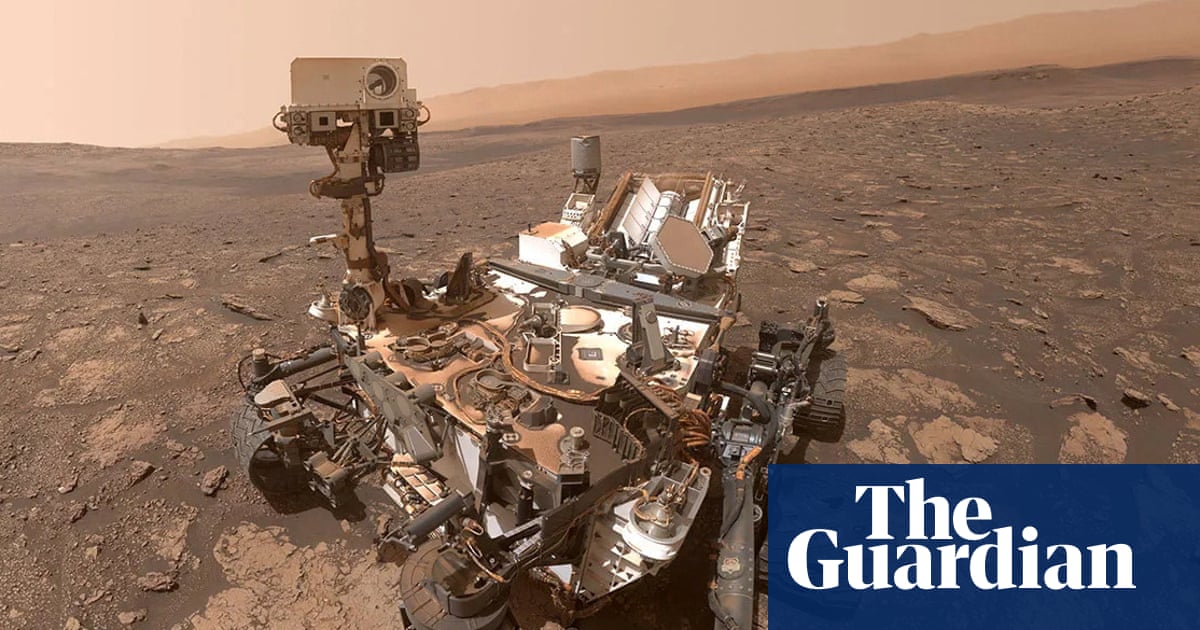
NASA’s Curiosity rover has detected a diverse suite of organic molecules on Mars after running a chemistry experiment never before performed beyond Earth, researchers reported April 21, 2026 in Nature Communications. The Sample Analysis at Mars (SAM) instrument used tetramethylammonium hydroxide (TMAH) thermochemolysis on clay-rich sandstones in the Glen Torridon region of Gale Crater, recovering more than 20 organic compounds from roughly 3.5-billion-year-old sedimentary rocks. Confirmed detections include benzothiophene and a nitrogen-bearing molecule whose structure resembles precursors to DNA. The team, led by Amy Williams of the University of Florida, says the results demonstrate preservation of macromolecular carbon in near-surface Martian rocks but cannot distinguish whether the organics are native, formed abiotically, or were delivered by meteorites. Curiosity carried only two TMAH doses, making the 2020 experiment high-stakes; findings validate the technique for future missions and underscore the need for returned samples or deeper drilling to resolve biological versus non-biological origins.

🤝 Social Media Insights

Social Summary
1 / 3
Lab work suggests terrestrial microbes struggle in Mars‑like soil, reducing contamination concerns. The organics found could be meteoritic or locally preserved macromolecules; sparse sampling prevents concluding they are widespread or biological in origin.

Canada introduces bill to enable domestic space launches

🏷️ Science & Space🌍 Canada🔗 3 sources37Digest ScoreiThis score reflects the story's reliability, bias neutrality, and public momentum.
Canada introduces bill to enable domestic space launches

📰 Full Story

On April 21, 2026, Transport Minister Steven MacKinnon introduced the Canadian Space Launch Act (C-28) in the House of Commons to authorize, regulate and oversee launches and re-entries from Canadian soil. The proposed law would create the first domestic regulatory framework covering commercial and military launches, amend statutes including the Aeronautics Act and Canada Transportation Act, and establish safety, security, insurance and indemnification requirements. Ottawa says the move follows funding measures in last year’s budget (including capital for a Nova Scotia spaceport) and recent momentum from NASA’s Artemis II mission featuring Canadian astronaut Jeremy Hansen. Government officials argue Canada — the only G7 country without sovereign launch capability — must reduce reliance on foreign providers to retain investment, cut delays and secure critical infrastructure. Industry players such as Maritime Launch Services (Spaceport Nova Scotia) and NordSpace are developing facilities, and Defence’s Launch the North grants have supported domestic launcher development. The bill is framed as a step to grow a potentially large commercial sector while addressing aviation and maritime safety, environmental and national-security concerns.

NASA assesses Artemis II performance, Ames contributions

🏷️ Science & Space🌍 United States🔗 3 sources31Digest ScoreiThis score reflects the story's reliability, bias neutrality, and public momentum.
NASA assesses Artemis II performance, Ames contributions

📰 Full Story

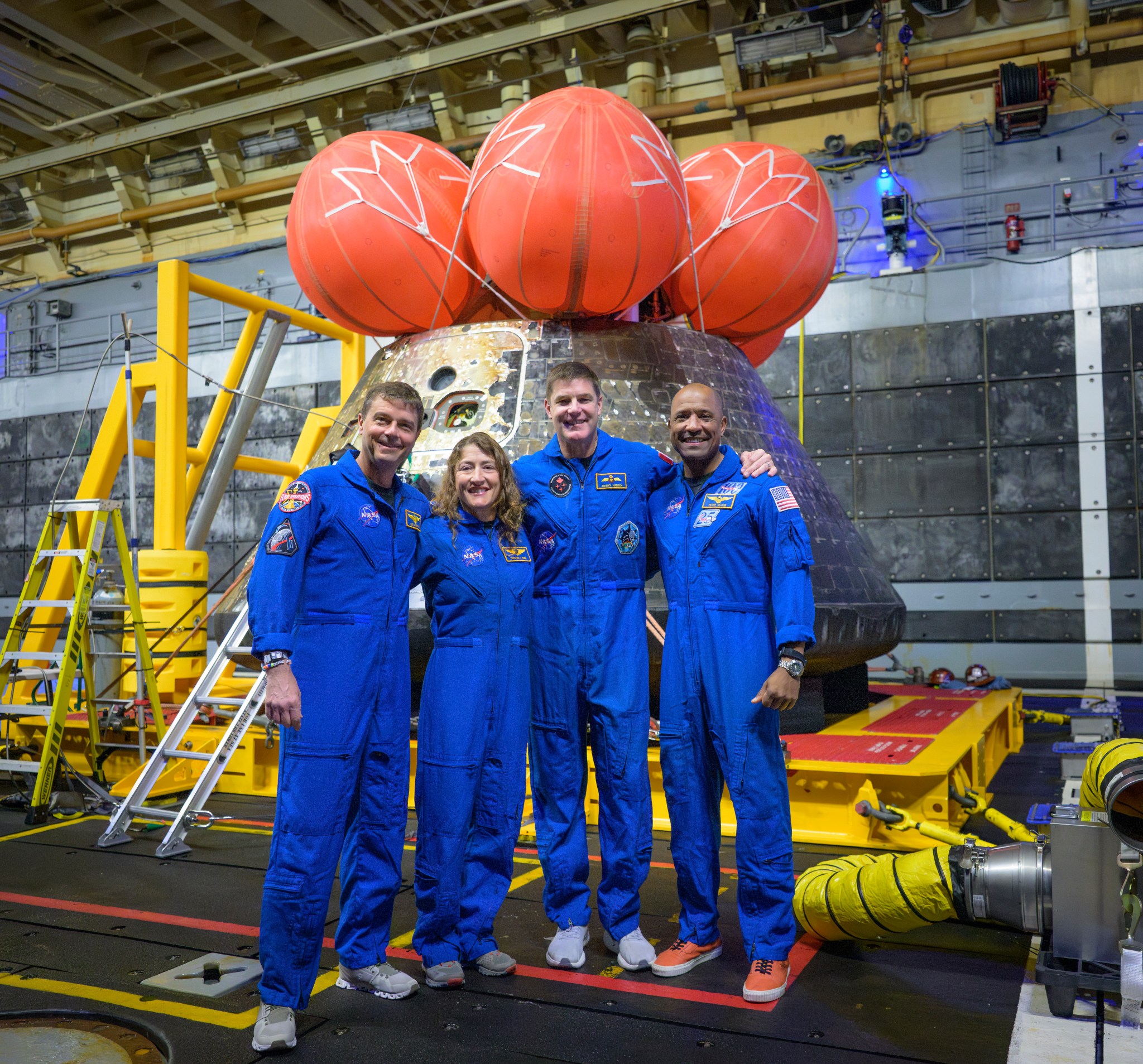
NASA’s Artemis II crewed test flight (launched April 1, 2026) completed a roughly 694,481-mile lunar flyby and splashed down off San Diego on April 10, returning four astronauts — NASA’s Reid Wiseman, Victor Glover and Christina Koch, and CSA’s Jeremy Hansen — safely to Earth. Initial post-flight assessments through April 20–21 show Orion’s thermal protection system performed as expected, with char loss markedly reduced compared with Artemis I. Diver imagery and US Navy recovery photos documented the heat shield’s condition; the crew module will be transported to Kennedy Space Center and then to Marshall Space Flight Center for detailed sample extraction and X-ray scans. NASA teams are also probing a urine vent-line clog identified during the mission. Ames Research Center in California supported the mission with aerodynamic and aerothermal modeling, onboard heat-shield sensors, 3D-MAT compression pads, wind-tunnel testing that validated SLS core-stage strakes to reduce vibration, and SBIR-driven technologies. Early reviews indicate the SLS rocket and ground systems met flight objectives; the mobile launcher has returned to the Vehicle Assembly Building for repairs and preparation for upcoming missions.

Artemis II commander’s iPhone captures Earthset

🏷️ Science & Space🌍 United States🔗 13 sources26Digest ScoreiThis score reflects the story's reliability, bias neutrality, and public momentum.
Artemis II commander’s iPhone captures Earthset

📰 Full Story

NASA Artemis II commander Reid Wiseman posted a 53-second iPhone video showing ‘Earthset’ — Earth slipping behind the Moon’s horizon — taken during the crew’s lunar flyby on April 6 and shared on social media April 19. The clip, shot on an iPhone 17 Pro Max using 8x zoom and described by Wiseman as uncropped and unedited, was filmed through Orion’s docking hatch as Wiseman, Christina Koch, Victor Glover and Jeremy Hansen orbited the Moon. The mission, launched April 1 and returning April 10 with a Pacific splashdown near San Diego, carried both professional Nikon DSLRs and consumer iPhones cleared for the flight. Artemis II set new distance marks for human spaceflight and delivered extensive imagery of the Moon’s far side; Wiseman’s footage — widely viewed and shared by international media — joins those photos as the first publicly seen video of an Earthset since Apollo-era missions.

Astronauts' brains struggle to unlearn gravity

🏷️ Science & Space🌍 Belgium🔗 3 sources23Digest ScoreiThis score reflects the story's reliability, bias neutrality, and public momentum.
Astronauts' brains struggle to unlearn gravity

📰 Full Story

A multinational team led by Philippe Lefèvre at Université catholique de Louvain reported that astronauts retain a long‑standing ‘memory’ of Earth gravity that alters basic hand movements in microgravity. The Journal of Neuroscience study, published 20–21 April 2026, tracked 11 European Space Agency crewmembers on five‑ to six‑month International Space Station missions. In weightlessness, astronauts tended to grip objects more strongly and showed unexpected asymmetries in force across movements — behaviour researchers interpret as the brain overcompensating for an internally expected weight. Tests conducted shortly after splashdown showed residual miscalibration of grip, although repeated movements on Earth produced a rapid readaptation in the lab setting. Authors warn that these sensorimotor changes could raise safety risks during delicate tasks, spacewalks, robotic manipulation or surface operations in partial gravity (Moon, Mars). The team calls for tailored training, tool and procedure design, and further study of longer missions and partial‑gravity environments to reduce operational hazards.

🤝 Social Media Insights

Social Summary
1 / 5
Commenters converge on two points: the reported sensorimotor effects are actionable — artificial gravity (periodic centrifugation or rotating habitats) is a plausible mitigation — and rigorous tests with better controls and dedicated spin‑gravity platforms are needed to separate training/safety behaviour from true neurovestibular adaptation.
Explore more on NewsDigest