
NewsDigestFollow

OIG warns spacesuit delays could push Artemis to 2031

🏷️ Science & Space🌍 United States🔥 Trending🔗 5 sources38Digest ScoreiThis score reflects the story's reliability, bias neutrality, and public momentum.
OIG warns spacesuit delays could push Artemis to 2031

📰 Full Story

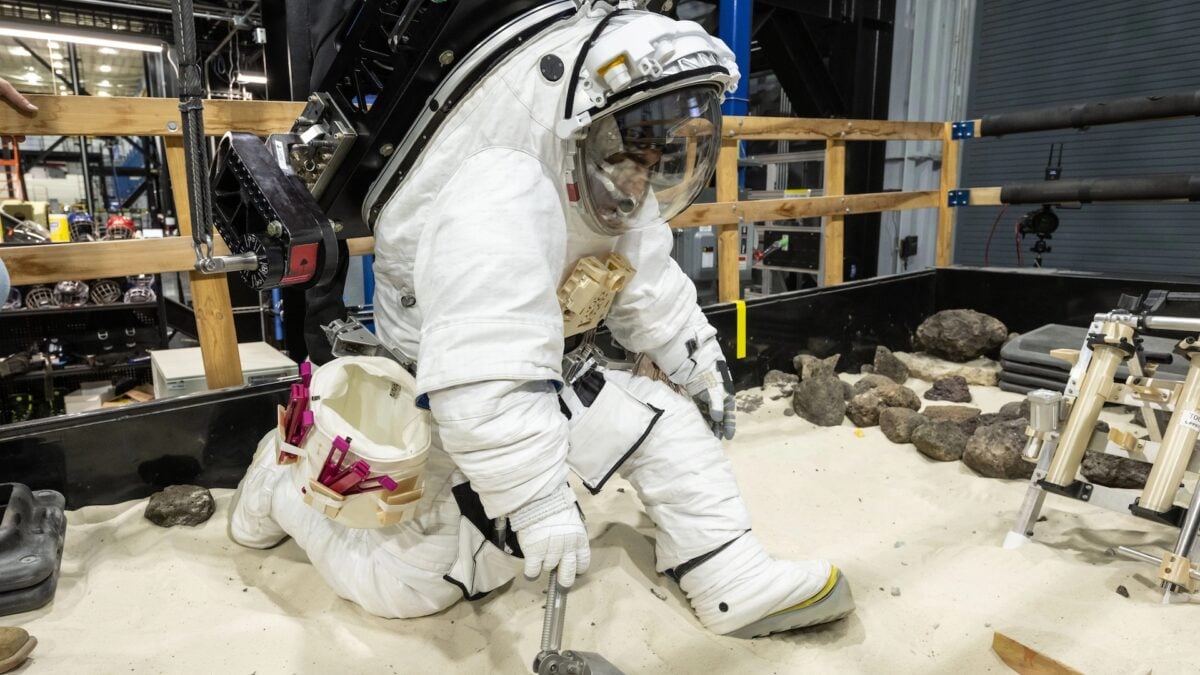
A NASA Office of Inspector General audit released in April 2026 warned that development and testing delays for next-generation spacesuits could push demonstrations — and therefore readiness for lunar surface operations — to 2031, potentially slipping Artemis landing plans well beyond NASA’s current target of 2028. NASA contracted Axiom Space (after Collins Aerospace exited in 2024) under firm-fixed-price, service-based xEVAS deals to supply lunar and microgravity suits; the OIG said that acquisition approach and overly optimistic schedules increased technical and schedule risks. NASA leadership and Axiom dispute the 2031 projection: Administrator Jared Isaacman and Axiom CEO Jonathan Cirtain say they remain committed to a 2027 in-space demonstration and supporting a 2028 landing. The report also flagged interoperability problems (different suit interfaces across lander designs), the lack of a common suit standard, and the danger that the International Space Station’s retirement around 2030 could leave insufficient testbeds. NASA has inserted a low-Earth-orbit demo flight into Artemis sequencing to de-risk systems, but other pressures — Human Landing System readiness, procurement protests and budget uncertainty — add to schedule vulnerability.
Congress Pushes Back on Trump's NASA Cuts

🏷️ Science & Space🌍 United States🔗 4 sources38Digest ScoreiThis score reflects the story's reliability, bias neutrality, and public momentum.
Congress Pushes Back on Trump's NASA Cuts

📰 Full Story

Lawmakers on the House Science, Space, and Technology Committee voiced bipartisan opposition this week to the White House’s FY2027 budget request that would cut NASA funding by about 23% — roughly $5.6 billion — compared with the enacted FY2026 level. NASA Administrator Jared Isaacman testified on April 22–23 defending the proposal, arguing cost discipline is needed after program overruns, but representatives from both parties said the reductions would undermine space science, aeronautics, technology and STEM outreach. Members cited recent successes including the Artemis II lunar flyby and upcoming projects such as the Nancy Grace Roman Space Telescope and Dragonfly to Titan, warning that steep cuts risk ceding leadership to China, which plans ambitious human and robotic missions. The request again proposed eliminating the Office of STEM Engagement, prompting concern about the pipeline for future engineers and scientists. Several committee members said they expect Congress to reject the proposal as it did a similar FY2026 request and urged a more targeted approach to savings that preserves core science and commercial partnerships.

Sony’s Ace robot beats elite table tennis players

🏷️ Science & Space🌍 Japan🔥 Trending🔗 25 sources34Digest ScoreiThis score reflects the story's reliability, bias neutrality, and public momentum.
Sony’s Ace robot beats elite table tennis players

📰 Full Story

Sony AI’s autonomous robot “Ace” has reached expert-level performance in competitive table tennis, a milestone detailed in a Nature paper published April 22, 2026. Built and tested at Sony’s Tokyo facilities under International Table Tennis Federation rules and officiated by licensed umpires, Ace combines an eight-jointed robotic arm, high-speed perception (nine active-pixel cameras plus event-based vision to read ball spin), and a model-free reinforcement-learning control stack with very low end-to-end latency. In trial matches first staged in April 2025 Ace won three of five matches against elite players; the team says the system later beat professional players in December 2025 and again in March 2026. The robot returned a wide range of high-speed, high-spin shots, scored multiple direct points on serve and handled unexpected bounces (including net-caught balls). Researchers say Ace was trained largely in simulation then transferred to the real world; the project lead, Peter Dürr, and Sony AI highlight potential applications beyond sport in manufacturing, service robotics and other fast, safety-critical human–robot interactions. The system still relies on a surrounding camera array and a non-humanoid base, and Sony says further work aims to improve adaptation to human tactics.

Study: 17 million Americans at high coastal flood risk

🏷️ Science & Space🌍 United States🔗 3 sources34Digest ScoreiThis score reflects the story's reliability, bias neutrality, and public momentum.
Study: 17 million Americans at high coastal flood risk

📰 Full Story

A University of Alabama-led study published April 23, 2026 in Science Advances finds that tens of millions of Americans along the Atlantic and Gulf coasts face elevated flood risk. Using 16 factors — including geographic hazards, exposed population and infrastructure, land subsidence, impermeable surfaces and social vulnerability — and combining FEMA damage records with three AI tools, researchers estimated 17.5 million people at "very high" risk and roughly another 17 million at "high" risk (about 34.5 million total). For the most extreme floods (top 1% of events) the study finds 4.3 million at the highest risk and 20.5 million at high risk. Major metro areas singled out include New York City (about 4.75 million people in the two highest risk tiers and some 200,000 buildings likely exposed), New Orleans (about 380,000 people, representing 99% of the city), Jacksonville, Houston, Miami, Norfolk, Charleston and Mobile. Authors and outside experts say human-caused climate change, combined with urban development and social vulnerability, is intensifying coastal flood threats and complicating preparedness and planning.

Study: Seeds 'hear' rain and sprout faster

🏷️ Science & Space🌍 United States🔗 4 sources23Digest ScoreiThis score reflects the story's reliability, bias neutrality, and public momentum.
Study: Seeds 'hear' rain and sprout faster

📰 Full Story

A study led by Nicholas Makris at the Massachusetts Institute of Technology, published in Scientific Reports on April 23, 2026, finds that rice seeds exposed to the sound and vibration of falling raindrops germinate substantially faster than seeds not exposed to droplet impacts. Researchers submerged roughly 8,000 Oryza sativa seeds in shallow water and subjected some trays to streams of rain-like droplets while keeping controls in identical water without droplet impact. Depending on conditions and seed position in puddles, germination was accelerated by roughly 24–40%. The team attributes the effect to pressure waves transmitted through water that jostle microscopic starch-rich statoliths inside seed cells; those movements plausibly trigger early growth processes. The study also measured very high underwater sound pressures produced by single drops in shallow puddles. Authors caution that other factors — such as aeration, pressure changes or extra material from drops — might contribute, and they call for further biological and cross-species testing to confirm mechanisms and field relevance.
Explore more on NewsDigest