
NewsDigestFollow

Congress Pushes Back on Trump's NASA Cuts

🏷️ Science & Space🌍 United States🔗 4 sources42Digest ScoreiThis score reflects the story's reliability, bias neutrality, and public momentum.
Congress Pushes Back on Trump's NASA Cuts

📰 Full Story

Lawmakers on the House Science, Space, and Technology Committee voiced bipartisan opposition this week to the White House’s FY2027 budget request that would cut NASA funding by about 23% — roughly $5.6 billion — compared with the enacted FY2026 level. NASA Administrator Jared Isaacman testified on April 22–23 defending the proposal, arguing cost discipline is needed after program overruns, but representatives from both parties said the reductions would undermine space science, aeronautics, technology and STEM outreach. Members cited recent successes including the Artemis II lunar flyby and upcoming projects such as the Nancy Grace Roman Space Telescope and Dragonfly to Titan, warning that steep cuts risk ceding leadership to China, which plans ambitious human and robotic missions. The request again proposed eliminating the Office of STEM Engagement, prompting concern about the pipeline for future engineers and scientists. Several committee members said they expect Congress to reject the proposal as it did a similar FY2026 request and urged a more targeted approach to savings that preserves core science and commercial partnerships.
Study: Giant 'kraken-like' octopuses ruled Cretaceous seas

🏷️ Science & Space🔥 Trending🔗 7 sources63Digest ScoreiThis score reflects the story's reliability, bias neutrality, and public momentum.
Study: Giant 'kraken-like' octopuses ruled Cretaceous seas

📰 Full Story

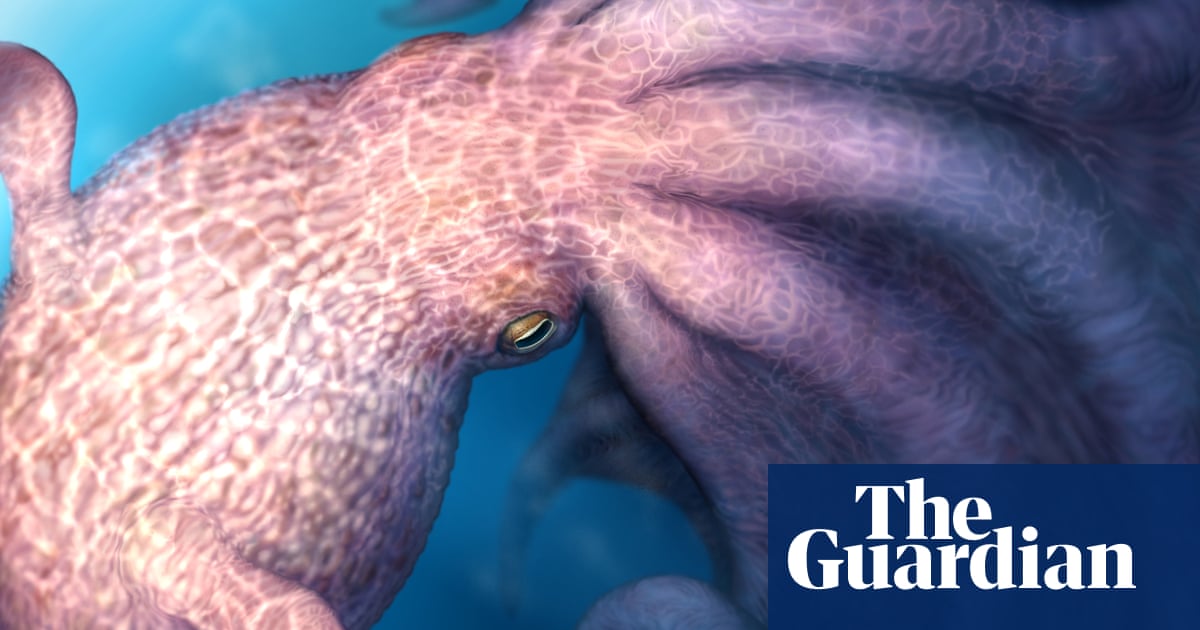
An international team led by researchers at Hokkaido University reports evidence that enormous, kraken-like octopuses were apex predators in Late Cretaceous oceans. Published in Science on April 23, 2026, the study re-examined 27 fossilized cephalopod beaks from marine sediments in Japan and Canada’s Vancouver Island and reassigned them to two species, Nanaimoteuthis jeletzkyi and the much larger N. haggarti. Using comparisons with modern finned octopuses, digital “fossil‑mining” and AI-assisted imaging, the team estimates N. haggarti could have reached roughly 7–19 metres in total length. Consistent, heavy wear on the beaks indicates routine crushing of hard prey—shells and bones—while asymmetric wear suggests lateralized (handed) behaviour indicative of advanced neural control. The findings imply giant octopuses may have competed with mosasaurs, plesiosaurs and large sharks for top‑tier predator roles in seas between about 100 and 72 million years ago, challenging the view that vertebrates exclusively dominated Cretaceous marine food webs.

Artemis II heat shield performs well on reentry

🏷️ Science & Space🌍 United States🔗 4 sources39Digest ScoreiThis score reflects the story's reliability, bias neutrality, and public momentum.
Artemis II heat shield performs well on reentry

📰 Full Story

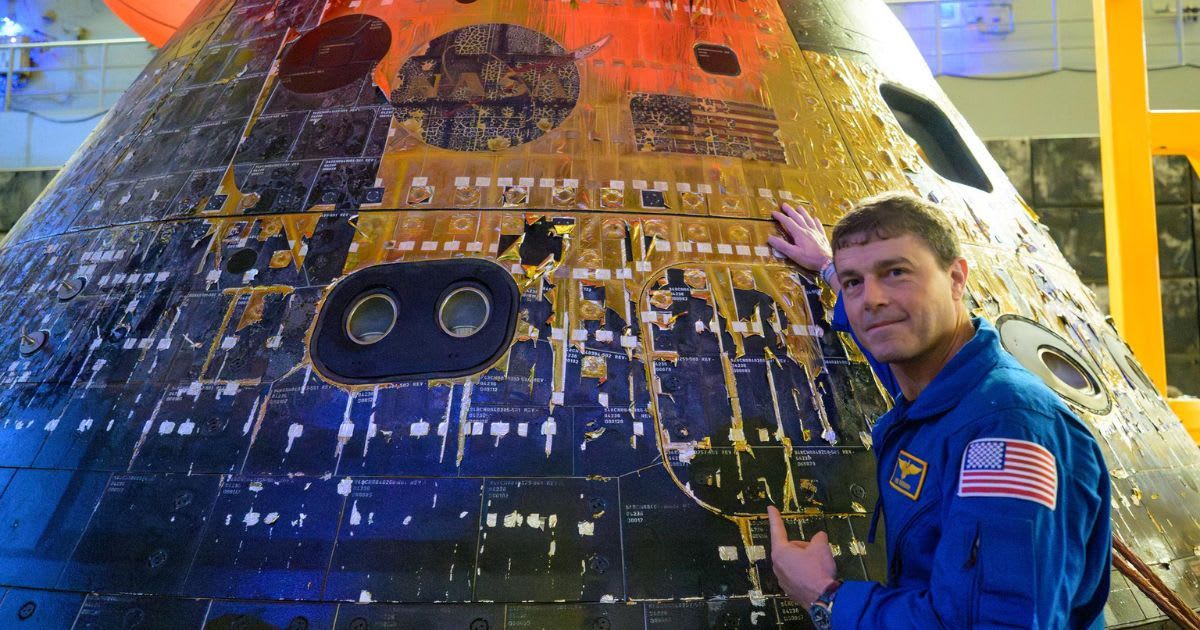
Initial post-mission inspections show the Orion heat shield used on NASA’s crewed Artemis II mission withstood the mission’s blistering reentry with substantially less damage than the uncrewed Artemis I return. Divers photographed the underside of the capsule shortly after its April 10 splashdown; NASA said on April 20 that ceramic tiles were uncracked, reflective thermal tape remained in many places and overall char loss was reduced in both size and quantity. The heat shield uses Avcoat ablative material; engineers attribute the improved outcome largely to a change in the reentry profile — a lofted, Apollo-style entry — that eliminated the skip maneuver used on Artemis I and reduced conditions that trapped gases and led to cracking. Orion splashed down about 2.9 miles (4.7 km) from its targeted landing point, and early system checks found the SLS and other mission systems performed as expected. NASA will transport the heat shield to the Marshall Space Flight Center for more detailed scans. The findings will factor into planning and hardware decisions for upcoming Artemis missions, including the 2027 Artemis III docking test and later lunar-landing campaigns.

Study: 17 million Americans at high coastal flood risk

🏷️ Science & Space🌍 United States🔗 3 sources29Digest ScoreiThis score reflects the story's reliability, bias neutrality, and public momentum.
Study: 17 million Americans at high coastal flood risk

📰 Full Story

A University of Alabama-led study published April 23, 2026 in Science Advances finds that tens of millions of Americans along the Atlantic and Gulf coasts face elevated flood risk. Using 16 factors — including geographic hazards, exposed population and infrastructure, land subsidence, impermeable surfaces and social vulnerability — and combining FEMA damage records with three AI tools, researchers estimated 17.5 million people at "very high" risk and roughly another 17 million at "high" risk (about 34.5 million total). For the most extreme floods (top 1% of events) the study finds 4.3 million at the highest risk and 20.5 million at high risk. Major metro areas singled out include New York City (about 4.75 million people in the two highest risk tiers and some 200,000 buildings likely exposed), New Orleans (about 380,000 people, representing 99% of the city), Jacksonville, Houston, Miami, Norfolk, Charleston and Mobile. Authors and outside experts say human-caused climate change, combined with urban development and social vulnerability, is intensifying coastal flood threats and complicating preparedness and planning.

Sony’s Ace robot beats elite table tennis players

🏷️ Science & Space🌍 Japan🔥 Trending🔗 25 sources29Digest ScoreiThis score reflects the story's reliability, bias neutrality, and public momentum.
Sony’s Ace robot beats elite table tennis players

📰 Full Story

Sony AI’s autonomous robot “Ace” has reached expert-level performance in competitive table tennis, a milestone detailed in a Nature paper published April 22, 2026. Built and tested at Sony’s Tokyo facilities under International Table Tennis Federation rules and officiated by licensed umpires, Ace combines an eight-jointed robotic arm, high-speed perception (nine active-pixel cameras plus event-based vision to read ball spin), and a model-free reinforcement-learning control stack with very low end-to-end latency. In trial matches first staged in April 2025 Ace won three of five matches against elite players; the team says the system later beat professional players in December 2025 and again in March 2026. The robot returned a wide range of high-speed, high-spin shots, scored multiple direct points on serve and handled unexpected bounces (including net-caught balls). Researchers say Ace was trained largely in simulation then transferred to the real world; the project lead, Peter Dürr, and Sony AI highlight potential applications beyond sport in manufacturing, service robotics and other fast, safety-critical human–robot interactions. The system still relies on a surrounding camera array and a non-humanoid base, and Sony says further work aims to improve adaptation to human tactics.
Explore more on NewsDigest