
NewsDigestFollow

Broadcom Q2 AI Revenue Soars, Shares Slide

🏷️ Finance & Economics🌍 United States🔥 Trending🔗 23 sources64Digest ScoreiThis score reflects the story's reliability, bias neutrality, and public momentum.
Broadcom Q2 AI Revenue Soars, Shares Slide

📰 Full Story

Broadcom reported second-quarter fiscal 2026 results on June 3, posting $22.19 billion in revenue and non‑GAAP EPS of $2.44. Semiconductor revenue tied to AI accelerated 143% year‑over‑year to $10.8 billion. The company guided third‑quarter revenue of about $29.4 billion and forecast AI semiconductor revenue of roughly $16.0 billion for the quarter. Management said it expects to ship more than 10 gigawatts of AI compute in 2027 and reiterated a long‑range hardware target of $100 billion. Despite strong cash flow (operating cash flow and free cash flow in the roughly $10.3–10.5 billion range) and record margins, shares dropped sharply in after‑hours trading — falling more than 11–13% in some sessions — as investors parsed mixed signals versus high market expectations. Analysts noted intensifying competition from Nvidia and Marvell and flagged supply‑chain constraints at partners such as TSMC; Broadcom also acknowledged that major cloud customers like Google are diversifying suppliers. Reported valuation metrics include a market cap around $2.27–2.29 trillion and an elevated P/E near the mid‑90s; insider selling of roughly $356 million was also reported.

🤝 Social Media Insights

Social Summary
1 / 5
Users point to a verified Fidelity settlement over Broadcom/VMware licensing as evidence of broader customer pushback; commenters say migrations to alternatives could pressure software revenue even as AI hardware remains the primary growth engine, producing mixed investor sentiment.


Ackman to Sell Remaining Universal Music Stake

🏷️ Finance & Economics🌍 Netherlands🔗 8 sources52Digest ScoreiThis score reflects the story's reliability, bias neutrality, and public momentum.
Ackman to Sell Remaining Universal Music Stake

📰 Full Story

Bill Ackman’s Pershing Square is selling its remaining stake in Universal Music Group (UMG) after the music giant’s board rejected a takeover proposal earlier this year. Pershing is marketing roughly 80.6 million UMG shares in an overnight placing, with Bank of America offering a range of €17.66 to €18.62 per share — a sale that could raise about €1.5 billion at the top end. The move follows UMG’s unanimous conclusion that Pershing’s April non-binding bid, which valued the company at roughly €55.8–€56 billion, “fundamentally and materially undervalues” the business. Ackman first built a multi‑billion dollar UMG position beginning in 2021, briefly served on the company’s board and has previously sold tranches of stock; he had also pushed to move UMG’s primary listing to the U.S. The sale marks the latest chapter in a multi‑year activist campaign and comes after major shareholder Bolloré publicly urged the board to reject Pershing’s offer. UMG shares saw modest downward pressure in reaction to the news in European trading.

Palo Alto Raises Guidance as AI Security Demand Surges

🏷️ Finance & Economics🌍 United States🔗 17 sources47Digest ScoreiThis score reflects the story's reliability, bias neutrality, and public momentum.
Palo Alto Raises Guidance as AI Security Demand Surges

📰 Full Story

Palo Alto Networks reported stronger-than-expected fiscal Q3 results on June 2-3, 2026, driven by rising enterprise spending on cloud, identity and AI-driven cybersecurity. Revenue rose 31% year-on-year to $3.0 billion and non-GAAP EPS was $0.85; next-generation security annual recurring revenue reached $8.13 billion, up about 60%. Remaining performance obligations were $18.4 billion, up 36%. Management raised full-year revenue and adjusted EPS guidance (fiscal 2026 revenue roughly $11.415–11.425 billion; adjusted EPS $3.77–3.79) and flagged accelerating demand tied to AI-related threats. Operational highlights included 75.8% gross margins, $910 million adjusted free cash flow, nearly 40% growth in next-generation firewall bookings and Prisma AI customer growth to over 300. The company closed its Portkey acquisition to bolster AI gateway capabilities. Market reaction was mixed — Reuters reported a 7.4% after-hours jump, while other trading sessions saw some pullback — as analysts pushed price targets higher (Truist $375, Needham/Deutsche Bank $350, Morgan Stanley $320) even as valuation metrics (TTM P/E ~164x) and recent insider sales drew investor scrutiny.

Nvidia Calls Marvell 'Next Trillion-Dollar Company'

🏷️ Finance & Economics🌍 Taiwan🔗 42 sources43Digest ScoreiThis score reflects the story's reliability, bias neutrality, and public momentum.
Nvidia Calls Marvell 'Next Trillion-Dollar Company'

📰 Full Story

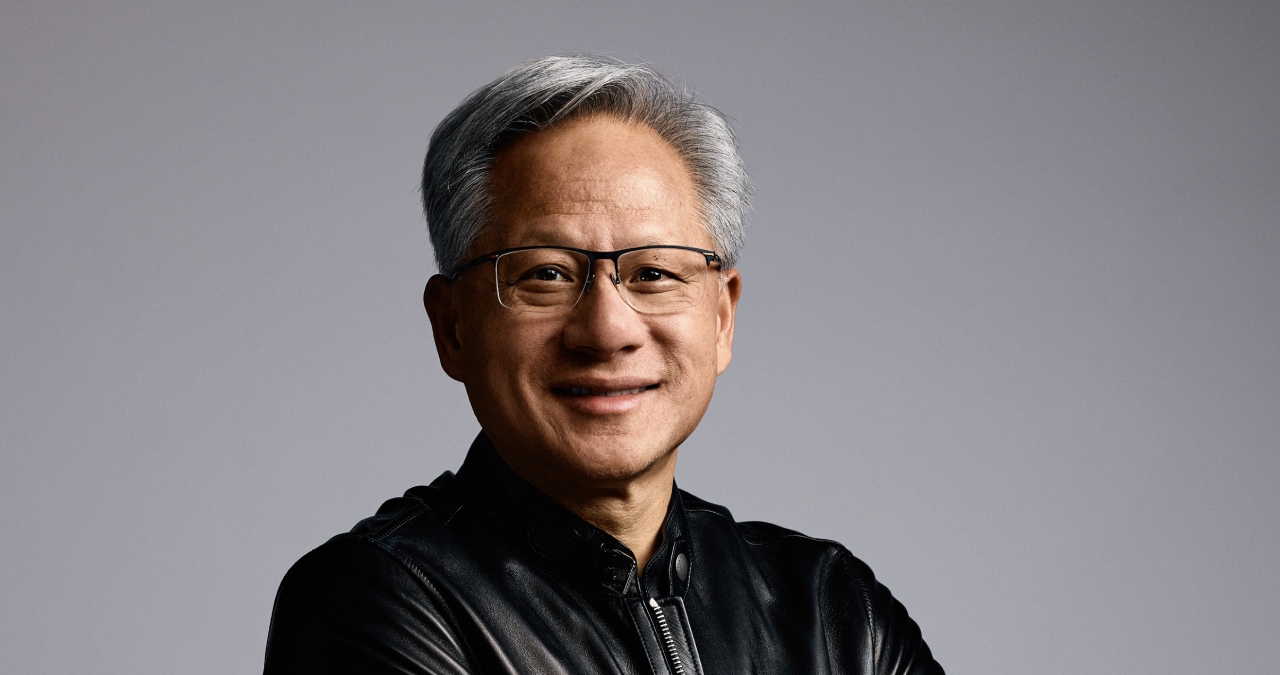
Marvell Technology shares jumped sharply on June 2 after Nvidia CEO Jensen Huang, speaking onstage with Marvell chief Matt Murphy at Computex in Taipei, called the chip and networking firm the "next trillion-dollar company." The endorsement — coming after Nvidia's roughly $2 billion investment in Marvell earlier in 2026 — sent Marvell stock up about 24-32% in early trading across reports, lifting its market value by tens of billions and to record highs in intraday trade. Marvell last week forecast its custom chips business would exceed $10 billion in revenue by fiscal 2029. Huang and others highlighted Marvell's role in connectivity and optical interconnects that link processors across large AI data centres, a sector seeing heavy spending from major cloud providers. Analysts and data services noted both brisk analyst upgrades and warnings about steep valuations: some screens show the stock trading far above modelled intrinsic values. Nvidia shares also rose modestly on the news as markets digested the broader Computex announcements and AI-infrastructure momentum.

Nvidia's Huang pitches 'insanely profitable' AI returns

🏷️ Finance & Economics🌍 Taiwan🔗 3 sources35Digest ScoreiThis score reflects the story's reliability, bias neutrality, and public momentum.
Nvidia's Huang pitches 'insanely profitable' AI returns

📰 Full Story

Nvidia Chief Executive Jensen Huang told more than 300 representatives of wealthy family offices and financial institutions at a private forum in Taipei on June 3 that returns on artificial intelligence investments have become “insanely profitable.” Speaking during a Computex week appearance at the Mandarin Oriental, Huang said the ROI picture was “completely reset” over the past six months and suggested skeptics now risk looking out of touch. The closed-door event, hosted by Era and Chailease, drew attendees from Hillhouse, PAG and DBS, among others. Huang praised companies across the AI supply chain — including TSMC, Micron, SK Hynix and Marvell — and reiterated infrastructure needs for AI: land, power and financing. His comments followed public remarks that helped lift Marvell shares and come amid a broader debate over whether the surge in data-centre spending and debt to build AI capacity will translate into sustainable profits. Huang also pushed back on claims that AI is the primary driver of recent corporate layoffs, urging clearer explanations from company leaders.

SEBI alleges Rajesh Exports inflated revenue by $158bn

🏷️ Finance & Economics🌍 India🔗 4 sources35Digest ScoreiThis score reflects the story's reliability, bias neutrality, and public momentum.
SEBI alleges Rajesh Exports inflated revenue by $158bn

📰 Full Story

India’s markets regulator, the Securities and Exchange Board of India (SEBI), said in an interim order on June 3, 2026 that Bengaluru-based Rajesh Exports overstated group revenues by about 15.15 trillion rupees ($158.3 billion) across fiscal years 2020-21 to 2024-25. SEBI said some 97–99% of consolidated revenue was attributed to overseas subsidiaries — notably Switzerland’s Valcambi SA — while those entities’ standalone audited accounts showed negligible revenues. The regulator flagged nonexistent or unverifiable entries, including identical sales and purchase records with Affluence Shares and Stocks Pvt Ltd that the counterparty denied, and alleged routing of company funds (around 3.39 billion rupees) to promoter Rajesh Mehta’s personal accounts and 9.26 billion rupees moved without required approvals or disclosures. SEBI estimated shareholder wealth erosion of about 127.26 billion rupees, has barred the company and its owner from market participation pending investigation, and ordered cooperation and further forensic review. The probe was triggered by a shareholder complaint in March 2024 and involved forensic auditors and requests for extensive cross-border financial disclosures.

Macy's posts strongest Q1 sales, raises outlook

🏷️ Finance & Economics🌍 United States🔥 Trending🔗 14 sources34Digest ScoreiThis score reflects the story's reliability, bias neutrality, and public momentum.
Macy's posts strongest Q1 sales, raises outlook

📰 Full Story

Macy’s Inc. reported its strongest first-quarter comparable sales performance in four years, driven by a 3.0% rise in comparable sales and a standout 10.2% gain at Bloomingdale’s. For the quarter ended May 2, net sales rose to $4.68 billion and net income was $63 million, or $0.23 per share; adjusted diluted EPS was $0.13, ahead of analyst expectations. The company said its 200 reimagined stores delivered a 2.4% comp increase and Bluemercury grew 6.4%. Inventory was up about 3.6% year-on-year. Macy’s raised full-year guidance: net sales of $21.5 billion to $21.75 billion, comparable sales now seen up 0.5%–1.2%, and adjusted diluted EPS of $2.00–$2.20. The retailer ended the quarter with $1.3 billion in cash, $2.0 billion of available borrowing capacity, returned $50 million to shareholders via dividend and repurchases, and cited continued macroeconomic and geopolitical uncertainty even as management noted sustained momentum into Q2.

DOJ, CFTC Probe George Santos Over Kalshi Bets

🏷️ Finance & Economics🌍 United States🔥 Trending🔗 15 sources30Digest ScoreiThis score reflects the story's reliability, bias neutrality, and public momentum.
DOJ, CFTC Probe George Santos Over Kalshi Bets

📰 Full Story

Federal prosecutors and the Commodity Futures Trading Commission are investigating former U.S. representative George Santos after the prediction-market platform Kalshi flagged suspicious trades tied to his public statements about attending President Donald Trump’s State of the Union on Feb. 24, 2026, multiple outlets reported on June 3. Santos posted a video saying he would be in the gallery the day before the speech, which pushed his odds of attendance sharply higher on Kalshi; minutes into the address he said on X he was delayed at an airport. Kalshi detected trades that allegedly bet against his presence and froze the account before referring the activity to regulators. Reports say Santos cashed out before odds collapsed; exact amounts are unclear. The inquiry has prompted market fallout: Polymarket said it is ending a paid relationship with Santos. Authorities have in recent months pursued other prediction-market cases, including a charged Google employee and an active-duty soldier, heightening scrutiny of the rapidly growing sector.

CMHC: Cutting development fees won’t solve housing

🏷️ Finance & Economics🌍 Canada🔗 3 sources30Digest ScoreiThis score reflects the story's reliability, bias neutrality, and public momentum.
CMHC: Cutting development fees won’t solve housing

📰 Full Story

A new Canada Mortgage and Housing Corporation (CMHC) analysis released June 3 finds that slashing municipal development charges would lift the number of viable housing projects in some cities but would not, by itself, restore affordability nationwide. Using a model based on data from 40 municipalities, CMHC chief economist Mathieu Laberge said eliminating development fees could increase viable projects by as much as about 14 per cent in places such as Burnaby. In Toronto and Vancouver, cuts of 50–60 per cent would raise viability by roughly 5 per cent, while near-elimination would boost projects by about 10 per cent. Small reductions of less than 20 per cent generally produce under 2 per cent gains. The report notes development charges — fees for local infrastructure like sewers and water — are a meaningful cost component but also a key municipal revenue source. CMHC and the federal government are encouraging municipalities to trim fees and are deploying billions in programs and financing to try to stimulate supply, but the agency cautions that fee cuts alone are insufficient to reverse rising prices.

KPMG Australia COO Steps Aside in Audit Leak

🏷️ Finance & Economics🌍 Australia🔗 3 sources28Digest ScoreiThis score reflects the story's reliability, bias neutrality, and public momentum.
KPMG Australia COO Steps Aside in Audit Leak

📰 Full Story

KPMG Australia’s chief operating officer, Eileen Hoggett, stepped aside from her executive role on June 3, 2026, amid widening allegations that the firm misused confidential client information to win audit work. Hoggett will remain an audit partner while external and internal probes continue. The move follows last week’s resignations of CEO Andrew Yates and head of audit Julian McPherson over the mishandling of an earlier internal investigation. Whistleblower claims — aired under parliamentary privilege by Senator Deborah O’Neill — allege partners took board papers from client Lendlease to support bids for audits of Westpac and Dexus; Lendlease has publicly confirmed misuse and plans to retender its audit next year. KPMG has engaged law firm Allens for a new external investigation and interim CEO Stan Stavros has warned staff to expect continued scrutiny. The Australian Securities and Investments Commission has opened a preliminary probe into three registered auditors and state governments are seeking assurances and reviewing contracts. A parliamentary hearing is scheduled for June 19.

Uber cuts nearly a quarter of HR division

🏷️ Finance & Economics🌍 United States🔗 3 sources28Digest ScoreiThis score reflects the story's reliability, bias neutrality, and public momentum.
Uber cuts nearly a quarter of HR division

📰 Full Story

Uber announced on June 3, 2026, that it is eliminating 23% of roles in its People and Places division — the unit that covers human resources, recruitment, workplace facilities and culture. The company said the reductions amount to well under 1% of Uber’s roughly 34,000 employees and that many of the positions cut are senior roles. The move comes about three weeks after Jill Hazelbaker was promoted to president and chief corporate affairs officer and given oversight of the People organisation; CEO Dara Khosrowshahi described the changes as necessary to reduce complexity and overlap. Uber explicitly denied that the HR cuts were driven by artificial intelligence, even as it has slowed hiring elsewhere because of rising AI adoption: management has disclosed around 95% monthly AI-tool adoption among engineers and widespread use of AI coding assistants. The company is still advertising more than 800 open roles, including positions supporting robotaxi commercialisation with partners, and has reinstated a three-day-in-office policy for People staff who previously worked fully remotely.

Ulta Beauty Q1 Beats Estimates, Raises Outlook

🏷️ Finance & Economics🌍 United States🔥 Trending🔗 28 sources27Digest ScoreiThis score reflects the story's reliability, bias neutrality, and public momentum.
Ulta Beauty Q1 Beats Estimates, Raises Outlook

📰 Full Story

Ulta Beauty reported a stronger-than-expected fiscal first quarter, posting EPS of $7.74 versus Street estimates of $6.86 and net sales of $3.16 billion, above forecasts of about $3.10 billion. Comparable sales rose 5.3% year-on-year, driven by higher ticket values and traffic, with fragrances and prestige brands performing particularly well. Management credited a successful TikTok Shop launch, exclusive celebrity lines and new brand additions for helping attract younger, affluent shoppers. Gross margin improved about 100 basis points to roughly 40.1%, aided by lower inventory shrink and better merchandise margins. The company repurchased $555 million of stock in the quarter and nudged full-year EPS guidance up to $28.36–$28.80 from $28.05–$28.55. Several major banks lowered price targets while largely maintaining buy/overweight ratings, reflecting investor caution about sustainability of comps and tougher Q2 comparisons. Shares traded higher in extended trading after the results.

EU Court Upholds Messenger Gatekeeper, Meta Unveils AI

🏷️ Finance & Economics🌍 Luxembourg🔥 Trending🔗 14 sources27Digest ScoreiThis score reflects the story's reliability, bias neutrality, and public momentum.
EU Court Upholds Messenger Gatekeeper, Meta Unveils AI

📰 Full Story

BRUSSELS/LUXEMBOURG/LONDON, June 3, 2026 — Europe’s General Court upheld the European Commission’s finding that Meta’s Messenger qualifies as a “gatekeeper” under the EU Digital Markets Act, keeping obligations on the messaging app in place. At the same time the court annulled the Commission’s designation of Facebook Marketplace as a core platform service on procedural grounds, saying Brussels had not given sufficient reasoning; that annulment has limited practical effect after the Commission removed the Marketplace label last year when user thresholds fell. Meta said it was reviewing the ruling on Messenger and considering options, including appeal to the Court of Justice. Separately, Meta used a London “Conversations” event to push further into enterprise AI — unveiling Muse Spark, introducing a business “agent” for WhatsApp/ Messenger to handle scheduling and sales, and elevating startup founder Alexandr Wang to lead parts of its AI effort. The company also said it would revise an internal employee-tracking tool after staff concerns. The combined legal, product and personnel developments came amid investor scrutiny of how regulatory constraints and new AI initiatives will shape Meta’s business.

SpaceX sets IPO at $135 for $1.75 trillion

🏷️ Finance & Economics🌍 United States🔥 Trending🔗 47 sources26Digest ScoreiThis score reflects the story's reliability, bias neutrality, and public momentum.
SpaceX sets IPO at $135 for $1.75 trillion

📰 Full Story

Elon Musk’s SpaceX has fixed its initial public offering at $135 a share, planning to sell roughly 555.6 million Class A shares to raise about $75 billion and price the company at roughly $1.75–1.77 trillion. The unusual move to set a firm price before a formal roadshow — which begins the week of June 4 — precedes a Nasdaq debut expected around June 12 under the ticker SPCX. The offering is structured as an all‑primary deal (no existing shareholders selling) with a 15% greenshoe option and an unusually large retail allocation reported as high as 30%. Post‑IPO governance provisions would leave Musk with roughly 82% of voting power; he has agreed to a 366‑day personal lockup. Analysts including Morningstar estimate a far lower fair value (about $780 billion), citing heavy losses, xAI integration and speculative projects such as orbital data centres. Lead underwriters include Goldman Sachs, Morgan Stanley, BofA, Citigroup and J.P. Morgan. The offering’s mechanics and Nasdaq rule changes that speed index inclusion are likely to shape demand and secondary market dynamics.

🤝 Social Media Insights

Social Summary
1 / 5
Commenters add that Starlink may be the only clearly profitable unit but its economics are complicated by satellite depreciation; they warn that rapid index inclusion and a small public float could expose retirement and retail investors to outsized risk if the IPO is driven more by hype and insider dynamics than sustainable fundamentals.

U.S. proposes 25% tariffs on Brazil

🏷️ Finance & Economics🌍 United States🔗 13 sources25Digest ScoreiThis score reflects the story's reliability, bias neutrality, and public momentum.
U.S. proposes 25% tariffs on Brazil

📰 Full Story

The White House has proposed a punitive 25% tariff on a wide range of Brazilian imports after a Section 301 investigation concluded that certain Brazilian acts, policies and practices are “unreasonable” and “burden or restrict U.S. commerce.” U.S. Trade Representative Jamieson Greer said the probe, launched in July 2025, targeted issues including digital trade and payment services (notably Pix), preferential tariff arrangements with third countries, intellectual property enforcement, ethanol market access, anti‑corruption measures and illegal deforestation. The proposal excludes many items — such as beef, coffee, rare earths, certain metals, energy products and aircraft and parts — and opens a public comment period with written submissions due July 1 and a hearing scheduled for July 6 ahead of a July 15 statutory deadline. Brazilian President Luiz Inácio Lula da Silva denounced the move, blamed political opponents for lobbying Washington and threatened retaliatory measures, while U.S. officials say the tariff replaces portions of last year’s higher duties after a Supreme Court ruling limited earlier authority. The measure could reshape bilateral trade flows and prompt further negotiations or legal challenges.

OECD warns Iran war could stall global growth

🏷️ Finance & Economics🌍 France🔥 Trending🔗 9 sources24Digest ScoreiThis score reflects the story's reliability, bias neutrality, and public momentum.
OECD warns Iran war could stall global growth

📰 Full Story

PARIS, June 3, 2026 — The OECD said the global economy faces a sharp downgrade if the Middle East conflict and associated Gulf energy disruptions persist. In its June Economic Outlook the Paris-based body cut baseline global growth to 2.8% in 2026 (from 3.4% in 2025) with a rebound to 3.1% in 2027 if supplies broadly normalise. But in a “prolonged disruption” scenario that stretches into 2027, growth could slump to 2.1% in 2026 and 1.8% in 2027 — rates last seen in major crises. Sustained energy shocks could add about 0.4 percentage points to global inflation in 2026 and 1.3 in 2027, prompting central banks to consider 50–75 basis point rate hikes. The OECD flagged outsized pain for Asian energy importers and poorer economies, risks to AI and other energy‑intensive investment, higher unemployment, and possible recessions in some countries.

AI optimism lifts markets amid Middle East jitters

🏷️ Finance & Economics🌍 United States🔗 4 sources24Digest ScoreiThis score reflects the story's reliability, bias neutrality, and public momentum.
AI optimism lifts markets amid Middle East jitters

📰 Full Story

U.S. and global equity markets rallied on June 2 as enthusiasm over artificial intelligence investments offset lingering geopolitical risks tied to the U.S.-Iran conflict. The S&P 500 and Dow finished modestly higher while the Nasdaq was essentially flat; small-cap stocks outperformed and semiconductor indexes jumped sharply. Corporate drivers included a strong earnings beat from Hewlett Packard Enterprise, which surged after accelerating long-term targets, and investor support for AI infrastructure: Alphabet said it is seeking up to $80 billion in equity to fund expansion, while Anthropic confidentially filed for a U.S. IPO. Nvidia-backed optimism sent Marvell shares sharply higher after CEO Jensen Huang singled it out; Nvidia has invested in Marvell. Brent crude traded near $96 a barrel as concern over a fragile truce and stalled U.S.-Iran talks kept oil markets on edge, lifting prospects of renewed inflation pressures and a possible Federal Reserve rate response later in the year. U.S. labor data showed an unexpected rise in job openings, adding complexity to the outlook ahead of the May employment report. Markets remain split between AI-driven momentum and geopolitical-driven volatility.

Lloyds Banking Group apps suffer nationwide outage

🏷️ Finance & Economics🌍 United Kingdom🔥 Trending🔗 6 sources24Digest ScoreiThis score reflects the story's reliability, bias neutrality, and public momentum.
Lloyds Banking Group apps suffer nationwide outage

📰 Full Story

Thousands of customers of Lloyds Banking Group — including Lloyds Bank, Halifax and Bank of Scotland — experienced widespread problems accessing mobile and online banking on 3 June 2026. Users began reporting issues on outage tracker Downdetector from about 11:15 BST, with reports peaking at several thousand and many customers seeing 503 server errors in apps and on websites. The interruptions left some unable to make payments or view accounts; reports were concentrated in major UK cities including London, Cardiff, Belfast, Manchester and Birmingham. Lloyds acknowledged the fault on social media, apologised and said engineers were working to restore services; later statements indicated services were back up for most customers. The outage affected services that share common Lloyds Banking Group infrastructure (including MBNA and Scottish Widows in some reports). The incident follows a separate March IT glitch that exposed data to other customers and may intensify scrutiny of the group’s digital resilience and customer protections.

Toronto home sales rise as prices dip

🏷️ Finance & Economics🌍 Canada🔥 Trending🔗 6 sources22Digest ScoreiThis score reflects the story's reliability, bias neutrality, and public momentum.
Toronto home sales rise as prices dip

📰 Full Story

Greater Toronto Area home sales strengthened in May, with the Toronto Regional Real Estate Board (TRREB) reporting seasonally adjusted transactions rose 10% from April to 5,364 units, while the unadjusted total was 6,583 sales (about 6.3% higher year-on-year). The MLS Home Price Index fell 0.2% month-on-month to C$927,800, while the composite benchmark was down 6.7% year-on-year. The average selling price declined roughly 4.6% year-on-year to C$1,069,700. New listings plunged about 18.9% year-on-year to 17,698 in May, and active inventory tightened, boosting competition in parts of the region even as buyers retained “substantial negotiating power.” TRREB said improved affordability from lower selling prices and easing borrowing costs helped support the rebound in activity. The board and local brokers flagged larger price drops for condos and townhouses versus detached homes and said prices could stabilise or begin to rise later in the year if sales continue to outpace listings.

Inditex posts stronger-than-expected sales, Q2 surge

🏷️ Finance & Economics🌍 Spain🔗 4 sources21Digest ScoreiThis score reflects the story's reliability, bias neutrality, and public momentum.
Inditex posts stronger-than-expected sales, Q2 surge

📰 Full Story

Spain’s Inditex, owner of Zara, reported resilient first-quarter results and a stronger-than-expected start to the summer trading period. Q1 net sales reached €8.75 billion, up 8.8% at constant exchange rates, with net income of €1.4 billion (+5.4%). Underlying EBITDA rose 7.3% to €2.6 billion and gross profit climbed 6.9% to €5.4 billion as gross margin improved to 61.2%. Early second-quarter trading (May 1–June 1) delivered an 11.5% constant-currency sales gain, beating analyst expectations and lifting the stock more than 5% on the day. Inditex finished the quarter with 5,456 stores, a net cash position of €10.8 billion and inventory roughly 1% higher year-on-year. Management kept full-year guidance unchanged, plans roughly 5% selling-space growth and ~€2.3 billion of investment, and flagged currency headwinds of about one percentage point on sales. The company cited rapid supply-chain adjustments to mitigate recent freight disruptions but warned that geopolitical instability in the Middle East and rising input and transport costs could affect performance in some markets.